
















 Back to Blogs
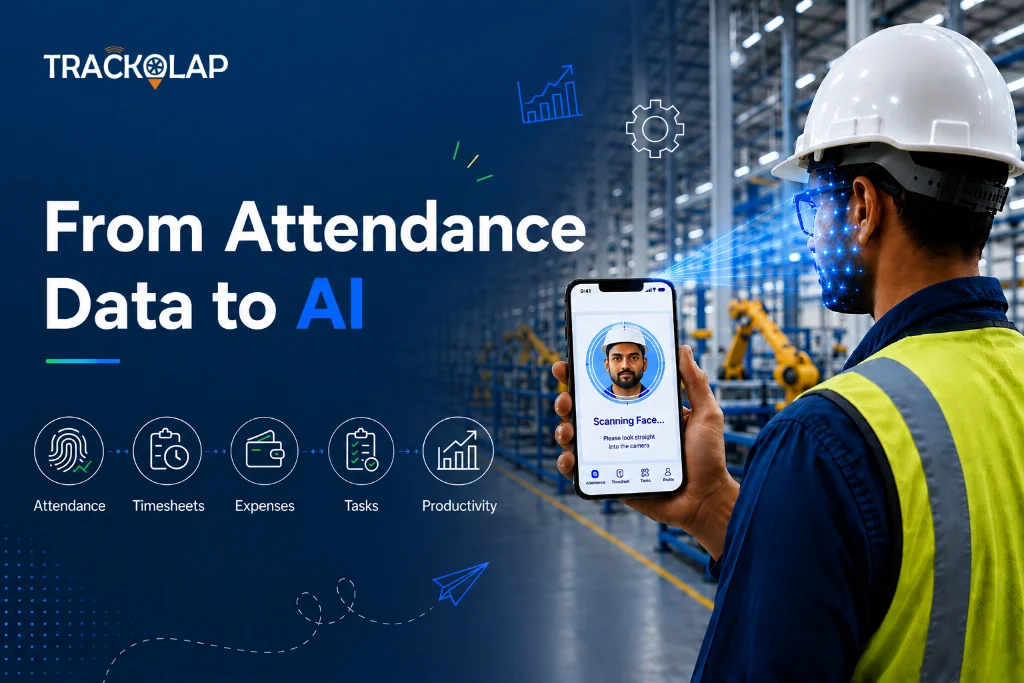
India is building factories faster than it is building the systems that run the people inside them.
Walk into almost any new plant commissioned under the Production Linked Incentive (PLI) scheme in the last three years and you will find world-class machines and an ERP that tracks every component down to the last screw. Then walk into the HR cabin next to it. More often than not, you will find attendance being reconciled in a spreadsheet, contractor invoices being matched by hand, and a supervisor calling three site in-charges to find out who actually turned up this morning.
Smart manufacturing has done an excellent job of digitising machines. Workforce management is the piece still catching up — and it is the piece that decides whether a new plant reaches rated capacity in nine months or nineteen.
What Workforce Management in Smart Manufacturing Actually Means
Workforce management in smart manufacturing is the practice of capturing, verifying and acting on employee data — attendance, working hours, movement, tasks, expenses and output — through connected digital systems rather than manual registers, so that labour capacity can be planned as precisely as machine capacity.
In simple terms: if you can tell your board exactly how many machine-hours you ran last month, you should be able to tell them exactly how many productive man-hours you paid for. Most Indian manufacturers today can answer the first question in seconds and the second one only after a week of reconciliation.
The distance between those two answers is where money leaks.
The Scale Problem Nobody Planned For
The numbers explain why this suddenly matters.
As of the latest official update, India’s PLI schemes across 14 sectors — with an approved outlay of ₹1.91 lakh crore — have drawn cumulative investment of over ₹2.16 lakh crore, generated cumulative sales exceeding ₹20.41 lakh crore, and supported more than 14.39 lakh direct and indirect jobs, according to the Press Information Bureau. Incentives disbursed had crossed ₹28,748 crore as of 31 December 2025.
Meanwhile, the Ministry of Statistics and Programme Implementation’s Annual Survey of Industries 2023-24 recorded around 1.96 crore persons engaged across 2.60 lakh registered factories, an employment growth of 5.92% in a single year.
But here is the figure that should shape your workforce strategy: in the same survey, contract workers accounted for roughly 42% of the factory workforce — the highest share in the five-year period covered.
Read those three facts together and the picture is clear. Capacity is being added fast. Hiring is being added faster. And close to half the people walking through the gate every morning are not on your payroll — they belong to staffing partners, they rotate between sites, and they are the hardest group to track accurately.
This is not a problem an ERP module was designed to solve. It is a workforce data problem.
Why Attendance Is the Foundation Layer — Not an HR Formality
Most manufacturers treat attendance as a payroll input. In a smart factory it is something more important: the first reliable signal about the state of your operation on any given day.
Attendance data tells you whether Line 3 has enough hands for second shift. It tells you whether a vendor supplied 40 workers or billed for 40 and supplied 33. It tells you whether absenteeism is drifting upward in one department six weeks before it becomes a production shortfall. None of that is available if the record is a signature in a register.
This is where GPS attendance software changes the equation. Instead of a punch that only proves someone touched a device, geofenced attendance proves who marked attendance, where they were standing and when — verified by device location and, increasingly, face authentication. For a plant with one gate that is a convenience. For a company running four plants, two warehouses, a project site and a field service team, it is the difference between knowing and guessing.
TrackOlap’s attendance and leave module was built for this pattern: geofence-based check-in, selfie or face verification, shift-wise rosters, and one consolidated view across every location — so head office sees a single dashboard instead of eleven WhatsApp groups.
The Compliance Clock Is Also Ticking
There is a regulatory reason to fix this now, not next year.
India’s four labour codes — the Code on Wages, 2019; the Industrial Relations Code, 2020; the Code on Social Security, 2020; and the Occupational Safety, Health and Working Conditions Code, 2020 — came into effect on 21 November 2025, consolidating 29 existing labour laws into a single framework. The Ministry of Labour & Employment’s year-end review and its Compliance Handbook for Employers set out what this means in practice.
Three changes matter most for plant HR teams:
- Records can now be electronic. Registration, returns and registers can be maintained digitally under a single licence-single return regime. Digital attendance is no longer a nice-to-have alongside a paper register — it can be the register.
- Appointment letters are mandatory for all employees, in the prescribed format. For a workforce with fixed-term and contract staff rotating across sites, that is documentation work manual systems handle badly.
- Overtime must be paid at not less than twice the ordinary wage rate — so every hour of unlogged or wrongly-attributed overtime is now a compliance exposure, not just a cost.
Add the 31.42 crore unorganised workers now registered on e-Shram, and the direction of travel is unmistakable: India’s labour ecosystem is becoming formal, digital and auditable. Employers whose hours data lives in Excel will feel that shift hardest.
From Attendance Data to AI: The Five-Stage Maturity Curve
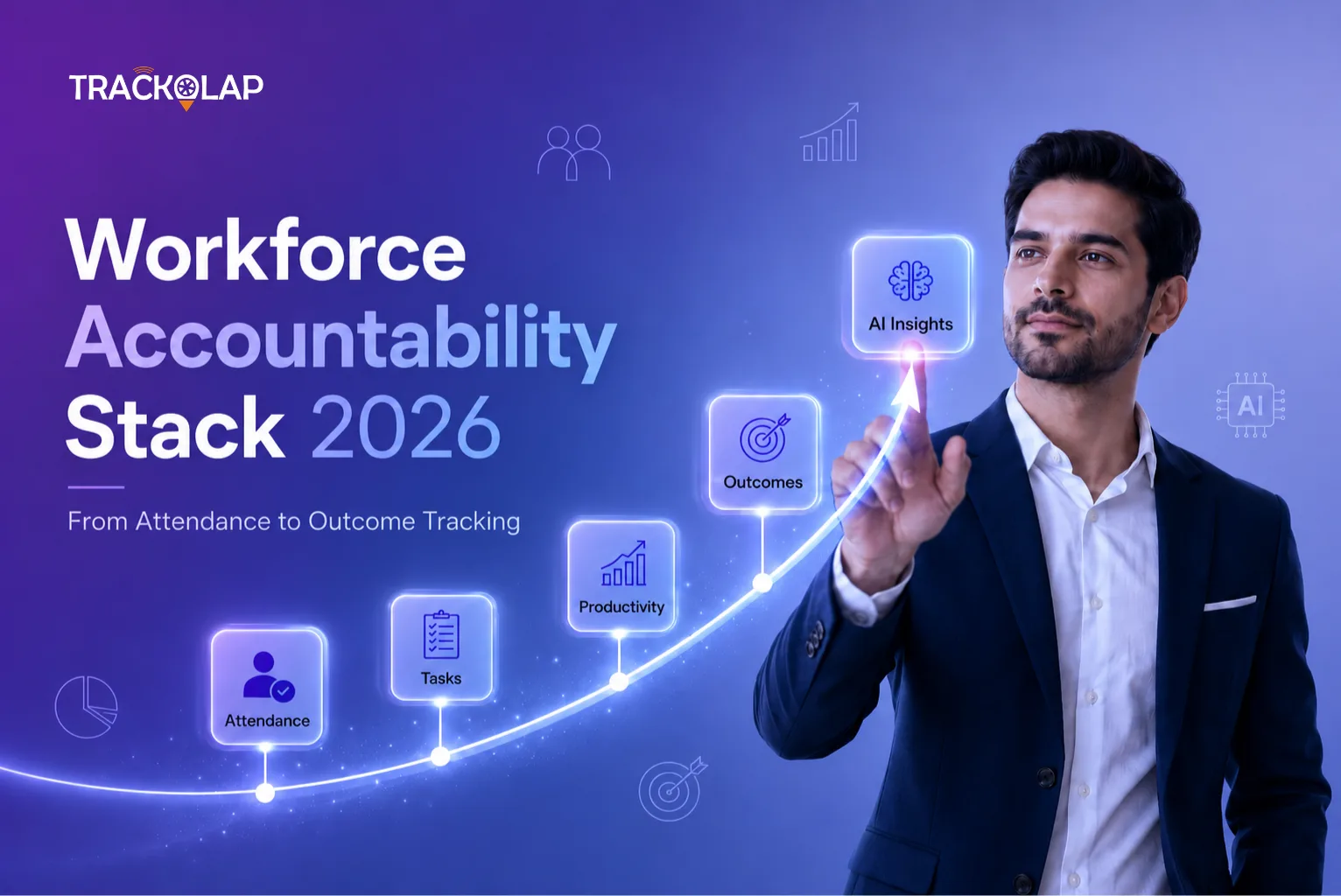
Very few organisations jump from registers to artificial intelligence. In practice, workforce intelligence in manufacturing matures in five stages — and each stage only works if the one below it is clean.
Stage 1 — Presence: Knowing Who Is On Site
The base layer: geofenced, timestamped, verified attendance across every plant, depot and project site. Success is measured by one thing — can you produce an accurate headcount by location and shift, without a phone call?
What matters here: GPS attendance software with geofencing, face or selfie verification, offline punch capture for low-network areas, shift and roster mapping, and automated leave rules.
Stage 2 — Effort: Knowing How Time Was Spent
Presence tells you someone was there. Timesheets tell you what the hours went into. Manufacturers often apply this only to projects, which is a mistake — maintenance, quality, commissioning crews and contract project labour all consume hours that are rarely attributed to anything.
Digital timesheets turn “we spent ₹1.4 crore on manpower last quarter” into “we spent ₹1.4 crore, of which 22% went into rework and unplanned maintenance.” The second sentence is the one that changes decisions.
Stage 3 — Movement: Knowing Where Work Happened
The moment a business has field engineers, service technicians, inter-plant logistics staff or project supervisors, the office-centric model breaks. A location tracking app for employees closes that gap — not to police people, but because the alternative is no data at all.
Movement data does three practical jobs. It validates attendance for staff who never enter a fixed premises. It automates travel-expense calculation from actual distance covered instead of self-declared kilometres. And it shows service managers which technician is nearest to a breakdown call.
TrackOlap combines real-time employee tracking with automated expense management, so a field visit generates its own distance log, its own claim and its own approval trail. Reimbursement stops being a monthly argument.
Stage 4 — Execution: Knowing What Got Done
Attendance without task data creates a strange blind spot: you know a shift was staffed and paid, but not what it produced. Task and workflow management closes that loop — assigned work, checklists, completion status, escalation paths and time-to-close.
For plant operations this becomes the connective tissue between maintenance schedules, quality checks, safety rounds and supervisor accountability. Over a quarter, it becomes a genuine picture of execution reliability by team, shift and site.
Stage 5 — Output: Knowing What Productivity Looks Like
The top of the pyramid is productivity intelligence — activity and idle-time analysis, task throughput, and comparative performance across shifts and locations.
Here is where remote employee monitoring software earns its place, provided it is deployed transparently. In a plant environment, the strongest use case is not surveillance of individuals but detection of systemic drag: a design team losing eleven hours a week to a slow approval workflow, a quality function whose reports take three days because the data lives in four places, a shift that underperforms because of a handover gap nobody documented.
And Then, AI
Once Stages 1 to 5 run cleanly for two or three quarters, artificial intelligence has something worth learning from. Not before.
This is the part of the AI story most vendors skip. AI does not fix bad workforce data — it amplifies it. A model trained on a register where the supervisor marked everyone present will confidently predict that nobody is ever absent.
With clean multi-site data, though, the applications are useful and refreshingly unglamorous:
- Absenteeism forecasting — predicting shift-level shortfalls before the shift starts, using history, seasonality, festival calendars and local patterns, so the staffing partner gets a call the previous evening rather than an angry one at 7 a.m.
- Overtime leakage detection — flagging the specific cost centres, supervisors or vendors where overtime consistently exceeds the pattern justified by output.
- Contractor billing reconciliation — automatically matching vendor invoices against verified geofenced attendance, which is where a large share of avoidable manpower cost sits in Indian manufacturing.
- Capacity planning for ramp-ups — using productivity data from an existing plant to model realistic manpower requirements for the next one, instead of estimating from a consultant’s benchmark.
None of this requires a data science team. It requires two or three years of trustworthy attendance, timesheet, task and expense data sitting in one system rather than eleven.
The Contract Workforce Problem, Stated Plainly
If close to 42% of the factory workforce is on contract, and PLI-driven expansion is adding capacity across several states at once, then the hardest workforce management question in Indian manufacturing today is this:
How do you apply one standard of attendance, hours, safety compliance and cost accountability to a workforce that does not report to you, changes composition weekly, and sits across sites you cannot personally visit?
Manual systems answer this badly for a structural reason. Each vendor keeps records in its own format. Each site in-charge applies a different level of rigour. Reconciliation happens after the money has been committed. By the time an anomaly surfaces in the monthly MIS, the workers involved have moved to another project.
A unified platform answers it differently. The vendor’s workers mark geofenced attendance on the same app as everyone else. Their hours flow into the same timesheet structure, their tasks into the same workflow, and their invoice is matched against verified data before approval rather than after payment. The standard is enforced by the system, not by supervision.
That is the specific reason TrackOlap fits manufacturing ramp-ups. Attendance, timesheets, expenses, tasks and productivity are not four vendors stitched together — they are one platform with one employee record, one location trail and one reporting spine. When you commission a new plant, you are not implementing software. You are adding a site.
A Realistic 90-Day Rollout
Ambitious transformation programmes fail on the shop floor more often than in the boardroom. A sequenced rollout works better.
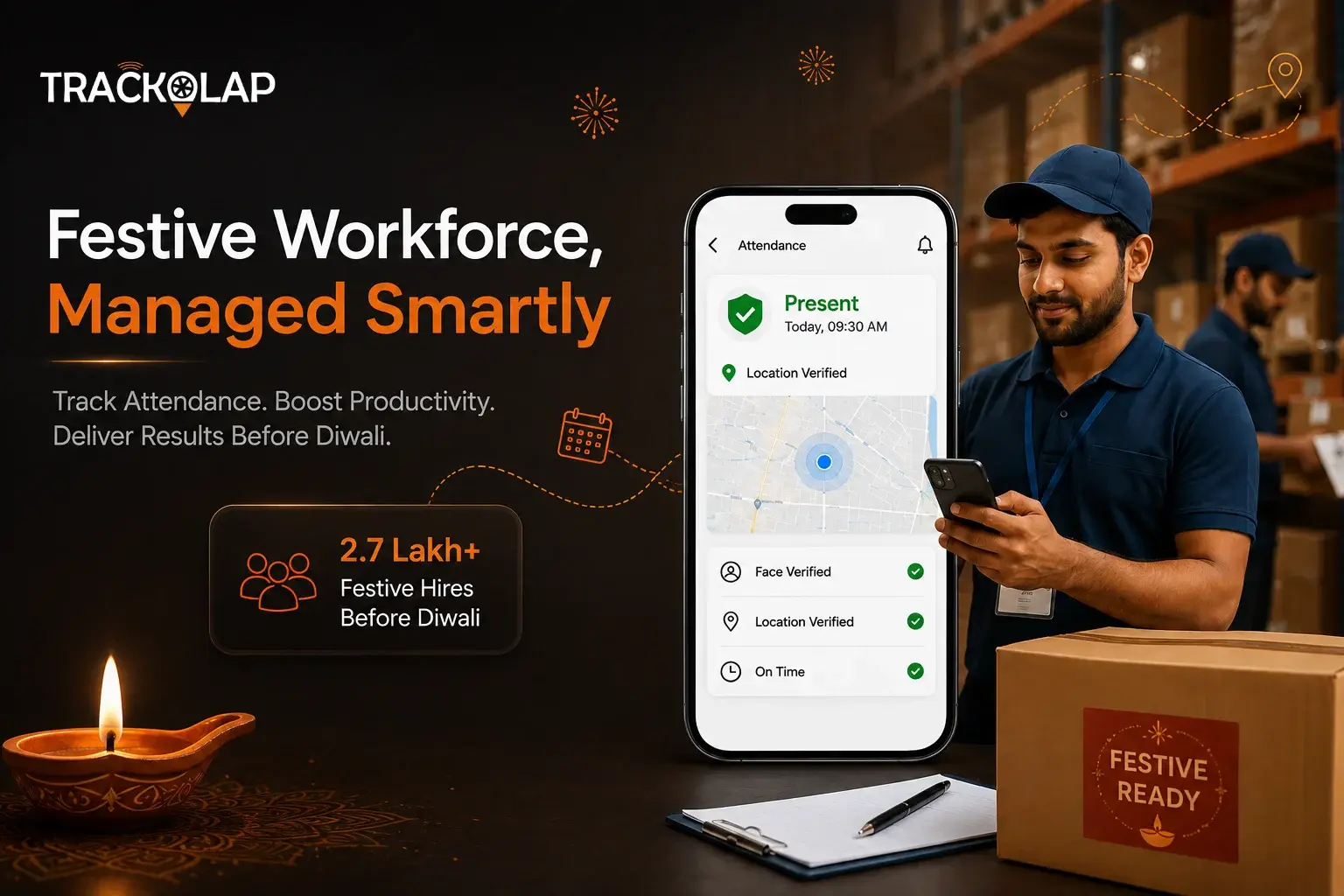
Days 1–30: Fix presence. Deploy geofenced attendance at every location, including contractor workforces. Do not change payroll rules yet — the only goal is a single accurate headcount view. Expect resistance in week one and near-full adoption by week three, provided supervisors are trained first and the reason is explained honestly.
Days 31–60: Add hours and money. Switch on timesheets for indirect and project staff, and route travel and site expenses through the app. This is where the first hard savings appear, usually in claims and overtime.
Days 61–90: Add execution and reporting. Move maintenance, quality and safety routines into task workflows. Stand up a weekly dashboard covering attendance percentage, overtime hours, expense per site and task closure rate — and review it in the same meeting where you review production.
After 90 days you have a working system. After three quarters you have a dataset. Only then is the AI conversation worth having.
Do This Ethically, or It Will Not Stick
Location tracking and productivity monitoring create real anxiety among employees, and that anxiety is not irrational. Organisations that get lasting value from these systems do four things consistently: they track during working hours only, they explain clearly what is captured and what is not, they document it in policy and in the appointment letter, and they use the data to fix processes far more often than to discipline individuals.
There is a legal dimension too. Employee location and monitoring data is personal data, and India’s Digital Personal Data Protection Act, 2023 and the DPDP Rules, 2025 set expectations around notice, purpose limitation and security that employers must meet. Build consent and disclosure into the rollout from day one — it is far cheaper than retrofitting it later.
The plants where this works treat workforce data as an operations instrument, the same way they treat a pressure gauge. Nobody feels surveilled by a pressure gauge.
Key Takeaways
- India’s manufacturing expansion under PLI has already supported over 14.39 lakh jobs, and roughly 42% of the factory workforce is now on contract — making multi-site, multi-vendor workforce visibility a core operational requirement, not an HR preference.
- The four labour codes, effective 21 November 2025, permit electronic records and mandate appointment letters and 2x overtime — which raises the cost of inaccurate manual attendance data.
- Workforce intelligence matures in five stages: presence, effort, movement, execution and output. AI is only useful once those layers are clean.
- The most valuable early AI use cases in manufacturing are unglamorous: absenteeism forecasting, overtime leakage, and contractor invoice reconciliation.
- TrackOlap unifies GPS attendance, timesheets, expense management, task workflows and productivity monitoring on a single platform, so new-capacity ramp-ups do not run on spreadsheets.
Frequently asked questions
What is GPS attendance software, and is it suitable for factories?
GPS attendance software records employee check-in and check-out along with verified device location, usually within a defined geofence around a plant, warehouse or project site. It suits manufacturing well because it works across multiple locations simultaneously, covers contract and field staff who never enter a fixed office, and produces an auditable record acceptable for compliance purposes.
Is employee location tracking legal in India?
Tracking employees during working hours for legitimate business purposes such as attendance verification, safety and expense validation is generally accepted practice, provided employees are informed and have consented, and the data is handled in line with India’s data protection framework. Employers should limit tracking to working hours, disclose it in employment documentation, and restrict access to authorised personnel.
How is a location tracking app for employees different from ordinary attendance software?
Conventional attendance software confirms a punch occurred. A location tracking app for employees adds the geographic dimension — where the punch occurred, the route covered, time spent at each site and distance travelled. For field service and project teams, that context is what makes the attendance record meaningful.
Do we need AI to improve workforce productivity?
Not initially. Most manufacturers recover significant value simply by digitising attendance, timesheets and expenses accurately. AI becomes useful once two to three years of clean, consolidated data exist.
How does remote employee monitoring software help a manufacturing company?
Its main value lies with indirect functions — engineering, design, quality, planning and support teams. It identifies process bottlenecks, uneven workload distribution and time lost to broken approval chains, which are usually invisible in production reporting.
Can one platform handle both plant staff and field teams?
Yes, and it is strongly preferable. Separate systems for plant attendance, field tracking and expense claims create reconciliation work and inconsistent reporting. TrackOlap covers attendance, real-time employee tracking, timesheets, expenses, tasks and productivity for both groups within a single employee record.
Build the System Before You Need It
The manufacturers who handle India’s next decade of capacity addition well will not be the ones with the newest machines. They will be the ones who can answer, on any given morning, exactly how many people are working, where they are, what they are working on and what it is costing — across every site, including the ones staffed by someone else’s employees.
That capability is built before the ramp-up, not during it.
Book a free TrackOlap demo and see how attendance, timesheets, expenses, tasks and productivity work together on one platform — or run it at a single site for 30 days before scaling it across the network.

 D-5, Logix Infotech Park, Sector 59, Noida - 201301, Uttar Pradesh (India)
 contactus@trackolap.com
 7011494501






 Demo
at free of cost
Demo
at free of cost