
















 Back to Blogs
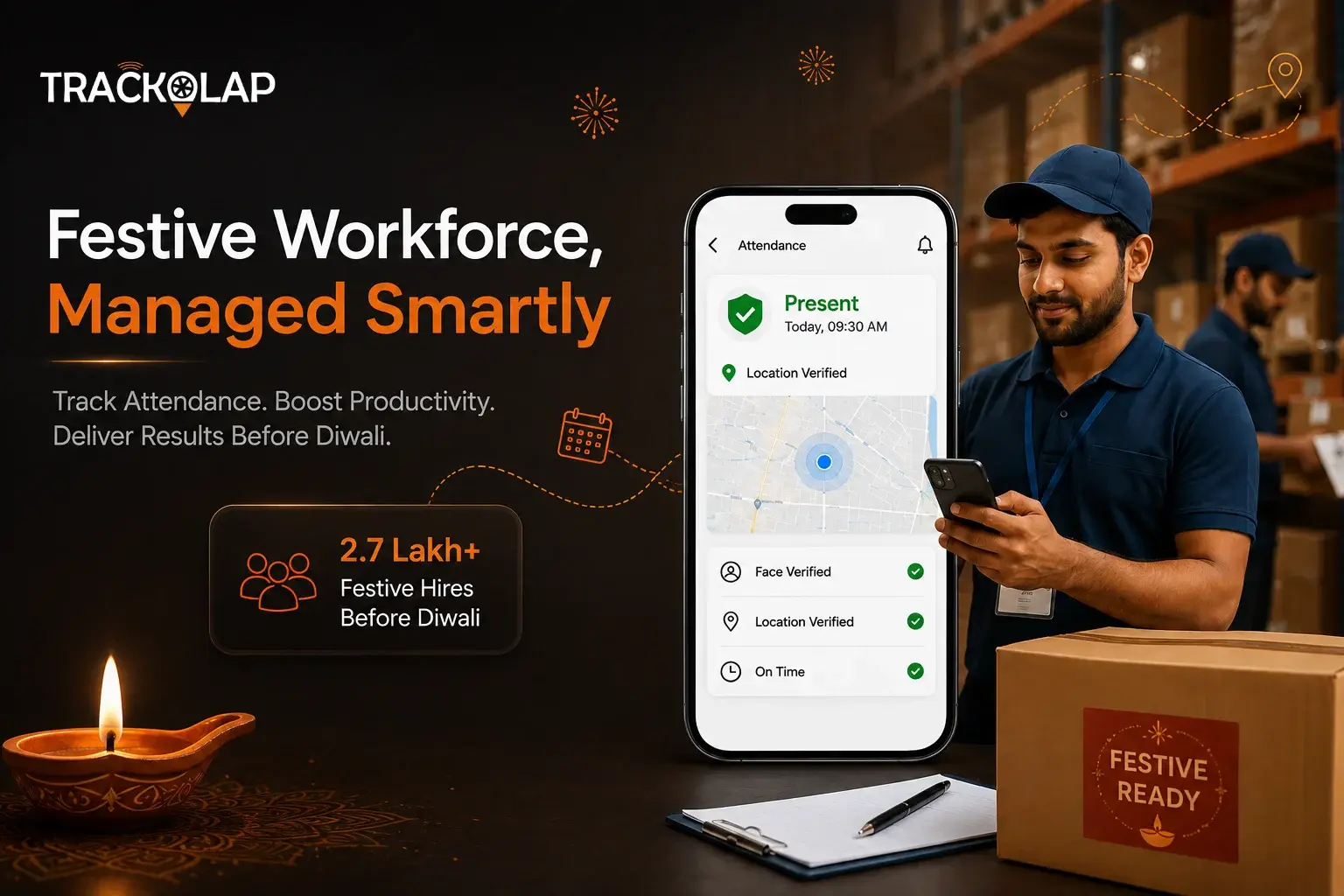
India’s retail economy compresses a disproportionate share of its annual revenue into the weeks between Onam, Navratri, Dussehra and Diwali. In 2026, Diwali falls on Sunday, 8 November, which means the operational build-up begins in late August and peaks through October. For thousands of employers, that build-up is not a marketing exercise. It is a hiring exercise.
According to Adecco India’s festive hiring outlook released on 17 August 2026, the season is expected to generate 2.5 to 2.7 lakh temporary and gig jobs, a 15–20% year-on-year increase over the 2.16 lakh roles created in the previous festive cycle. TeamLease Services’ Festive Season Workforce Report 2026, published on 12 August 2026 and based on an analysis of roughly 60,000 frontline workers, projects the same 15–20% growth band across organised retail, e-commerce, quick commerce, logistics, FMCG and consumer durables.
The scale is impressive. The management problem underneath it is rarely discussed.
A company that onboards 800 temporary associates across 40 dark stores, three warehouses and eleven delivery clusters in under six weeks has effectively created a second organisation — one with no institutional memory, no established supervisory relationships, and no reliable attendance history. Most employers run this second organisation on WhatsApp groups, shared spreadsheets and the word of a shift supervisor. That is not workforce management. That is flying blind.
Key Takeaways
- Up to 2.7 lakh festive hires are expected in India before Diwali 2026, a 15–20% jump year-on-year.
- Tier II and III cities now account for 45% of festive workforce demand, while Tier I markets report a 30% talent shortage.
- Seasonal wages are rising 12–15% in metros and 8–10% in Tier II and III markets, which raises the cost of every unverified attendance entry.
- India’s four Labour Codes took effect on 21 November 2025, making appointment letters, timely wage payment and auditable working-hour records statutory obligations rather than good practice.
- Manual attendance for a distributed temporary workforce produces three predictable leakages: buddy punching, roster-versus-reality drift, and unverifiable field activity.
- Face-verified, geo-fenced attendance combined with task-level productivity data is the only practical way to make festive payouts defensible at scale.
- For mobile roles, real-time employee tracking software with route mapping, travel history and customer visit management turns a self-reported field day into an auditable one.
1. What the 2026 Festive Hiring Data Actually Tells Employers
The headline number is the least useful part of the forecast. The distribution is where the operational risk lives.
| Indicator | 2026 Festive Season | Source |
|---|---|---|
| Temporary and gig jobs expected | 2.5–2.7 lakh | Adecco India, Aug 2026 |
| Year-on-year hiring growth | 15–20% | Adecco India / TeamLease |
| Share of demand from Tier II & III cities | 45% | Adecco India |
| Talent shortage reported in Tier I metros | 30% | Adecco India |
| Seasonal workers likely to convert to permanent roles | 25% | Adecco India |
| Median frontline monthly salary | ₹20,525 | TeamLease, Aug 2026 |
Wages are climbing alongside volume — 12–15% in metro markets and 8–10% in Tier II and III regions — with e-commerce, quick commerce and logistics roles now averaging ₹24,266 a month against ₹16,811 in FMCG.
Read that together and the conclusion is uncomfortable. Employers are hiring more people, in more locations, at higher wages, from a shallower talent pool, for a shorter period, with less supervisory bandwidth per head than at any other point in the year. Every rupee of that increased wage bill is being paid out against attendance data that, in most organisations, nobody can independently verify.
Why quick commerce makes this harder
The infrastructure has multiplied faster than the management systems around it. Equirus research cited in July 2026 found India’s quick commerce market growing 40% year-on-year, with the combined dark store network of Blinkit, Instamart and Zepto expanding nearly 48% to 5,026 stores by May 2026, up from 3,405 a year earlier. Quick commerce alone now represents roughly ₹1.08 trillion of an approximately ₹8 trillion digital commerce market.
Each new dark store is a physical node that must be staffed across two or three shifts, seven days a week, through the festive peak. Multiply that by a delivery fleet that reports to no fixed desk, and the supervisory span of control breaks down completely.

2. The Three Leakages Nobody Budgets For
Leakage 1: Buddy punching and proxy attendance
When attendance is marked on a shared register, a supervisor’s phone or an unsecured app, a worker who is absent can be marked present by a colleague. In a permanent workforce with stable teams, social accountability limits this. In a six-week temporary workforce of strangers, it does not.
At a median frontline salary of ₹20,525 per month, even a 4% proxy attendance rate across 800 seasonal hires translates to roughly ₹6.5 lakh in wages paid for work never performed — over a single festive cycle, in a single mid-sized operation.
Leakage 2: Roster-versus-reality drift
The roster says twelve associates are on the morning shift at a Jaipur dark store. Nine actually reported. The store manager reassigns work informally, the shift closes late, order SLAs slip, and the payroll file still shows twelve. Nobody lied. The system simply had no mechanism to compare the plan against the ground truth in real time.
Leakage 3: Unverifiable field activity
This is the most expensive of the three because it is invisible. A field sales executive, merchandiser or delivery associate marks attendance and then disappears into a working day that generates no auditable record. Did the merchandiser visit all fourteen assigned outlets or four? Was the beat plan followed? Were the reimbursement claims for travel that actually happened?
Without Field Force Management Software, none of those questions has an answer that anyone can check. The organisation is left relying on a self-reported day-end summary from a worker who joined three weeks ago.
Attendance answers whether someone worked. It does not answer what they did. For a temporary workforce hired specifically to produce output during a compressed window, the second question matters more than the first.
3. The Compliance Layer Changed in November 2025
Employers who treat festive attendance as an informal internal matter should note that the legal ground shifted underneath them.
The Government of India brought all four Labour Codes into effect on 21 November 2025, consolidating 29 central labour laws. As set out in the Press Information Bureau release and the statutes hosted on the India Code portal, the changes that bear directly on seasonal hiring include:
- Mandatory appointment letters for every worker, including fixed-term and seasonal staff, documenting terms of employment.
- Timely payment of wages as a statutory obligation.
- Working hours capped at 8–12 hours per day and 48 hours per week, with overtime payable at twice the ordinary wage rate and requiring the worker’s consent.
- Fixed-term employees entitled to benefits at par with permanent employees, with gratuity eligibility after one year instead of five.
- Gig and platform workers formally defined for the first time, with aggregators required to contribute 1–2% of annual turnover, capped at 5% of payments made to workers, toward social security administered through an Aadhaar-linked Universal Account Number.
The same release notes that social security coverage in India expanded from roughly 19% of the workforce in 2015 to over 64% by 2025 — an indication of the direction of travel, not a plateau.
The direction of policy is unambiguous. The e-Shram portal had registered over 31 crore unorganised workers and more than 5 lakh gig and platform workers by December 2025, and NITI Aayog projects the gig workforce rising from 77 lakh in 2020–21 to 2.35 crore by 2029–30. Seasonal and platform work is moving into the formal record — festive hiring is a rehearsal for a permanently more fluid labour market.
The practical implication: an employer who cannot produce accurate, timestamped, location-verified working-hour records for a temporary associate cannot demonstrate compliance with overtime, wage-payment or working-hour provisions. A spreadsheet maintained by a shift supervisor is not an audit trail.
4. What “Verified Attendance” Actually Requires
The phrase gets used loosely. In a distributed festive operation, verified attendance has five non-negotiable components.
4.1 Identity proof and location proof, together
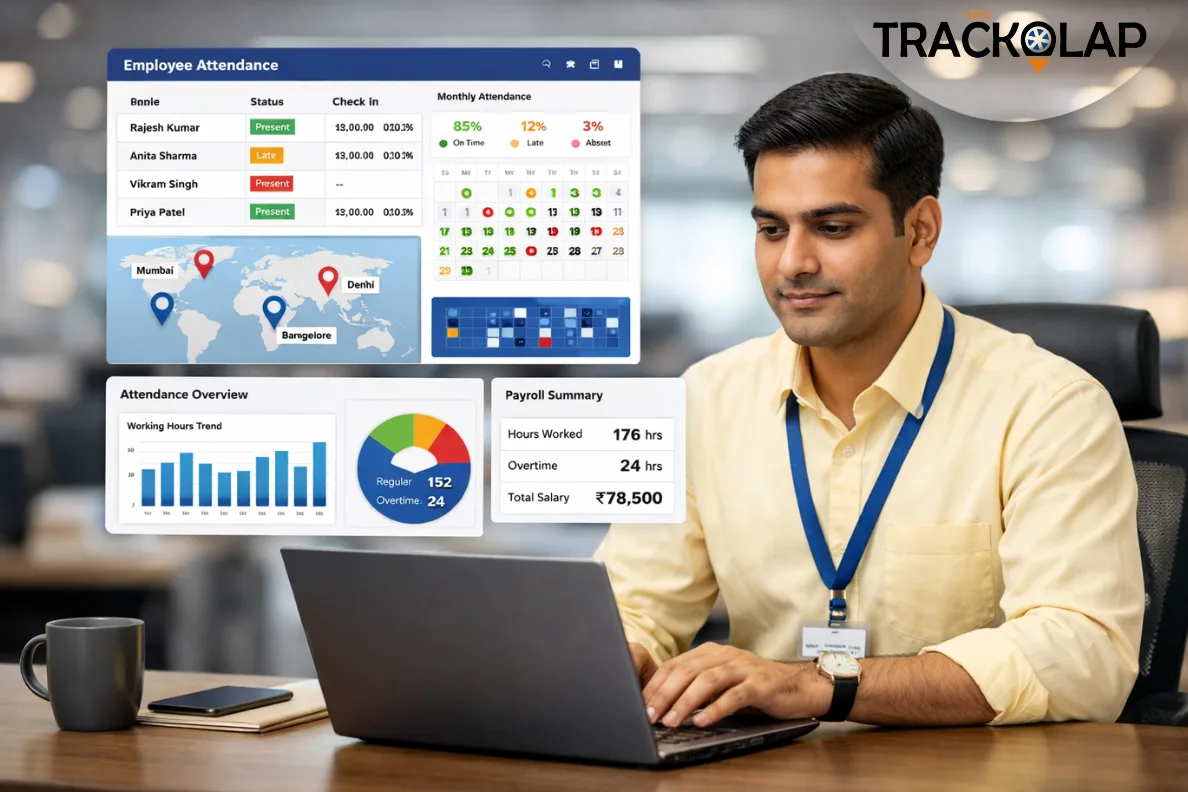
Face-verified, geo-fenced attendance answers both questions at once — who marked attendance and where they were standing when they did it.
The geo-fence draws a virtual boundary around each dark store, warehouse, retail outlet or client site, so a worker can only punch in when their device is physically inside it. Face verification then matches the live selfie captured at punch-in against the photo registered during onboarding, and the entry is stored with GPS coordinates and a timestamp.
Location alone can still be shared — one worker carrying a colleague’s phone into the fence. Face recognition alone can be marked from anywhere. Together, they close both loopholes: proxy attendance stops being a possibility rather than a suspicion.
4.2 Continuous location intelligence for mobile roles
For delivery associates, field sales executives and merchandisers, a check-in at 9:00 AM proves nothing about 2:00 PM. Real-time employee tracking software closes that gap by keeping the day visible while it is still happening, rather than reconstructing it afterwards from a claim form.
Employee route tracking software adds the second half of the picture. Route mapping and travel history produce a day-level record of the path a worker actually took: every stop, the arrival and departure time at each one, the halt duration, the idle gaps, and the total distance covered. A supervisor reviewing a Tuesday in October should be able to replay it, not infer it.
4.3 Proof of customer and outlet coverage
Location history tells you where someone went. Customer visit management software tells you what happened when they got there — whether the visit was logged against the assigned outlet, how long it lasted, what order or feedback came out of it, and which stops on the day’s beat plan were skipped entirely.
For festive merchandising and field sales teams, this is the difference between a route that looks busy and a route that produced coverage. Visit logs geo-stamped at the customer location also settle the recurring dispute over whether a scheduled call actually took place.
4.4 Task-level output, not just hours
Hours worked is an input measure. Task management and timesheet data convert it into an output measure: orders picked, outlets covered, deliveries completed, leads met, tickets closed. This is what allows an operations head to distinguish a productive shift from an attended one.
4.5 A payroll-ready audit trail
Attendance, leave, overtime and expense data must flow into payroll without manual re-entry. Every manual transcription step between the field and the payslip is a point at which errors and disputes enter the system — and during a six-week season, disputes cost more in supervisory time than they do in rupees.
5. How TrackOlap Closes the Festive Visibility Gap
TrackOlap was built for exactly this problem: workforces that do not sit at desks, in operations that scale up and down quickly.
Face-verified, geo-fenced attendance. TrackOlap’s Attendance & Leave Management module lets you define geo-fences around every dark store, warehouse, hub and retail location. Seasonal staff punch in from the TrackOlap mobile app on Android and iOS with a live selfie that is matched against their onboarding photo, and the entry is geo-tagged and timestamped. Attendance attempted outside the fence, or with a face that does not match, is blocked or flagged for supervisor approval. Identity and location are both proven at the moment of punch-in — no register, no supervisor confirmation, no proxy.
Real-time employee tracking software for field roles. For delivery, merchandising and field sales teams, TrackOlap’s Live Tracking works as full field employee tracking software — a regional manager can see, on one dashboard, which of 60 field executives are on-route, which are stationary and which have not started the day, while the shift is still recoverable rather than after it is lost.
Route mapping and travel history. TrackOlap’s employee route tracking software records the complete path of every field day: stops, arrival and departure times, halt duration, idle gaps and total distance. The travel history is replayable date-wise, so a disputed day in October can be examined in November without relying on anyone’s recollection.
Customer visit management software. Beat Planning pairs the route with the purpose. Assign the day’s outlets or client sites, and TrackOlap logs each visit with a geo-stamp at the customer location, the duration of the call, and the order, lead or feedback captured. Skipped stops surface as exceptions the same day, so festive coverage gaps are corrected inside the season rather than reviewed after it.
Time tracking and timesheets. TrackOlap’s Time Tracking and Project Management modules convert raw presence into structured working hours, mapped to shifts, tasks and cost centres. Overtime is calculated against actual recorded hours, which is precisely the record the Labour Codes now expect employers to maintain.
Employee productivity software. TrackOlap’s Employee Productivity and Employee Monitoring tools surface output per associate, per store and per shift — task completion rates, idle time, target achievement — so that the 25% of seasonal workers most likely to convert into permanent roles can be identified from data rather than from a supervisor’s impression.
Expense management software with odometer verification. Travel and conveyance claims from a large temporary field force are a well-known leakage point, because reimbursement is usually paid against a self-declared number of kilometres. TrackOlap’s Expense Management Software requires the worker to capture an odometer photograph at the start of the day and again at the end, timestamped and geo-tagged. The claimed distance is calculated from the difference between the two readings and cross-checked against the GPS travel history for the same day. Fuel and conveyance amounts are then computed on verified kilometres rather than an estimate, and routed through a digital approval workflow — so the reimbursement figure is evidence-backed before it ever reaches finance.
Payroll and onboarding at festive speed. TrackOlap’s Employee Onboarding and Payroll Management modules let you onboard hundreds of seasonal hires digitally — documents, appointment letters, policy acknowledgements — and push verified attendance directly into payroll, eliminating the spreadsheet handoff entirely.
Task and target management. Assign, monitor and close tasks at individual and team level, with targets set per store or per cluster, so festive throughput is measured continuously rather than reconstructed after Diwali.
The design principle across all of it is simple: every rupee paid out should be traceable to a verified hour, and every verified hour should be traceable to recorded output.

6. A Practical Festive Readiness Checklist
Use this as an operational sequence, not a wish list.
- Map every work location and draw geo-fences — dark stores, warehouses, hubs, retail counters and client sites — before onboarding begins.
- Digitise onboarding, including appointment letters, as required under the Labour Codes.
- Configure shifts, rosters and overtime rules in the system rather than in a spreadsheet.
- Enable face-verified, geo-fenced check-in for all site-based staff, with employee photos captured at onboarding.
- Activate real-time employee tracking, route mapping and beat plans for every mobile role, so travel history and customer visits are recorded from day one.
- Define daily task and target templates per role so productivity is measured from day one.
- Set exception alerts — late check-ins, geo-fence breaches, no-shows and idle time — routed to the responsible supervisor in real time.
- Run a weekly reconciliation of roster versus verified attendance versus output before payroll is processed.
- Retain the audit trail — location-stamped attendance, working hours, overtime and wage records — for statutory inspection.
- Score seasonal performers on data at the end of the season to build a rehire pool for 2027.
Frequently asked questions
How many festive hires will India make before Diwali 2026?
India is expected to add 2.5 to 2.7 lakh temporary and gig jobs in the 2026 festive season, a 15–20% increase over the 2.16 lakh roles created the previous year, according to Adecco India’s August 2026 outlook. TeamLease Services projects the same 15–20% growth band across organised retail, e-commerce, quick commerce, logistics, FMCG and consumer durables.
Why is attendance tracking harder for seasonal workers?
Seasonal workers are onboarded in large batches, deployed across many distributed locations, supervised by managers who do not know them, and released within weeks. There is no attendance history, no established accountability, and a supervisory span of control that is stretched far beyond normal. Manual registers and WhatsApp confirmations cannot verify presence under those conditions.
What is face-verified geo-fenced attendance and how does it prevent proxy attendance?
Face-verified geo-fenced attendance combines two checks in a single punch-in. A virtual boundary, the geo-fence, around the workplace means attendance can only be marked from inside the site, and face recognition matches the live selfie taken at punch-in against the employee’s registered photo. Because both identity and location are proven at the same moment, buddy punching and phone-sharing are structurally blocked rather than merely discouraged.
How can employers verify field travel and conveyance claims?
By replacing self-declared kilometres with evidence. TrackOlap requires an odometer photograph at the start and end of the working day, both timestamped and geo-tagged, and calculates the reimbursable distance from the difference between the two readings — cross-checked against the GPS route actually travelled. Fuel and conveyance amounts are then paid on verified distance rather than an estimate.
What does field employee tracking software do that attendance software does not?
Attendance software confirms that a worker started and ended a shift. Field employee tracking software covers the hours in between: where each executive is during the working day, the route they actually covered, and what they did at every stop. For seasonal field roles, that middle layer is where both the productivity and the cost leakage sit.
What is route mapping and travel history used for?
Route mapping plots the actual path a field employee covered during the day; travel history stores it so any past date can be replayed. Together they are used to verify beat plan adherence, measure time spent productively at customer locations versus in transit or idle, validate conveyance claims against real distance, and settle disputes about whether a visit took place.
Do the new Labour Codes apply to temporary and festive workers?
Yes. The four Labour Codes, effective 21 November 2025, require appointment letters for all workers, timely wage payment, working hours within statutory limits, overtime at twice the ordinary wage rate, and benefits for fixed-term employees at par with permanent staff. Gig and platform workers are formally defined, with aggregator contributions toward social security. Employers should refer to labour.gov.in and indiacode.nic.in for the authoritative text.
How does TrackOlap help manage a festive workforce?
TrackOlap provides face-verified geo-fenced attendance, real-time field employee tracking software with route mapping and travel history, customer visit management with beat planning, time tracking and timesheets, task and target management, employee productivity analytics, expense management software with odometer-based distance verification, and digital onboarding with payroll integration — delivered through a mobile app for workers and centralised dashboards for managers.
What is the cost of not tracking festive attendance properly?
Three compounding costs: wages paid for unworked hours, throughput lost to unnoticed shift shortfalls during the highest-revenue weeks of the year, and compliance exposure if working-hour and wage records cannot be produced on inspection. At a median frontline salary of ₹20,525 per month, small percentage leakages across several hundred hires become material very quickly.
The Bottom Line
The festive workforce is the most operationally leveraged group any Indian retail, logistics or quick commerce business will employ all year. It is also the group about which most employers know the least.
Between now and 8 November 2026, roughly 2.7 lakh people will join organisations that, in most cases, cannot confirm where those people are, whether they worked their rostered shift, or what they produced. The Labour Codes have raised the evidentiary bar. Wage inflation has raised the financial stakes. The dark store build-out has raised the number of blind spots.
Verified attendance and measured productivity are no longer a back-office nicety. They are the control system for the highest-revenue six weeks of the year.
Set your festive workforce up on TrackOlap before the peak begins — book a demo and get every hire, every hour and every rupee accounted for.




 D-5, Logix Infotech Park, Sector 59, Noida - 201301, Uttar Pradesh (India)
 contactus@trackolap.com
 7011494501






 Demo
at free of cost
Demo
at free of cost