
















 Back to Blogs

The Hidden Cost of a Fragmented Field Workforce
Ask most Indian companies with a field team — sales reps, service technicians, delivery staff, merchandisers, collection agents — where their workforce data lives, and you will rarely get a single answer. Attendance sits in one register or biometric device. Location updates arrive over phone calls or WhatsApp. Daily tasks are tracked in a supervisor’s notebook or a shared spreadsheet. Expenses are reconciled from paper bills at month-end. Leads and follow-ups float across a CRM, an Excel sheet, and a dozen personal phones.
Each of these systems may work in isolation. The problem is the gaps between them. Every gap is a place where data goes to die — where a missed visit becomes invisible, an inflated expense goes unquestioned, a hot lead cools without a follow-up, and a genuinely hardworking rep looks identical, on paper, to one who is coasting. When your field workforce data is scattered across five tools, you effectively have five blind spots, and no reliable way to answer the questions that actually matter:
- Who is productive?
- Which territory is underperforming and why?
- Where is money leaking?
- Which leads are we losing, and to what?
This is the core operational challenge for field-heavy Indian businesses in 2026. And the solution is not another point tool. It is a single source of truth — one connected system where attendance, GPS location, tasks, expenses, and leads roll up into a unified analytics layer that turns scattered activity into confident decisions. This is precisely what modern field workforce management software like TrackOlap is built to deliver.
What Is a “Single Source of Truth” for a Field Workforce?
A single source of truth (SSOT) for field operations means that every piece of workforce data — who is present, where they are, what they are doing, what they are spending, and what they are selling — is captured in one platform, reconciled automatically, and made available through a common analytics view.
Instead of a manager stitching together a biometric report, a spreadsheet of visits, a pile of expense bills, and a CRM export to understand yesterday’s performance, an SSOT presents all of it in one place, already connected. Attendance links to location. Location links to the task or customer visit. The visit links to the lead outcome and the expense incurred. Nothing is orphaned.
The value of this is not merely tidiness. It is decision quality. When data is unified, patterns become visible that were previously buried: the top rep whose “average” numbers hide the fact that they cover the toughest territory; the branch whose expenses are 30% higher for the same output; the product line where follow-up delays are quietly killing conversions. A field workforce running on a single source of truth is a workforce a manager can actually manage — with facts, not guesswork.
For Indian SMEs, MSMEs, and enterprises, TrackOlap consolidates exactly these streams — attendance automation, employee GPS tracking software, task management, expense management software, field service operations software, beat planning software, and sales CRM with lead management — into one workforce analytics platform.
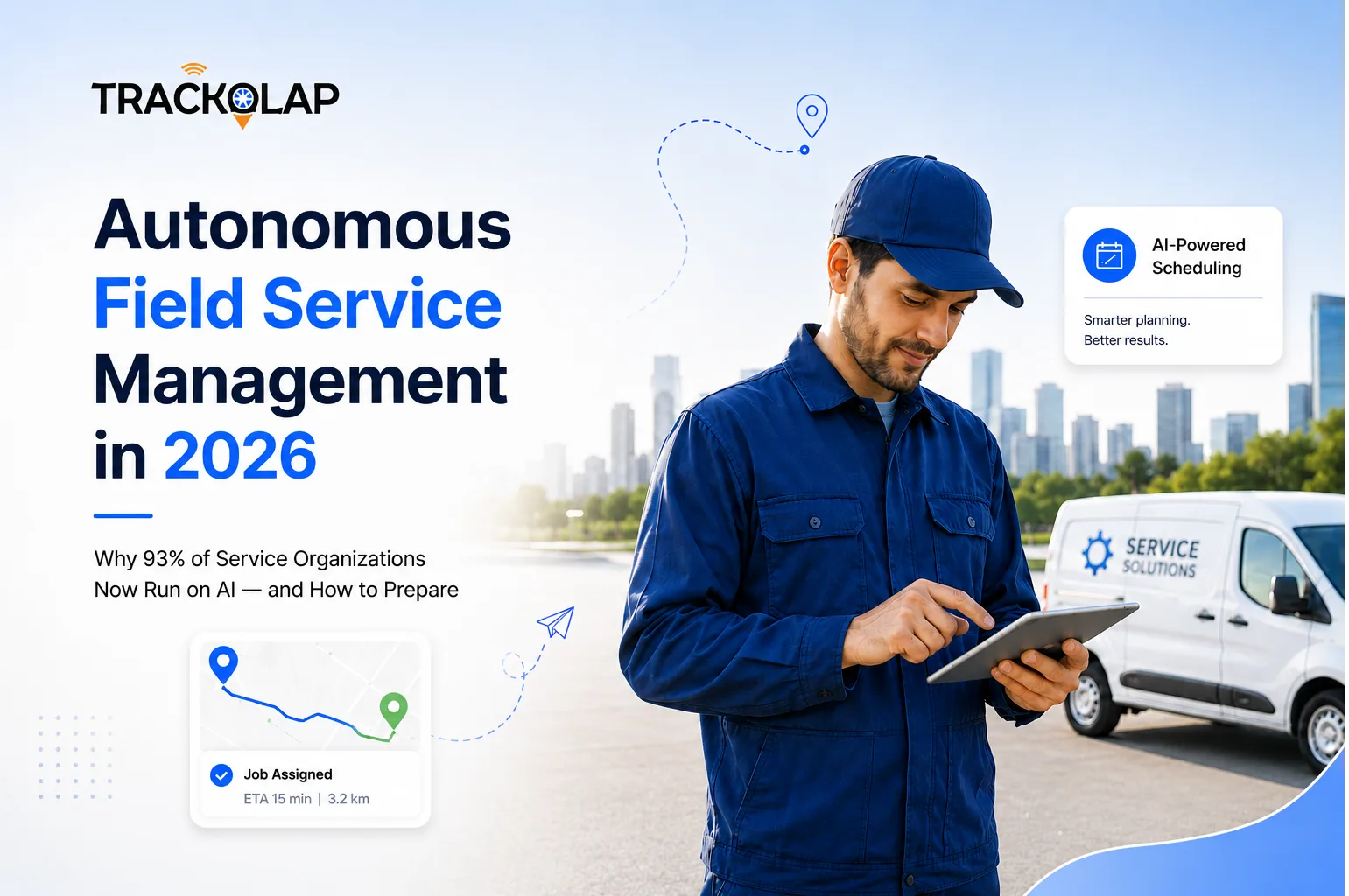
Layer 1 — Attendance: The Foundation of Field Truth
Everything starts with a reliable answer to a deceptively simple question: is this person working, and from where?
Manual attendance registers and standalone biometric machines fail the field workforce, because field staff rarely start their day at a fixed office. A merchandiser begins at the first store; a sales rep at the first client; a technician at the first service call. Traditional attendance simply cannot capture this reality, which is why so many field teams operate on trust and self-reported timings — and why disputes, buddy-punching, and “ghost” working hours are so common.
Attendance automation with geofencing, face verification, and GPS-based check-ins solves this at the root. Field staff mark attendance from their actual location on a mobile app, with the time and geo-coordinates captured automatically, while AI-powered face verification confirms that the right person is checking in — eliminating buddy-punching and proxy attendance at the source. Managers know not just that someone is working, but who checked in, when they started, and from where — the essential first layer of the single source of truth. TrackOlap’s face-verification attendance pairs biometric confirmation with geo-tagging, so every check-in is both identity-verified and location-verified.
This matters far beyond convenience. Accurate, timestamped attendance and hours are now central to statutory compliance. Under India’s four Labour Codes (labour.gov.in), exact, auditable records of who worked, when, and where are now the standard — and automated attendance is where compliance and visibility begin.
Layer 2 — GPS & Location: Turning Presence Into Coverage
Knowing someone is “present” is necessary but not sufficient. The next question is: are they actually where the work is?
Employee GPS tracking software and real-time location visibility transform attendance into coverage intelligence. For a field workforce, coverage is everything — the number of quality customer visits, the discipline of a beat plan, the time actually spent in front of clients versus in transit. Without location data, a manager is blind to whether a rep made eight productive stops or two, whether territories are being covered evenly, and whether reported visits genuinely happened.
With GPS-based field tracking, every visit is verified against real coordinates, routes are visible, and beat plans can be optimised for efficiency. This is where beat planning software proves its value: managers can design, assign, and monitor structured beat routes, ensure every retailer or client on the plan is actually visited, and rebalance coverage across territories using live location data rather than assumptions. For service-led businesses, the same location backbone powers field service operations software — dispatching technicians to the nearest open job, tracking on-site time, and confirming service completion at the verified customer location. In a year when input costs are elevated and demand is under pressure from a weaker monsoon outlook, this efficiency is not a luxury — it directly reduces wasted travel, fuel spend, and idle time while increasing productive customer contact.
Crucially, location data must be handled transparently and with consent. The purpose is not surveillance but fairness and accountability — protecting honest reps whose effort is now visible, and giving managers facts to coach rather than suspicions to act on. TrackOlap’s field tracking is designed around this consent-first, productivity-focused principle, adding the location layer to the single source of truth.

Layer 3 — Tasks: Connecting Activity to Outcomes
Attendance and location tell you someone is working somewhere. Task management tells you what they are actually doing, and whether it is getting done.
A field workforce runs on tasks: visit these ten retailers, close these five service tickets, collect these payments, onboard these new outlets, complete this survey. When tasks live in a supervisor’s head or a WhatsApp thread, there is no reliable record of what was assigned, what was completed, what slipped, and why.
Accountability evaporates, and managers spend their days chasing status updates instead of driving results.
Digital task management assigns work with clear ownership and deadlines, captures completion in real time (often with photo or geo-verification), and connects each task back to the employee, the location, and the customer. Now activity is no longer abstract — it is measurable. A manager can see completion rates by rep, by territory, and by task type, and can identify bottlenecks the moment they appear rather than at month-end.
This is the layer where a field workforce shifts from “busy” to “productive.” TrackOlap’s task management ties directly into attendance and location, so every completed task carries the full context of who did it, when, and where — deepening the single source of truth.
Layer 4 — Expenses: Closing the Leakage Gap
Few areas drain field-operation budgets as quietly as expenses. Travel, fuel, mileage, daily allowances, client entertainment — reconciled from paper bills weeks after the fact, these are notoriously hard to verify and easy to inflate. The result is a persistent, often unmeasured leakage that erodes margins precisely where they are thinnest.
Expense management software integrated into the same platform closes this gap. When expense claims are captured digitally and cross-checked against the very same attendance and GPS data already in the system, verification becomes near-automatic. A travel claim can be validated against the actual route travelled; a field-day allowance against verified attendance; and, critically, a mileage claim against an automated odometer reading. TrackOlap’s odometer reading feature captures start and end readings — supported by GPS distance — so reimbursements are based on actual kilometres travelled rather than self-reported estimates, ending one of the most common sources of expense inflation. Anomalies surface immediately instead of hiding in a stack of receipts.
The platform also closes the loop on money moving in and out of the field. For sales and collection teams, UPI payment integration lets field staff collect customer payments digitally on the spot — instantly recorded against the right lead, invoice, and location — while reimbursements to employees can be processed faster and cleaner. Cash handling, delays, and reconciliation errors shrink, and every rupee is traceable within the single source of truth.
The financial impact is direct — reduced leakage, faster reimbursement cycles, real-time collections, and cleaner books. And it demonstrates the compounding power of a single source of truth: the same data captured for attendance and coverage now does double duty for expense control, with no additional effort from the field team.
TrackOlap’s expense management software draws on this shared data — odometer readings, GPS routes, verified attendance, and UPI collections alike — turning a traditional cost centre into a controlled, transparent process.
Layer 5 — Leads & Sales CRM: Where Field Activity Becomes Revenue
The ultimate purpose of most field work is revenue. So the final data stream that must join the single source of truth is leads and the sales pipeline.
For Indian field-sales teams, leads arrive from everywhere — IndiaMART, JustDial, website forms, WhatsApp enquiries, referrals, and walk-ins. When these live in a separate CRM (or, worse, on individual phones and spreadsheets), the connection between field activity and sales outcome is broken. You can see that a rep visited a client and that a deal did or did not close, but you cannot easily see the relationship between coverage discipline, follow-up speed, and conversion — which is exactly the relationship that drives growth.
An integrated sales CRM and lead management system closes the loop. Leads are auto-captured from multiple sources, assigned automatically, and tracked from first contact to closure — with follow-up reminders that prevent hot leads from cooling. Because the CRM sits in the same platform as attendance, location, and tasks, managers can finally see the full chain: this territory has strong coverage → follow-ups happen within hours → conversion is higher. The field team’s daily effort and the company’s revenue become measurably connected.
With TrackOlap, lead management, field activity, and workforce data share one system — so sales performance is no longer a mystery downstream of everything else, but a visible outcome of measurable inputs.


The Analytics Layer: Where the Five Streams Become Decisions
Individually, attendance, GPS, tasks, expenses, and leads are useful. Together, in one analytics layer, they become decisive.
This is the payoff of the single source of truth. When all five streams feed a unified workforce analytics dashboard, managers stop reacting to month-end reports and start making proactive, evidence-based decisions in real time. They can rank reps by genuine productivity (not just sales, but visits, conversion, and cost-efficiency together). They can compare territories on a like-for-like basis. They can spot the branch where high expenses and low output signal a problem, and the star performer who deserves recognition and a bigger role. They can forecast more accurately because the inputs behind the outputs are finally visible.
Field workforce management software earns its place not by digitising one process, but by unifying all of them into intelligence. That is the difference between software that stores data and a platform that drives decisions. TrackOlap is built as the latter — an integrated analytics layer over the entire field operation, purpose-built for Indian businesses that need to convert field activity into measurable, compliant, profitable performance.
The Bottom Line: Stop Managing Blind
A field workforce spread across five disconnected tools is a field workforce you cannot truly see — and what you cannot see, you cannot improve. In 2026, with margins under pressure, compliance expectations rising under the Labour Codes and the e-Shram-anchored social security regime, and competition intensifying across sales, distribution, and service, operating blind is a cost few Indian businesses can afford.
The path forward is a single source of truth: unify attendance, GPS, tasks, expenses, and leads into one analytics layer, and turn the daily activity of your field team into clear, confident decisions. Coverage becomes measurable, expenses become controllable, leads become traceable, and productivity becomes visible — for every employee, every territory, every day.
TrackOlap brings all five together in one platform — giving Indian businesses the unified visibility, automation, and analytics to manage their field workforce with facts instead of guesswork.
Ready to unify your field workforce data? Bring attendance, GPS, tasks, expenses, and leads into a single source of truth with TrackOlap. Request a walkthrough at trackolap.com.
Frequently asked questions
What is field workforce management software?
Field workforce management software is a platform that helps businesses manage employees who work outside a fixed office — such as sales reps, technicians, and delivery staff. It typically combines attendance automation, GPS location tracking, task management, expense management, and sales CRM into a single system with analytics, giving managers real-time visibility into field operations.
What does “single source of truth” mean for a field team?
A single source of truth means all field workforce data — attendance, location, tasks, expenses, and leads — is captured and reconciled in one platform rather than scattered across separate tools. This eliminates blind spots and lets managers make decisions from complete, consistent, real-time information.
How does GPS-based attendance help Indian businesses?
GPS-based attendance lets field staff mark attendance from their actual location via a mobile app, with time and coordinates captured automatically. It verifies real presence and coverage, reduces disputes and buddy-punching, and produces the timestamped, auditable records increasingly expected under India’s Labour Codes and the e-Shram social security framework.
How does unified workforce data reduce costs?
When attendance and GPS data are connected to expense claims, travel, mileage, and allowances can be verified automatically instead of trusted on paper — cutting leakage. Unified task and lead data also reduces wasted visits and lost follow-ups, so the same team delivers more output at lower cost.
What is TrackOlap?
TrackOlap is a field force automation and workforce productivity platform for Indian businesses. It unifies employee GPS tracking software, face-verification attendance automation, task management, beat planning software, field service operations software, expense management software (with odometer reading and UPI payment collection), and sales CRM with lead management into one analytics platform — creating a single source of truth for the field workforce.

 D-5, Logix Infotech Park, Sector 59, Noida - 201301, Uttar Pradesh (India)
 contactus@trackolap.com
 7011494501






 Demo
at free of cost
Demo
at free of cost