








 Back to Blogs
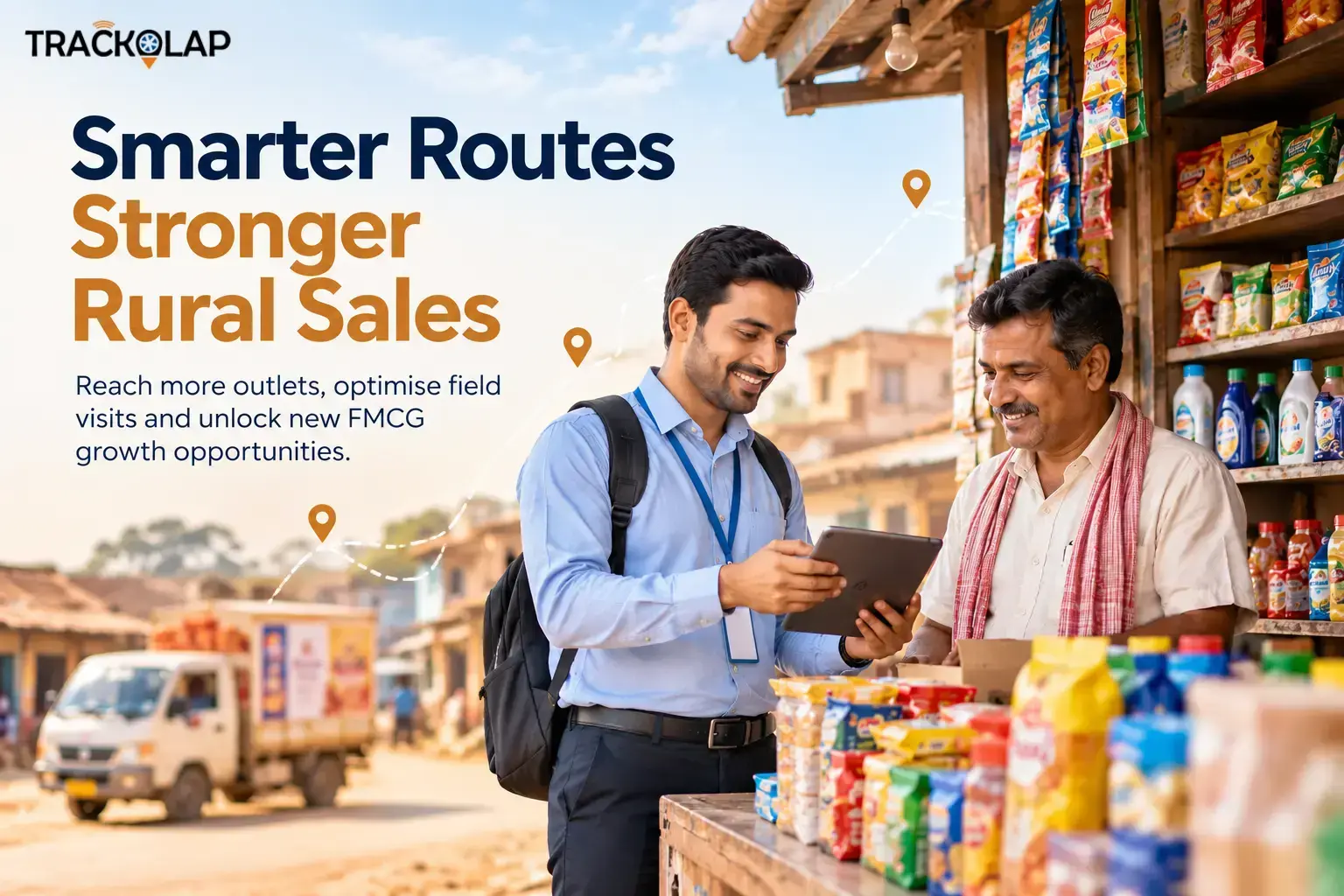
Yes, brands should rethink their sales beat plans in 2026. Rural FMCG demand in India has changed in size, in shape and in speed, and beat plans designed for yesterday's rural market are struggling to keep pace.
For years, rural India was treated as a volume market served by a fixed weekly route, a distributor salesman and a notebook of outlet names. That model assumed slow-moving demand, a limited assortment and low-value, cash-only orders. In 2026, each of those assumptions is weakening.
Rural households are spending more on packaged foods, personal care and premium variants. Better roads, near-universal mobile data and UPI payments have connected villages to the wider economy. Government programmes in housing, water, roads and digital connectivity have raised the baseline of rural consumption. At the same time, quick commerce and modern trade are reshaping urban channels, pushing FMCG brands to look to Bharat for their next phase of growth.
The question for sales leaders is no longer whether rural demand matters. It is whether their rural distribution strategy, sales beat plans and field force management systems can keep up with it. This article explains what has changed, why static beat plans are leaking revenue, and how a data-driven approach with TrackOlap's smart field force automation software helps FMCG brands plan smarter beats, improve outlet coverage and grow rural sales profitably.
What the Data Says About Rural Consumption in India
Official data shows rural spending rising faster than urban spending, and the gap between the two narrowing. The figures below come from government and government-authorised sources.
| Indicator | What it shows | Source |
|---|---|---|
| Rural average monthly per capita consumption expenditure (MPCE) of about ₹4,122 in 2023-24, up from about ₹3,773 in 2022-23 | Rural household spending is rising year on year | MoSPI: Household Consumption Expenditure Survey |
| Urban-rural MPCE gap narrowed to about 70% in 2023-24, from about 84% in 2011-12 | Rural consumption is catching up with urban India | MoSPI |
| Roughly 69% of India's population lives in rural areas | The largest pool of FMCG consumers is outside cities | Census of India 2011 |
| Lakhs of kilometres of all-weather rural roads built under PMGSY | Villages are easier and faster to reach by van and two-wheeler | PMGSY: Ministry of Rural Development |
| Over 15 crore rural households with tap water connections | Higher demand for detergents, personal care and hygiene products | Jal Jeevan Mission |
| Gram panchayats connected through optical fibre under BharatNet | Mobile internet and app-based ordering now reach the village | Bharat Broadband Network Ltd. |
| UPI processing well over 15 billion transactions a month | Digital payments are normal for kirana stores, including rural ones | NPCI: UPI statistics |
| GST rate rationalisation effective 22 September 2025 moved many daily-use items to lower slabs | Lower prices on everyday FMCG support rural volume growth | CBIC: GST and PIB |
Together, these signals point to one conclusion: rural FMCG demand in 2026 is broader, more digital and more aspirational than the beat plans designed to serve it.
Five shifts in rural FMCG demand
- Premiumisation: Rural shoppers are trading up to larger packs, branded staples and value-added variants, not only the lowest price point.
- Wider assortment: Categories once seen as urban, such as packaged snacks, health drinks, skincare and home care, now sell steadily in villages.
- Digital ordering and payments: Retailers place orders over WhatsApp, B2B apps and platforms connected to the ONDC network, and pay through UPI.
- Faster replenishment: Better roads and smaller, more frequent orders mean outlets expect quicker restocking.
- Uneven, hyperlocal demand: Harvest cycles, government transfers, festivals and local haats create sharp spikes that differ from village to village.
Why Traditional Sales Beat Plans Are Failing in Rural Markets
A traditional beat plan assigns each salesperson a fixed set of outlets on fixed days, usually drawn up once a year in a spreadsheet. It worked when demand was predictable. In today's rural market, it creates five costly gaps.
1. Fixed frequency ignores real demand
A high-potential outlet in a growing village may be visited once a week, while a low-turnover shop on the highway is visited twice. Static frequency leads to stock-outs at the stores that sell most and wasted visits at the stores that sell least.
2. Outlet coverage is incomplete
New kirana stores, chemists, cosmetic shops and agri-input dealers open every month in growing villages. Without geo-tagged outlet mapping, these outlets never enter the beat, and competitors reach them first.
3. Travel time eats into selling time
Rural beats cover long distances. When routes are not optimised, a sales representative may spend more time on the road than inside stores, which pushes up fuel claims and lowers calls per day.
4. No visibility of what happens in the field
Managers often rely on phone calls and end-of-day reports to know whether a beat was completed. Without field employee monitoring software, fake visits, skipped outlets and inflated expense claims go unnoticed, and secondary sales data arrives too late to act on.
5. Beat plans do not learn
A spreadsheet beat plan does not adjust when an outlet's orders rise after harvest or fall after a competitor's scheme. Without order history linked to each visit, there is no feedback loop between what the field force does and what the market buys.
The result is a familiar pattern for many FMCG brands: strong rural demand on paper, but flat numeric distribution, low lines per call and rising cost to serve.
How FMCG Brands Should Rethink Rural Beat Planning in 2026
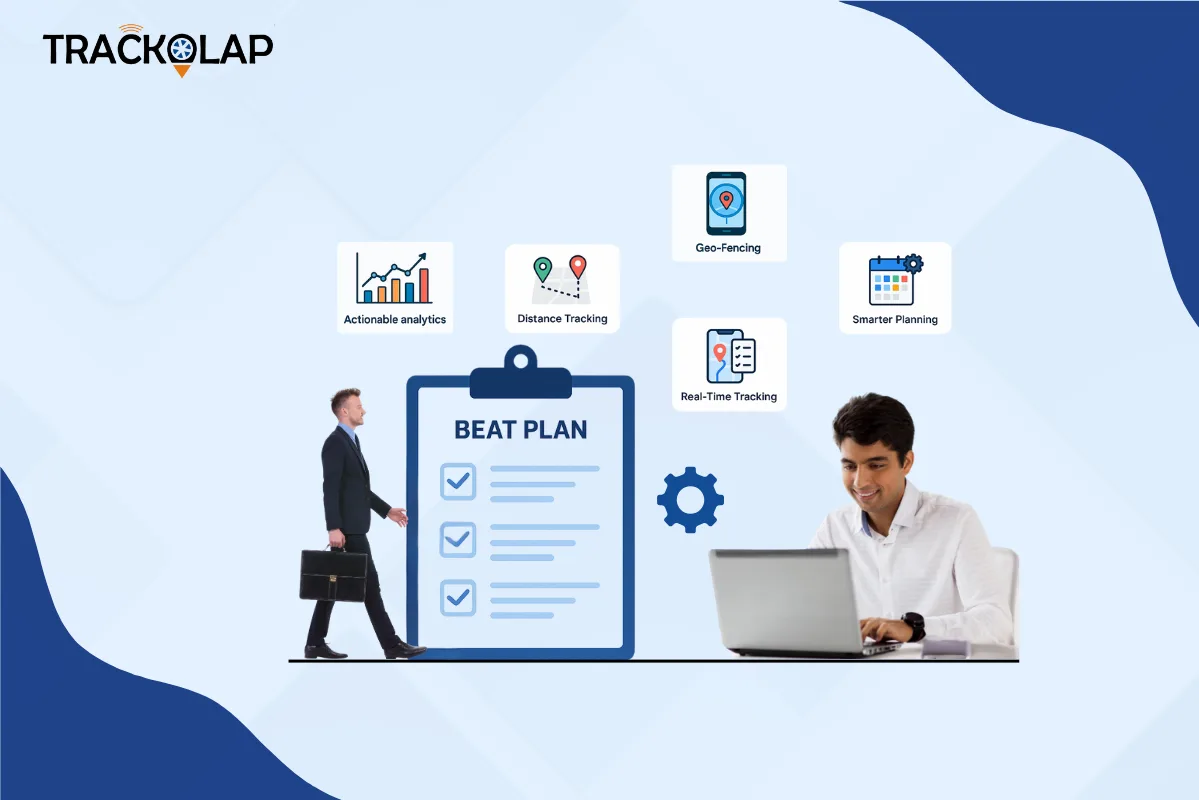
Modern rural beat planning is dynamic: it is built on outlet data, reviewed every month and adjusted to demand. The following framework helps sales and distribution teams move from static routes to data-driven beats.
- Map every outlet with geo-tags. Build a complete outlet universe for each territory, including kiranas, chemists, paan shops, agri-input stores and wholesalers. Capture GPS location, outlet type, size and owner contact.
- Classify outlets by potential. Segment outlets into A, B and C categories using order value, growth rate and category mix. A-class outlets get higher visit frequency; C-class outlets can be served through tele-ordering or the distributor.
- Set visit frequency by demand, not habit. Link frequency to sell-out velocity and seasonality. Increase visits before harvest, festivals and wedding seasons, and reduce them in lean months.
- Optimise routes and clusters. Group nearby villages into logical clusters and sequence outlets to reduce kilometres travelled. Plan haat-day visits where weekly markets drive footfall.
- Use a hub-and-spoke model. Combine direct coverage of large villages with sub-stockists or rural distributors who serve smaller hamlets, and track both through one system.
- Give the field force a field sales management app. Sales representatives should capture orders, collections, stock checks and merchandising photos at the outlet, even with weak connectivity.
- Track execution in real time. Use real-time employee GPS tracking and geo-fencing to verify attendance, check-ins and visit duration, so managers know which outlets were actually covered.
- Review and refine every month. Compare planned versus actual visits, productive calls, lines per call and order value per beat, then rebalance territories accordingly.
Key metrics for rural beat performance
| Metric | Why it matters |
|---|---|
| Beat adherence (%) | Shows whether planned outlets were actually visited |
| Productive calls (%) | Share of visits that resulted in an order |
| Lines per call | Measures assortment depth and cross-selling |
| Numeric distribution | Share of outlets in a territory stocking your brand |
| Average order value | Indicates outlet potential and trade-up |
| Cost to serve per outlet | Combines travel, time and expenses against revenue |
| Distance travelled per productive call | Shows route efficiency in large rural territories |
How TrackOlap Helps FMCG Brands Win Rural Markets
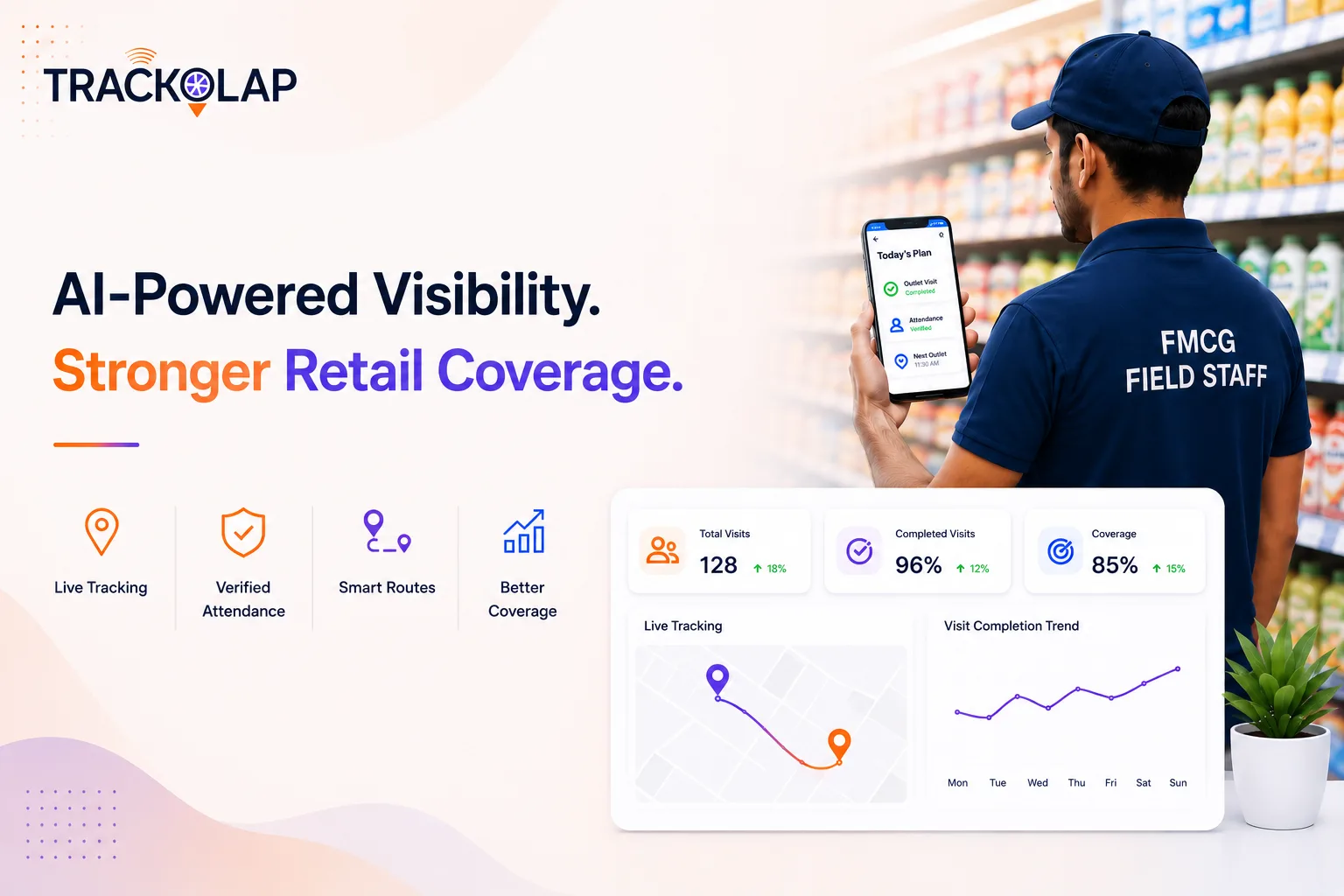
TrackOlap is a smart field force automation software and sales tracking platform that turns beat planning from a yearly spreadsheet exercise into a live, data-driven process. It gives sales leaders, area managers and field representatives one system to plan, execute and measure rural beats.
Smart beat planning and route optimisation
TrackOlap's beat planning software lets managers create and assign beats by territory, outlet class and visit frequency. Routes can be sequenced to cut travel distance, and beats can be revised in minutes when demand shifts after harvest or a festival.
Geo-tagged outlet mapping
Field teams can add new outlets with GPS coordinates, photos and outlet details directly from the mobile app. This builds an accurate outlet universe and helps brands expand numeric distribution in villages that were previously off the map.
Real-time employee GPS tracking and geo-fenced attendance
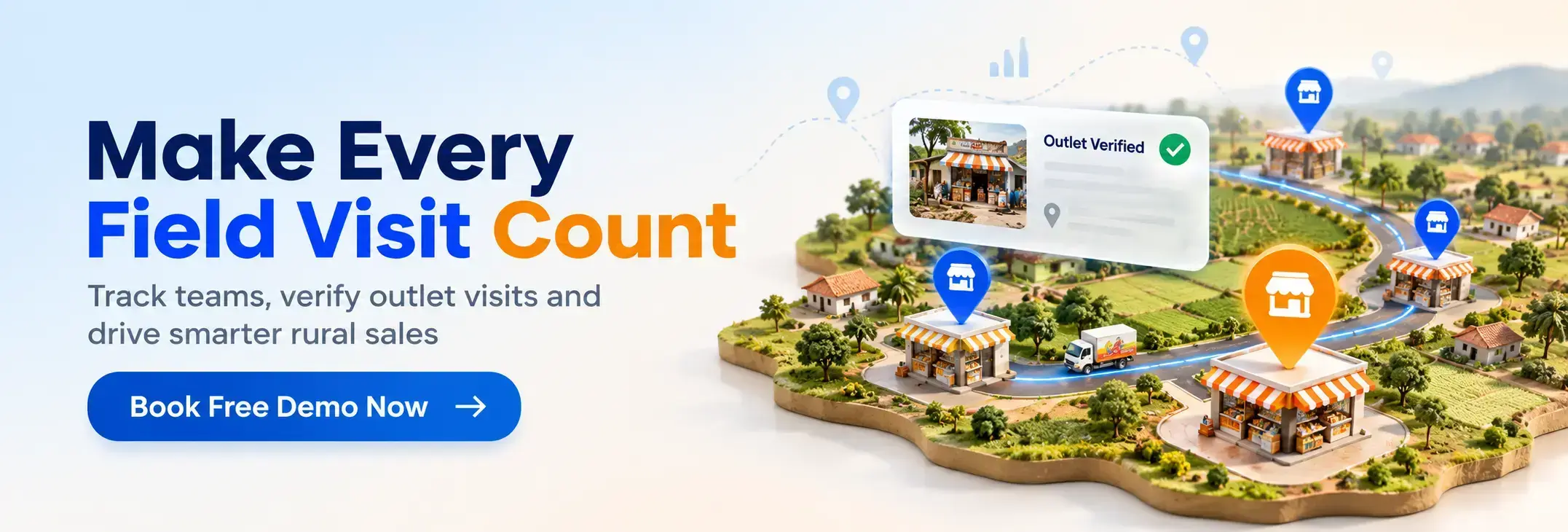
As field employee monitoring software, TrackOlap lets managers see live location, check-in and check-out times and time spent at each outlet. Geo-fenced attendance and visit verification reduce fake visits and give an accurate view of beat adherence.
Sales visit tracking, order booking and secondary sales
TrackOlap's sales visit tracking software logs every outlet visit with time, location and outcome. Representatives can capture orders, schemes and collections at the outlet through the TrackOlap field sales management app. Orders flow to distributors without delay, giving the brand near real-time visibility of secondary sales by village, beat and SKU.
Expense and travel management
Distance travelled is calculated from GPS data, so travel allowance and fuel claims are linked to actual movement. This cuts expense leakage, which matters most in large rural territories.
Analytics and dashboards
TrackOlap dashboards show planned versus actual visits, productive calls, lines per call, order value and representative performance. Sales heads can compare beats, spot under-served clusters and reallocate effort where rural demand is growing fastest.
Built for rural conditions
Rural beats often pass through low-network areas. A mobile-first field app that supports offline data capture and syncs when connectivity returns keeps order and visit data complete, even in remote villages.
Before and after TrackOlap
| Area | Traditional beat plan | With TrackOlap |
|---|---|---|
| Beat design | Fixed yearly routes in spreadsheets | Dynamic beats by outlet class and demand |
| Outlet coverage | Partial, based on memory | Geo-tagged outlet universe |
| Field visibility | Phone calls and manual reports | Live GPS tracking and verified check-ins |
| Order capture | Paper order books | Digital order booking at the outlet |
| Expenses | Self-declared claims | GPS-based distance and claims |
| Decision-making | Monthly, after the fact | Daily dashboards and analytics |
Frequently asked questions
Why is rural FMCG demand growing in India in 2026?
Rural FMCG demand is growing because rural household spending is rising, infrastructure has improved and digital payments are widespread. MoSPI's Household Consumption Expenditure Survey shows the urban-rural spending gap narrowing, while roads under PMGSY and connectivity under BharatNet have made villages easier to reach and serve.
What is a sales beat plan in FMCG?
A sales beat plan is a schedule that tells each field sales representative which outlets to visit, on which days and in what order. It defines the route, visit frequency and outlet coverage for a territory.
How often should FMCG beat plans be reviewed for rural markets?
Rural beat plans should be reviewed at least monthly, and before major seasons such as harvest, festivals and weddings. Frequent reviews keep visit frequency aligned with real demand.
What is the best way to plan sales beats for rural markets?
The best approach is to geo-tag every outlet, classify outlets by potential, set visit frequency by demand, optimise routes by village cluster and track execution in real time with a field force automation tool such as TrackOlap.
How does TrackOlap improve rural beat planning?
TrackOlap provides beat planning, route optimisation, GPS tracking, geo-fenced attendance, digital order booking, expense management and sales analytics in one platform. This helps FMCG brands increase outlet coverage, reduce travel cost and grow rural secondary sales.
Which metrics show whether a rural beat plan is working?
The key metrics are beat adherence, productive calls, lines per call, numeric distribution, average order value and cost to serve per outlet.
What is field employee monitoring software?
Field employee monitoring software tracks the attendance, location, outlet visits and daily activity of employees who work outside the office. For FMCG brands, it confirms that planned beats are completed and helps managers coach their teams with accurate data.
What features should beat planning software have for rural FMCG sales?
Good beat planning software should offer geo-tagged outlet mapping, route optimisation, real-time employee GPS tracking, sales visit tracking, digital order booking, offline data capture and performance dashboards, ideally within a single field sales management app.
Conclusion: The Brands That Re-plan Their Beats Will Win Bharat
Rural FMCG demand in 2026 is larger, more digital and more varied than at any point in the past decade. Government data on consumption, roads, water and connectivity all point in the same direction: Bharat is ready to buy more, and to buy better.
Yet demand alone does not create sales. Brands that continue to run rural markets on fixed routes, paper order books and end-of-day phone calls will see growth go to competitors who reach the right outlet, at the right time, with the right assortment. Rethinking sales beat plans is therefore not an operational detail; it is a growth strategy.
With TrackOlap, FMCG brands can map every rural outlet, plan dynamic beats, track field execution in real time and measure what each visit delivers. The outcome is wider rural distribution, higher productivity per salesperson and a lower cost to serve.
Ready to rethink your rural beat plans? Book a free TrackOlap demo and see how smart field force automation software can help your team turn rural demand into measurable sales growth.

 D-5, Logix Infotech Park, Sector 59, Noida - 201301, Uttar Pradesh (India)
 contactus@trackolap.com
 7011494501





 Demo
at free of cost