















 Back to Blogs
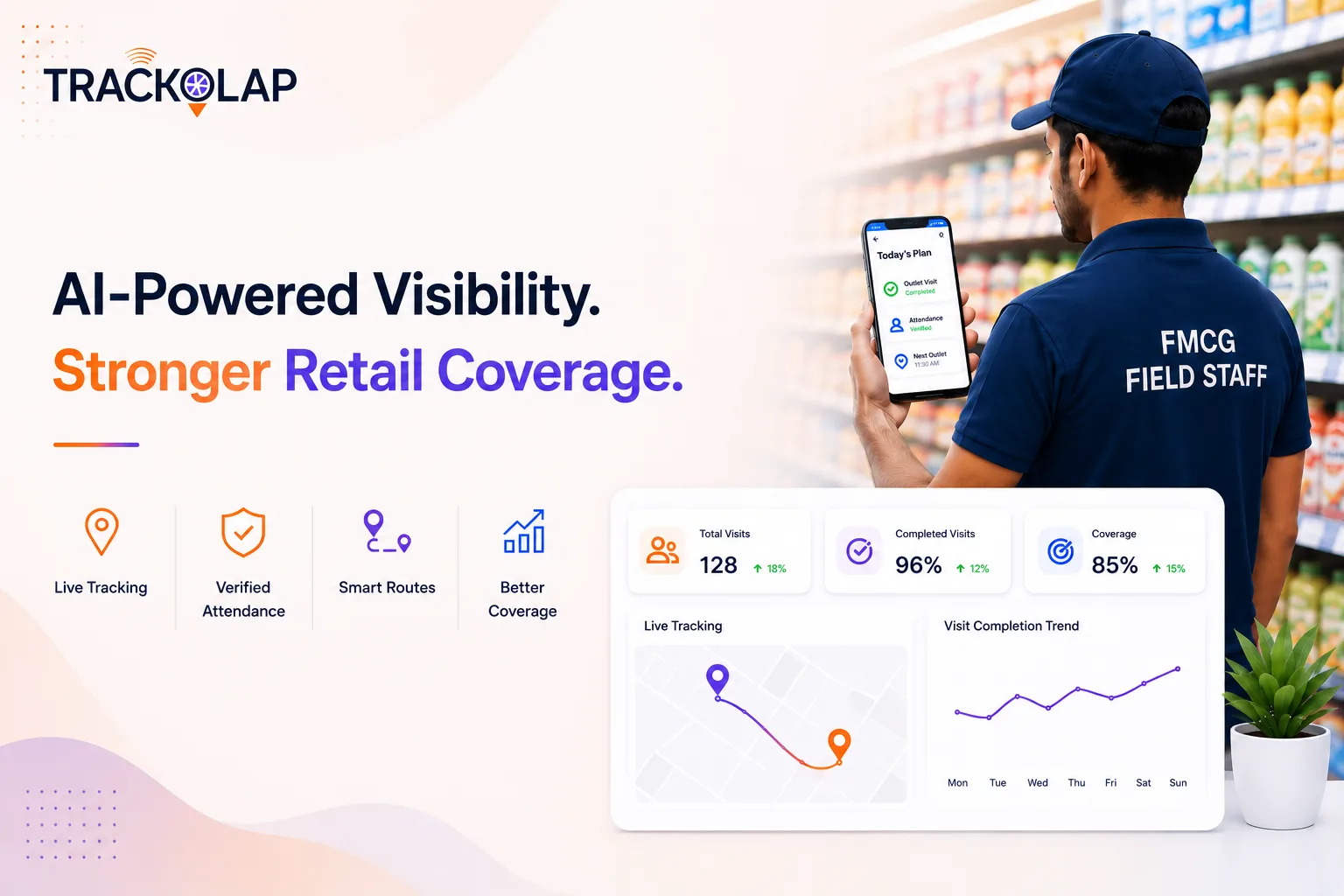
The gap between what FMCG managers assume is happening in the field and what is actually happening has become a serious operational liability.
A sales rep skips an outlet visit. A distributor follow-up gets dropped. A priority retail store goes unvisited. None of this reaches the manager until a phone call or end-of-day report surfaces — hours after the window to act has closed.
FMCG companies are moving away from this reactive model. Modern field staff tracking software gives businesses live visibility into outlet visits, attendance, route execution, and sales movement — replacing the follow-up chain with real-time intelligence. This blog explains how TrackOlap delivers that shift, capability by capability.
Why Is Traditional FMCG Field Coordination Failing Businesses Today?
The pressure on FMCG field operations has never been higher. Faster replenishment cycles, deeper retail penetration into Tier 2 and Tier 3 cities, and growing secondary sales targets are all demanding more from field coordination systems that were simply not designed to scale.
Yet the majority of FMCG companies are still running field operations on spreadsheets, phone calls, and messaging apps. The problem is not communication delay alone. It is retail execution blind spots — and they compound quietly.
Research found that top-performing field service organisations resolve issues 42% faster than average performers. The primary differentiator is not team size or budget — it is real-time operational visibility.
Without it, three failures consistently emerge:
Retail coverage blind spots: Managers cannot see in real time which stores were visited, which remain open, or which territories are being under-served. Every coverage decision becomes an assumption.
Delayed sales decision-making: When updates arrive manually, supervisors make operational choices with yesterday's data. By the time a gap is identified, it has already affected shelf availability or distributor relationships.
Inconsistent field reporting: Phone-based check-ins and informal visit logs create discrepancies in outlet records, payroll accuracy, and merchandising verification — creating compliance and cost risks that are hard to untangle at month-end.
These failures are most visible in FMCG businesses managing teams across multiple cities simultaneously. That is why field force management software with live operational intelligence has moved from a competitive advantage to an operational baseline.
What Is Field Staff Tracking Software for FMCG — and What Does It Do?
Field staff tracking software for FMCG is a real-time platform that gives businesses complete visibility and control over their field workforce — sales representatives, merchandisers, promoters, and distributor sales executives — from a single centralized dashboard.
It is not a surveillance system. It is not a standalone GPS tracker or a CRM replacement.
It is a coordination platform that connects every layer of field activity into one live operational view — so managers can act on what is happening right now, not what was reported an hour ago.
Field staff tracking brings field coordination together through four core capabilities:
- Live GPS tracking of every field agent, continuously updated on a central dashboard
- Geo-tagged outlet check-ins that verify physical presence at retail locations — not self-reported logs
- Real-time task coordination where outlet assignments, merchandising tasks, and distributor visits are assigned, updated, and tracked as they happen
- Mobile-first field execution through the field staff tracking app, which agents use to clock in, update visit status, navigate routes, submit reports, and receive new assignments — entirely from their phone
- For FMCG managers who have relied on WhatsApp updates and end-of-day Excel sheets, this is a fundamental shift — from reacting to retail problems to preventing them.
How Does Live Location Visibility Change FMCG Field Coordination?
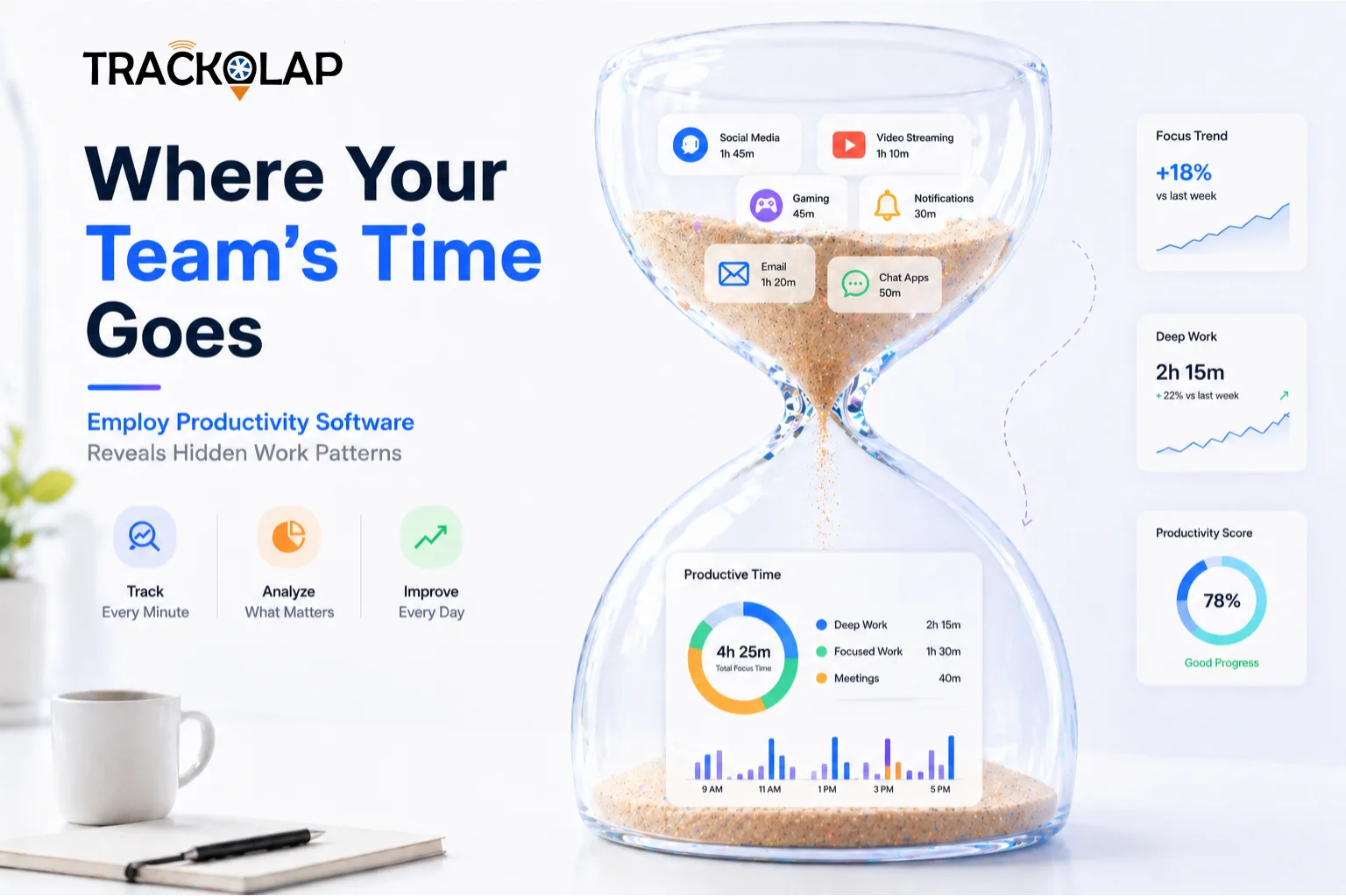
The most immediate change employee live tracking software delivers is straightforward: location uncertainty disappears.
Area sales managers typically spend a significant part of their day calling reps for updates. Every call is a delay. Across a team of 30 or 40 reps, this adds up to hours of management time lost daily to information-gathering that should be automatic.
Employee live tracking system gives managers a real-time operational map of the entire field team — who is active, where each rep is, which outlet visits are complete, whether a distributor meeting is running late, and who is closest to an urgent task. No calls required.
The system generates automated alerts for missed outlet visits, prolonged idle time at non-scheduled locations, route deviations, out-of-zone movement, and delayed distributor follow-ups. Execution gaps get flagged while they are still happening — not after a retailer complaint surfaces them.
In FMCG, catching an execution gap mid-day is a material advantage over discovering it the next morning. It also builds field team accountability naturally — when activity is transparently recorded, managers coach based on data rather than impression.
How Route Planning Software Increases Outlet Coverage
In FMCG, productivity is most often lost between visits — not during them.
Poor outlet sequencing, overlapping territories, and mid-day schedule changes all reduce the number of productive store visits a rep completes in a day. A team of 50 reps each losing 45 minutes to inefficient routing wastes over 37 productive hours of outlet time every single day. That is not a minor inefficiency at scale.
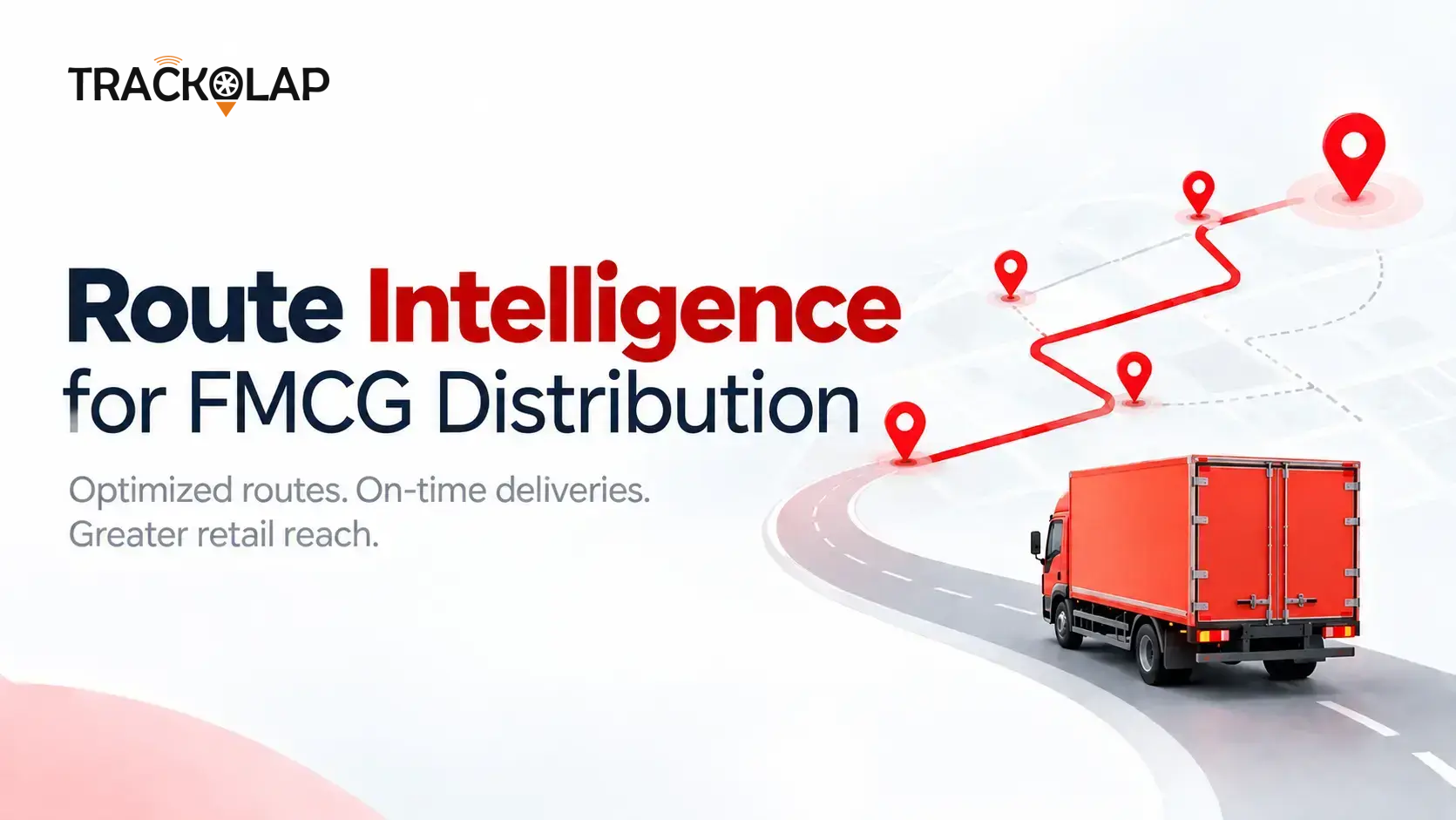
Route planning software sequences visits dynamically based on outlet proximity, retailer priority, real-time traffic, and territory coverage requirements. When a visit is cancelled or a rep runs ahead of schedule, the system recalculates the optimal remaining sequence automatically. No calls needed.
Here is how this compares to traditional coordination in practice:
| Operational Area |
Traditional Approach |
TrackOlap Beat Planning |
| Outlet visit planning |
Fixed schedules, manually assigned |
Dynamic optimisation updated in real time |
| Territory handling |
Manual adjustments when plans change |
Automatic recalculation based on live conditions |
| Retail prioritisation |
Static sequencing, no priority logic |
Priority-based scheduling tied to sales targets |
| Workforce allocation |
Delayed reassignment, calls required |
Instant workload balancing from the dashboard |
| Travel efficiency |
Higher idle movement, fuel waste |
Reduced travel time, more outlet visits per day |
For FMCG businesses managing distribution across high-density markets, intelligent route planning is a direct driver of outlet coverage, distributor meeting frequency, and daily sales productivity.
How Does AI-Based Attendance Management Work for FMCG Field Employees?
Attendance is genuinely hard to manage when your FMCG team rotates daily between retail outlets, distributor markets, and multiple sales territories across a city.
Traditional systems — paper registers, verbal check-ins, basic mobile punches — were not designed for this. They create real operational problems: proxy attendance, inaccurate visit reporting, payroll disputes, and compliance inconsistencies that HR teams spend hours resolving every month-end.
AI-based attendance management closes this with two verification layers that work simultaneously:
Geo-fenced attendance: Field staff can only clock in when physically within a defined retail zone or operational territory. Attendance is tied to actual market presence — not to a phone submitting a log from somewhere else.
AI-powered face recognition: At clock-in, the app captures a live selfie and verifies it against the employee's registered biometric profile. No additional hardware. No workarounds. Both the location and the person must be verified before attendance registers.
The result is attendance data that is tamper-proof, automatically timestamped, and feeds directly into payroll processing, HR reporting, distributor workforce audits, and compliance workflows — without manual reconciliation.
For FMCG businesses, where workforce sizes are large and payroll accuracy carries both financial and legal weight, this removes months of manual verification work from the HR cycle every year.
Why Does Integrated Field Force Management Software Outperform Separate Tools?
Many FMCG companies build their field tech stack piece by piece — one tool for GPS, another for attendance, a third for routing, and sales reporting through yet another system. Each tool may function. Together, they create a data reconciliation problem that consumes more time than the original manual process.
Managers switch between platforms to build a picture of one rep's day. Field staff juggle multiple apps. Data that should flow automatically requires manual export and re-entry. Operational intelligence breaks down at every gap between systems.
Field force management software solves this by bringing employee tracking, attendance, beat planning, task coordination, field reporting, and dashboards into one integrated platform. One dashboard for managers. One app for field staff. No duplicate entry, no reconciliation, no tool-switching.
When all operational layers share a single source of truth, businesses can surface patterns that disconnected tools never could — recurring coverage gaps in specific territories, route inefficiencies tied to particular rep-territory combinations, attendance anomalies that correlate with lower visit completion.

What Measurable Results Can FMCG Businesses Expect After Deployment?
When FMCG businesses deploy an integrated field tracking platform, the improvements are measurable, not vague efficiency claims.
Specific outcomes FMCG businesses see with TrackOlap include faster outlet visit execution, meaningful reduction in supervisor follow-up calls, higher daily outlet coverage per rep, improved distributor response times, better territory visibility that surfaces under-served retail zones before they affect sales, reduced travel costs through intelligent route sequencing, and audit-ready attendance records for compliance.
These advantages are most significant for businesses running secondary sales operations, distributor coordination, promoter activity monitoring, and retail audit programmes across geographically spread territories.
What Should FMCG Businesses Look for in a Field Staff Tracking App?
Choosing the right field staff tracking app is a long-term operational decision. These capabilities separate effective platforms from basic GPS trackers repackaged with a mobile interface:
Real-time GPS with offline mode: FMCG reps work in markets and rural areas with weak connectivity. The app must log activity offline and sync when connection returns.
Dual-layer attendance verification: Geo-fencing plus AI-powered face recognition is the only reliable way to eliminate proxy attendance. Location alone is insufficient.
Dynamic route optimisation: Beat planning must adapt during the day — automatically recalculating when visits are cancelled, rescheduled, or completed early.
Role-based access: Sales reps, area managers, regional heads, and HR teams need different views of the same data. A well-designed platform surfaces information by role.
System integration: The platform must connect to CRM, HRMS, payroll, and ERP tools already in use. A standalone system requiring manual data export recreates the reconciliation problem it was meant to solve.
Scalability: As FMCG businesses expand across India's Tier 2 and Tier 3 cities, the platform must handle larger teams and more complex territories without a system change.
The Future of FMCG Field Coordination Is Live — Not Logged
FMCG field operations are shifting from communication-dependent coordination to visibility-first execution. Shelf presence, distributor relationships, and secondary sales velocity all depend on the speed and accuracy of field activity — and operational visibility is no longer a competitive edge. It is a business requirement.
FMCG is one of the fastest-adopting verticals, because the cost of slow coordination shows up directly on the monthly sales report.
Field staff tracking software gives FMCG businesses the tools to move from reactive follow-up to proactive retail coordination. Live GPS visibility, AI-verified attendance, intelligent beat planning, task management, and performance analytics — all in one platform.
The FMCG companies building live retail visibility today will be structurally faster — in execution, decisions, and market response — than competitors still relying on phone calls and end-of-day reports.
Frequently asked questions
What is field staff tracking software for FMCG companies?
Field staff tracking software for FMCG is a real-time operational platform that tracks and manages sales representatives, merchandisers, promoters, and distributor teams from a single dashboard. It provides live visibility into outlet visits, attendance, route execution, and task progress — replacing manual follow-up calls with continuous operational intelligence.
How does field staff tracking software improve FMCG sales team performance?
It gives managers live visibility into field activity — outlet visits completed, routes followed, attendance verified — without check-in calls. For large FMCG sales teams, this directly improves outlet coverage, distributor engagement, and response speed when execution gaps appear.
Why is route planning critical for FMCG field operations?
Without intelligent routing, reps backtrack across territories, waste time in traffic, and miss lower-priority outlets. Beat Planning Software sequences visits dynamically based on proximity, retailer priority, and real-time traffic — and recalculates automatically when plans change mid-day. For large distribution networks across Indian metros or Gulf markets, this reduces wasted travel time and measurably increases daily outlet coverage.
How does AI-based attendance management work for FMCG field employees?
TrackOlap combines geo-fencing with AI-powered face recognition to verify both location and identity at clock-in. Staff can only register attendance within a designated retail zone, and the app simultaneously verifies their identity via a live biometric selfie. Both checks must pass. Attendance records are automatically linked to payroll, HR reporting, and compliance workflows — removing manual reconciliation from the month-end HR process entirely.
What features should FMCG businesses look for in a field staff tracking app?
Look for real-time GPS with offline mode, geo-tagged outlet visit verification, AI-powered face recognition, dynamic beat planning, centralised dashboards with role-based access, and integration with CRM, ERP, HRMS, and payroll systems. Scalability across growing territory structures is equally critical. TrackOlap covers all of these within a single integrated platform built specifically for the FMCG field environment.

 D-5, Logix Infotech Park, Sector 59, Noida - 201301, Uttar Pradesh (India)
 contactus@trackolap.com
 7011494501






 Demo
at free of cost
Demo
at free of cost