
















 Back to Blogs
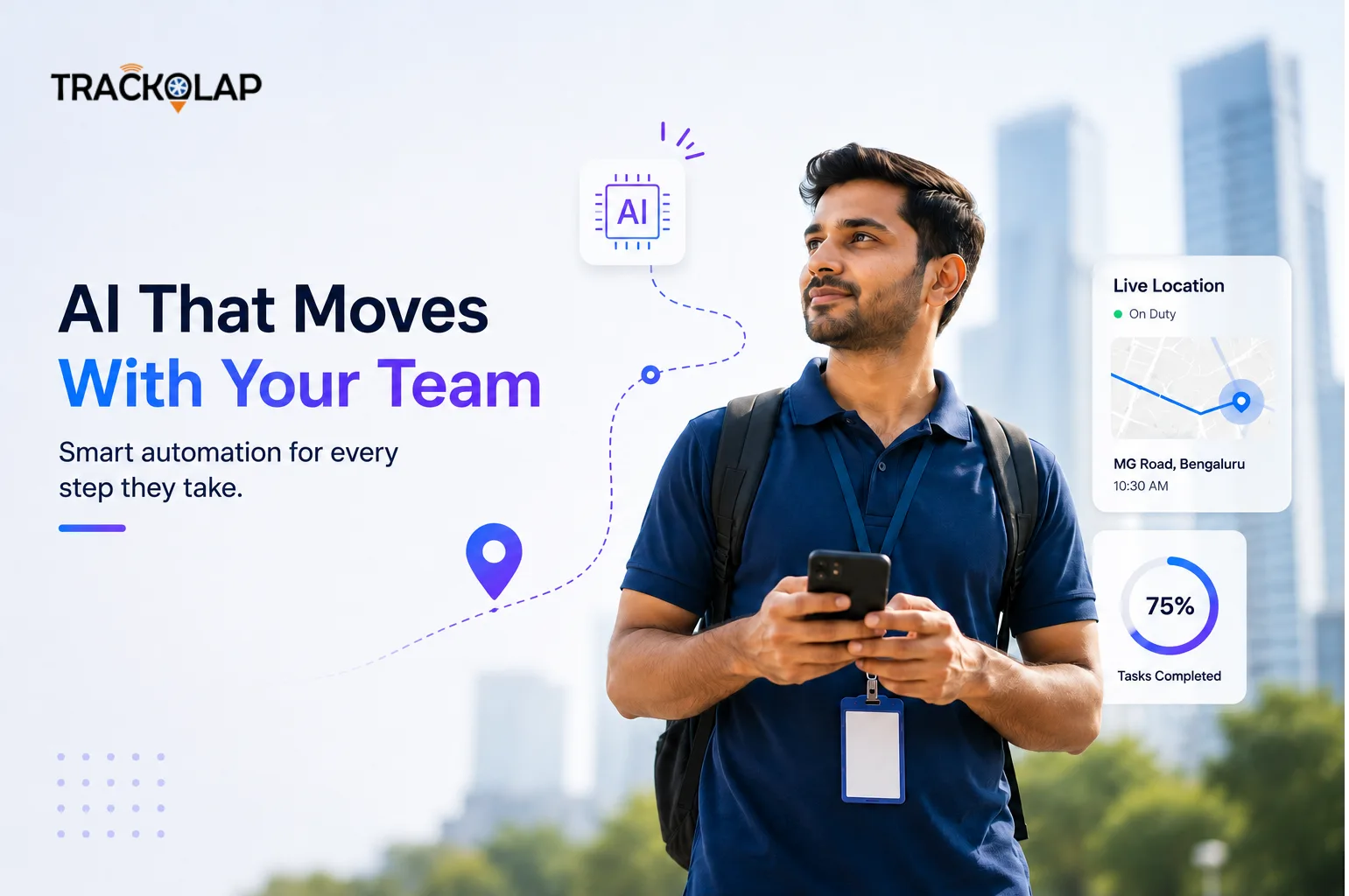
Most of the conversation about artificial intelligence at work assumes a desk, a laptop, and a browser tab. Yet the majority of the world’s employees do not work that way. They stand behind counters, drive between service calls, walk factory floors, inspect construction sites, restock shelves, and knock on doors. For these teams, AI for frontline workers is not an abstract productivity debate—it is the difference between a workday spent on paperwork and a workday spent on customers, patients, and revenue.
This guide explains how to bring frontline workforce automation to the people who keep operations moving but rarely sit still. It covers why deskless teams were left behind, six practical applications you can deploy this quarter, how to manage the change without losing trust, and how to measure the return. Throughout, the emphasis is on tools that already exist and work toda —sales force automation software, a location-based attendance system, a modern employee monitoring app, and field service management platforms—rather than speculative technology.
The Deskless Gap: Who Actually Makes Up the Frontline
The frontline is not a niche. An estimated 2.7 billion people—roughly 80% of the global workforce—are “deskless,” meaning they do their jobs away from a fixed computer. They are the retail associates, delivery riders, nurses, field sales representatives, technicians, and manufacturing operators who form the operational backbone of almost every economy.
In India, that reality is even more pronounced. According to the International Labour Organization’s India Employment Report 2024, the overwhelming majority of the country’s workers are employed in the informal economy, much of it mobile, field-based, and historically undocumented. The scale of this workforce is now visible in official data: as of 3 March 2025, more than 30.68 crore unorganised workers had registered on the Government of India’s e-Shram portal, with women constituting 53.68% of registrations, per the Ministry of Labour & Employment. These are the delivery partners, construction workers, drivers, and field staff who power commerce but who have traditionally operated with minimal digital support.
This is the deskless gap. Enterprise software spent two decades optimising the work of people who sit down. It largely ignored the people who move. Deskless workforce technology is the correction now underway—and AI is what makes that correction transformative rather than merely digital.
For organisations managing distributed teams, closing the gap starts with the fundamentals of visibility and coordination: knowing who is working, where, on what, and to what result. That is precisely where a purpose-built field employee tracking and attendance system from a platform like TrackOlap becomes the foundation on which frontline AI is built.
Why Frontline AI Lagged Behind
If the frontline is so large, why did automation arrive so late? Four structural reasons explain the delay.
No single system of record
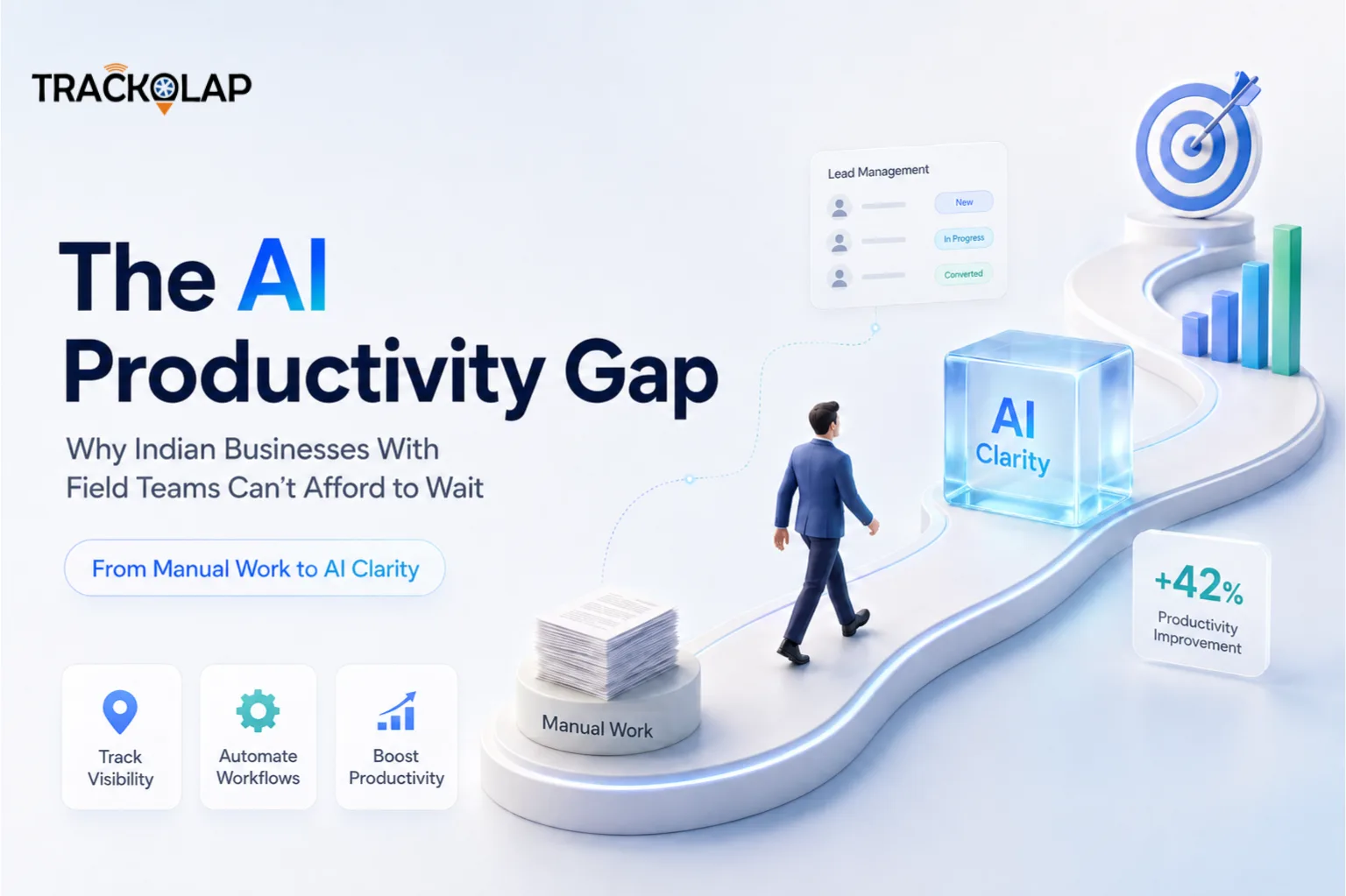
Desk workers generate a clean digital trail—emails, calendar events, documents, CRM entries. Frontline work has historically lived on paper, in WhatsApp messages, and in workers’ heads. AI needs data to function, and for years the frontline simply did not produce structured data. A location-based attendance system and a mobile-first employee monitoring app change this by turning everyday field activity—check-ins, visits, tasks, expenses—into a usable dataset.
Connectivity and device constraints
Frontline environments are not offices. Workers move through low-signal areas, share devices, and cannot pause to troubleshoot software. Early enterprise tools assumed always-on connectivity and full attention, which the frontline could not provide.
A trust deficit
When “monitoring” enters a conversation about deskless workers, it can feel like surveillance rather than support. Poorly designed tools reinforced that fear. Modern frontline workforce automation succeeds only when it visibly reduces the worker’s burden—less manual reporting, faster reimbursements, clearer routes—rather than simply watching them.
Fragmented budgets
Head-office software has a clear owner and budget. Frontline tools often fall between operations, HR, and sales, so investment lagged. That is now shifting: the global field service management platforms market is projected to reach roughly USD 9.17 billion by 2030, according to industry analysis from MarketsandMarkets, reflecting how seriously organisations now take deskless enablement.
The lag is ending because the enabling conditions—smartphone ubiquity, affordable data, cloud AI, and employee productivity AI—have finally converged.
Watch Video: Real-Time Sales Tracking Software to Improve Field Team Performance
6 Practical Applications of AI for Frontline Workers
The strongest case for AI for frontline workers is not futuristic. It is a set of concrete, deployable applications that remove friction from the working day. Here are six that deliver measurable value now.
1. Intelligent Attendance and Geo-Verified Check-Ins
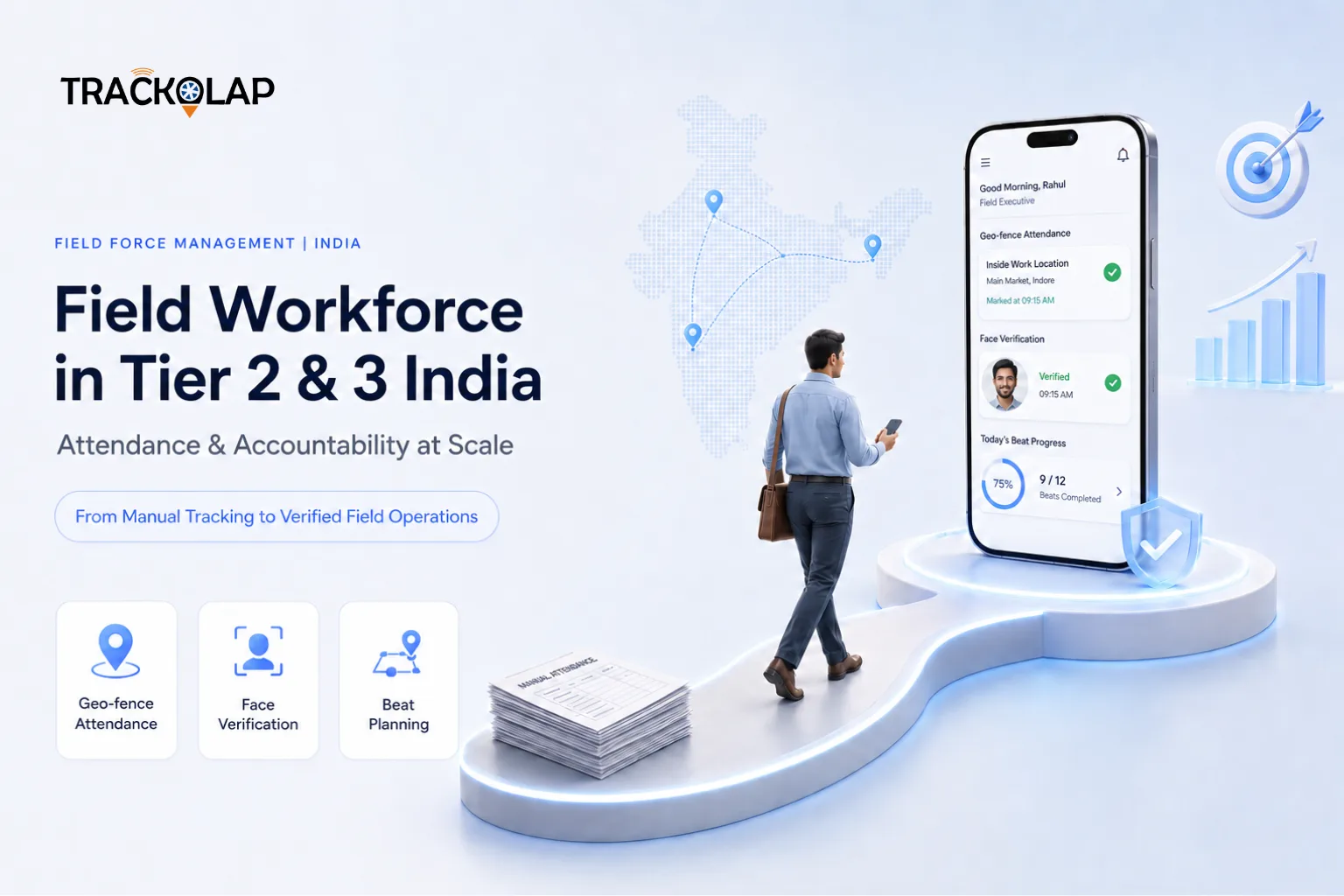
The first automation any deskless team needs is trustworthy attendance. A location-based attendance system lets employees mark attendance from the field using GPS and, increasingly, face or liveness verification—no biometric device, no register, no travel to a branch office. AI adds a layer on top: it flags anomalies (a check-in far from an assigned site), auto-calculates work hours, and reconciles attendance with payroll. TrackOlap’s attendance and workforce management module is designed for exactly this, giving managers a real-time, tamper-resistant record of who is on duty and where—without asking the worker to fill in a single form.
2. Automated Field Sales Workflows
For distributed sales teams, sales force automation software is the single highest-leverage investment. AI-driven automation captures visit notes by voice, logs orders on the spot, suggests the next best action for each account, and prioritises the day’s route by deal value and win probability. Instead of spending evenings updating a CRM, the field representative closes the loop in seconds between meetings. The result is more selling time, cleaner pipeline data, and forecasts a leader can actually trust.
3. Smart Scheduling and Dynamic Route Optimisation
Every kilometre a technician or salesperson does not have to drive is time returned to productive work. AI route optimisation within field service management platforms sequences visits to minimise travel, accounts for traffic and service-window constraints, and reassigns jobs in real time when priorities change. For fuel-intensive field operations, this is one of the clearest and fastest sources of return.
4. Automated Expense and Reimbursement Processing
Few things erode frontline morale faster than slow reimbursements. AI reads a photographed receipt, extracts the amount and category, checks it against policy, and routes it for approval automatically. What once took a week of back-and-forth compresses into a same-day workflow—a small change that meaningfully improves retention among mobile staff who fund travel out of pocket.
5. Real-Time Productivity Insights, Not Surveillance
A well-designed employee monitoring app is not a stopwatch; it is a coaching instrument. AI aggregates field activity—visits completed, tasks closed, targets met—into insight that helps managers spot who needs support and which processes create bottlenecks. Framed as employee productivity AI, it identifies the top performer’s winning pattern and helps the whole team adopt it, turning data into development rather than distrust.
6. Predictive Workforce and Demand Planning
At the operational level, AI forecasts how many people are needed where and when. By learning from historical attendance, seasonality, and demand signals, frontline workforce automation helps schedule the right headcount, reduce overtime, and prevent both understaffing and idle time. For multi-site operations, this planning intelligence is often the difference between healthy margins and constant firefighting.
Taken together, these six applications share a common thread: each removes an administrative task the worker never wanted to do, freeing them for the work only a human on the ground can perform.
Change Management: Winning Trust on the Frontline
Technology is the easy part. The hard part—and the reason many deskless workforce technology rollouts stall—is human. Frontline teams have seen tools imposed on them before, and they judge new systems by one question: does this make my day easier or just make me more watched? Managing that perception is the real project.
Lead with the worker’s benefit, not the manager’s dashboard.
The first features a worker experiences should save them effort—one-tap attendance, instant expense capture, automatic route planning. When the tool visibly reduces friction in week one, adoption follows. When it opens with a surveillance narrative, resistance hardens.
Be transparent about what is tracked and why
A location-based attendance system and an employee monitoring app collect sensitive data. Tell workers plainly what is captured, when it
is captured (for example, only during working hours), and how it is used. In India, this is not only good practice but increasingly a compliance expectation under the Digital Personal Data Protection framework; the Ministry of Electronics & Information
Technology (MeitY) provides the authoritative reference on data-protection obligations. Clear consent and purpose limitation turn a potential grievance into a trust signal.
Recruit frontline champions
Identify respected field employees, involve them early, and let them shape the rollout. Peer endorsement moves adoption faster than any executive memo.
Phase the rollout
Start with one region, one team, or one workflow. Prove value, gather feedback, fix friction, then scale. A staged rollout of sales force automation software or field service management platforms de-risks the investment and builds internal proof points.
Handled this way, automation stops being something done to the frontline and becomes something built with it.
Measuring ROI: Proving the Value of Frontline AI
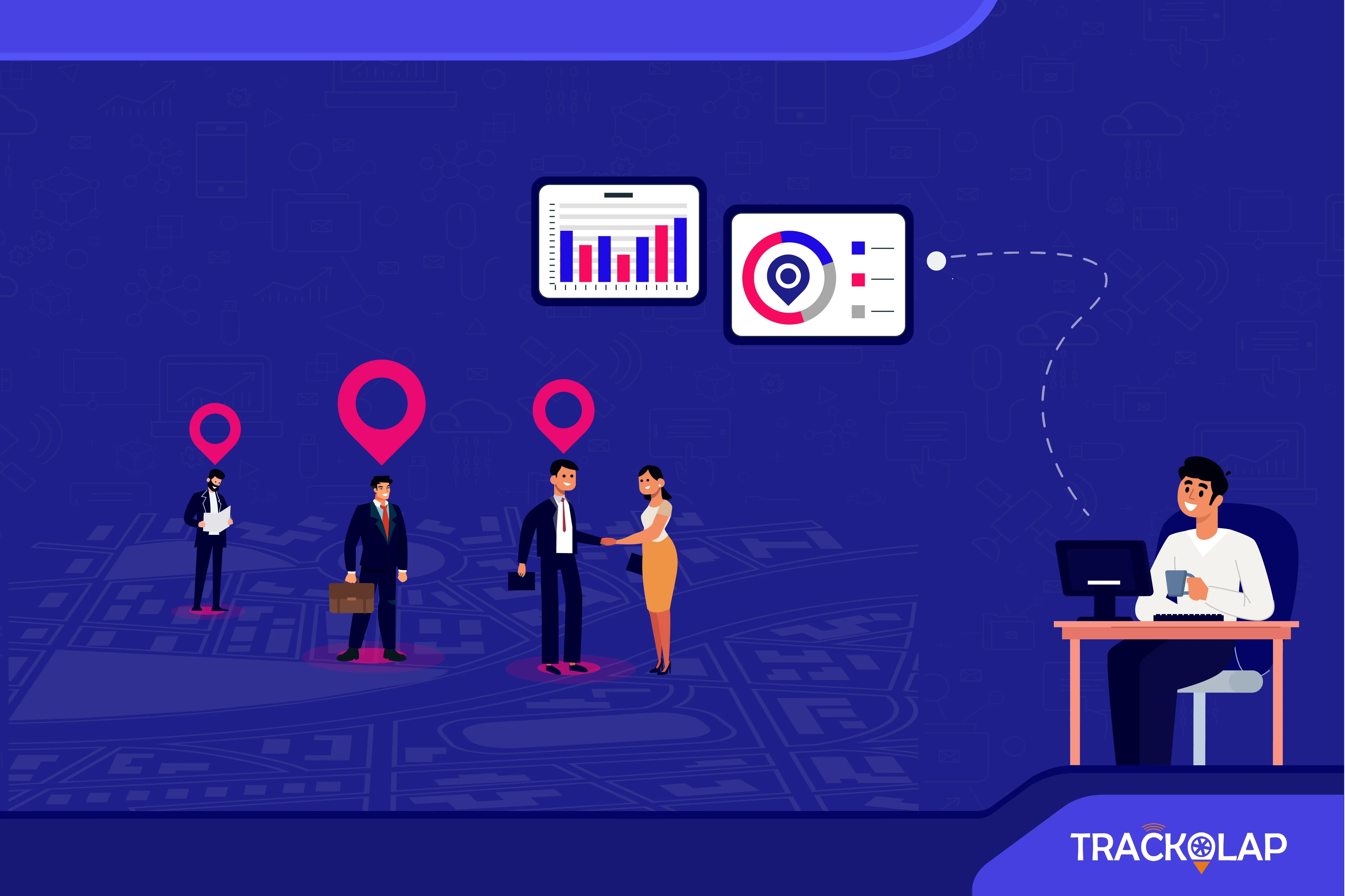
An investment in AI for frontline workers must be defensible in the language of operations and finance. The good news is that deskless automation produces unusually measurable results, because it touches time, travel, and transactions directly. Build your ROI case around four categories.
Productivity gains: Measure selling or service hours recovered when reporting, route planning, and data entry are automated. If employee productivity AI returns even 45 minutes per worker per day, multiply that across the team and the annual value becomes substantial. Track visits completed, jobs closed, and orders logged before and after deployment.
Cost reduction: Quantify savings from route optimisation (fuel and travel time), from lower overtime through better scheduling, and from reduced administrative overhead as expense and attendance processing automate. A location-based attendance system alone typically eliminates hours of manual reconciliation each month.
Revenue and quality lift: Better forecasting from sales force automation software, higher first-time-fix rates from field service management platforms, and faster response times all convert into revenue and customer retention. Measure conversion rates, average deal cycles, and customer satisfaction alongside the cost metrics.
Compliance, accuracy, and risk: Automated, geo-verified records reduce attendance fraud, payroll errors, and disputes. These avoided losses are real returns even when they never appear on a growth chart.
A disciplined ROI framework compares a clear baseline against post-deployment performance over a defined window—typically 90 days for early signal and a full year for the complete picture. Most organisations find that frontline automation pays back faster than head-office software precisely because the inefficiencies it removes are so tangible: a kilometre not driven, a form not filled, a reimbursement not delayed.
Where TrackOlap Fits
Bringing these capabilities together in one system is what separates a successful rollout from a stack of disconnected apps. TrackOlap unifies the foundational layers of frontline workforce automation—a GPS-based location-based attendance system, field-ready sales force automation software, task and productivity tracking through a purpose-built employee monitoring app, and the workflow automation that connects them. Because attendance, activity, sales, and expenses live in a single platform, the data is clean enough for employee productivity AI to generate insight that managers can act on and workers can trust.
For teams operating across multiple locations, that consolidation matters. It means a technician’s route, a salesperson’s visit log, an operator’s shift, and a field executive’s reimbursement all flow through one connected system rather than a patchwork of spreadsheets and messaging apps—turning the deskless gap from a liability into a managed, measurable advantage.
Frequently asked questions
What is AI for frontline workers?
AI for frontline workers refers to artificial intelligence applied to the tools deskless employees use every day—attendance, scheduling, sales, service, and reporting. Rather than replacing workers, it automates administrative tasks (like route planning, data entry, and expense processing) so that field, retail, and service staff can spend more time on customer-facing work.
How is a location-based attendance system different from a traditional one?
A location-based attendance system uses GPS and mobile verification to let employees mark attendance from anywhere in the field, tied to a specific site or geofence. Unlike a fixed biometric machine, it works for mobile teams, prevents proxy attendance, and integrates directly with payroll and productivity data.

 D-5, Logix Infotech Park, Sector 59, Noida - 201301, Uttar Pradesh (India)
 contactus@trackolap.com
 7011494501






 Demo
at free of cost
Demo
at free of cost