
















 Back to Blogs
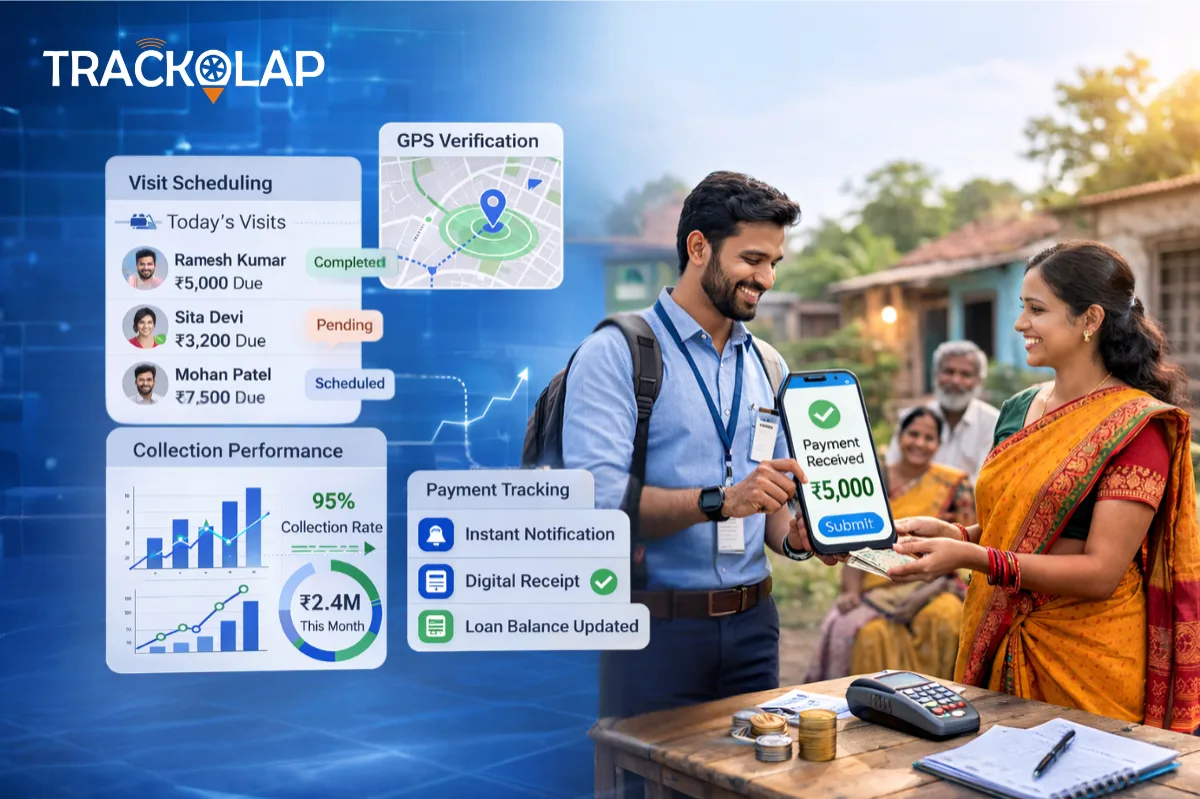
For NBFCs and other finance organisations, loan recovery is becoming a more challenging issue each year. According to the studies, borrowers are increasing, clients are spread out over different areas, and operating expenses are rising. Due to this fact, collection teams are continuously pressured to collect payments in a more timely and regular way.
Field visits remain an important component in the recovery process. However, most organisations find it hard to relate day-to-day field operations to actual repayment outcomes. Teams might be visiting borrowers every day, but delays in updates, lack of follow-ups, and other limited visibility slow down the recovery process.
This is where automation transforms the mode of operation for recovery teams. Through modern field force automation software, the organisations can integrate planning, implementation, and reporting into a single workflow.
Understanding the Current Loan Recovery Landscape
The finance services industry is experiencing rapid growth in its loan portfolios. Concurrently, borrowers are increasingly becoming geographically dispersed. It creates new challenges for collection teams that rely heavily on field activity.
Travel, coordination and manual reporting are raising the cost of field collection. Recovery agents tend to handle high volumes of accounts, hence they find it hard to make regular follow-ups. When there is a delay in the field updates, the managers are not in a position to act in time. At the leadership level, it is also difficult to have a clear picture of the day-to-day recovery performance.
Any lack of coordination, even in minute details, will delay repayment plans. With the increase in operations, the conventional recovery strategies are increasingly difficult to manage. That is why automation is moving towards several financial organisations.

Why Traditional Field Recovery Slows Down Repayments
Conventional loan recovery is based on phone calls, spreadsheets and reports at the end of the day. Although the strategies might be effective in smaller teams, they pose serious challenges as the operations expand.
The managers are often updated a few hours or days after visiting the field. It is difficult to change strategies because of the delay. It can lead to failure to make follow-ups, and it becomes a difficult task to check whether visits have really occurred. In the absence of real-time visibility, decision-making is slowed.
Repayments are also slow when there is a slow movement of information. This is the main reason why recovery teams are currently emphasising automation.
What Loan Recovery Automation Means in Simple Terms
Automation of loan recovery is not a substitute for field teams. Rather, it assists them in organising and transparentising their work.
Automation links agents, managers, and leaders in real time with data. It guarantees that all daily activities, updates on visits, and performance can be found at a single location. The transition helps organisations to exit the manual coordination and move to highly structured and data-based coordination.
How Automation Speeds Up the Recovery Process
Repayment schedules are also bound to improve when planning, implementation, updates and follow-ups contribute naturally. Automation reinforces every step of the recovery process and eliminates the time between the field operation and decisions.
Six effective ways of automation that make a real difference are mentioned below.
6 How Automation Enhances the Recovery of Loans
1. Smarter Visit Planning and Prioritisation
Automation helps managers in giving the right accounts to the right agents at the right time. Priority can be given to high-risk borrowers and overdue accounts without difficulty, and daily visits should produce the maximum impact.

Enhanced planning minimises the amount of travel wastage and the level of recovery.
2. Real-Time Visibility of Field Activity
Managers can track the location of the agents during the day with the employee live tracking software. Such visibility ensures that visits are scheduled and adjustments made in case of necessity.
Real-time tracking enhances coordination and helps teams stay on time.
3. Verified Field Visits and Stronger Accountability
Check-ins and timestamps that are geo-tagged ensure that visits actually occur. It eliminates doubt and generates confidence in field reporting.
Recovery data can be confirmed more through visit verification, which makes it more transparent.
4. Faster Updates from Field to Office
Visit outcomes can be updated immediately instead of waiting till the end of the day to get the reports. Managers have access to real-time information and can give immediate responses.
The decision is made faster, and the speed of repayment is enhanced.
5. Consistent Follow-Ups Without Manual Effort
Late repayments are caused mainly by missed follow-ups. Task management software, reminders, and revisit schedules may be automated using the software, such that no task is left out.
Stability significantly contributes towards prompt repayments.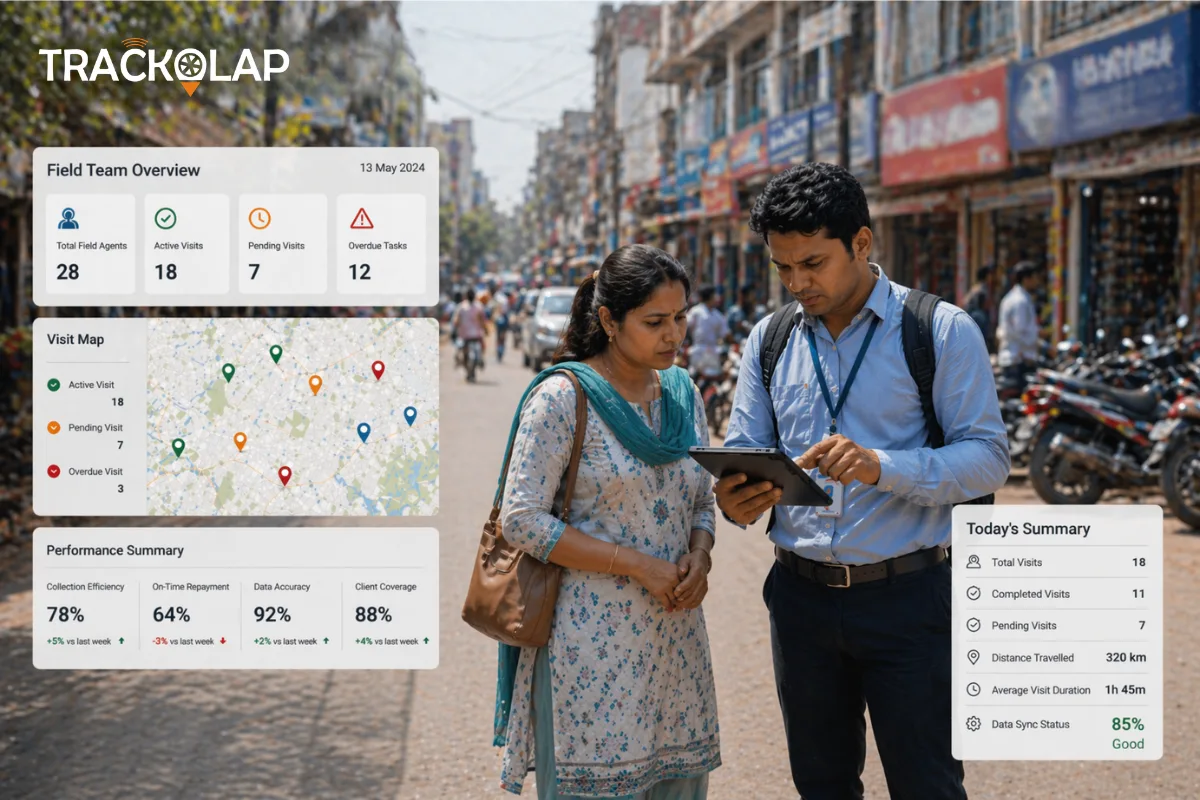 6. Clear Insights for Better Recovery Decisions
Daily activity becomes meaningful insights when it is transformed into recovery dashboards. Leaders can trace patterns and track performance as well as change strategies.
More understanding leads to a better long-term recovery.
How TrackOlap Supports Automated Loan Recovery
TrackOlap assists the NBFCs in modernising their recovery operation by uniting key tools under a single platform. It integrates planned field execution, real-time location, and automated task monitoring into a single system.
Smart planning, faster and increased response, and overall performance can be achieved by the recovery teams with enhanced coordination and complete visibility. This interrelated method helps in changing field activity to tangible repayment development.
Conclusion — Building a Faster and More Predictable Repayment Process
The idea of loan recovery is no longer only related to making more field visits. It is all about linking all the processes of the recovery process, such as planning visits, monitoring the results and enhancing the strategy.
Through automation, NBFCs will be able to transition into proactive recovery as opposed to the reactive recovery process. Using the right digital tools, it is possible to directly include a daily field activity in the process of making repayments faster, more accountable, and improving recovery performance.
The future of recovering loans is in smarter, connected and efficient field operations.
Frequently asked questions
How does field force automation software help recovery teams?
It helps teams recover payments more quickly by enhancing visit planning, tracking, and coordination.
Why is real-time tracking important in loan recovery?
It provides managers with a view of the activity in the field and supports the completion of the planned visits.
How does task automation reduce repayment delays?
Automated follow-ups and reminders can be sent to borrowers easily.
Can automation really improve repayment rates?
Yes, more timely updates and further coordination would reduce the recovery time.
Is loan recovery automation suitable for growing NBFCs?
Yes, it is useful when dealing with large volumes of borrowers and being efficient and in control.




 D-5, Logix Infotech Park, Sector 59, Noida - 201301, Uttar Pradesh (India)
 contactus@trackolap.com
 7011494501






 Demo
at free of cost
Demo
at free of cost