















 Back to Blogs
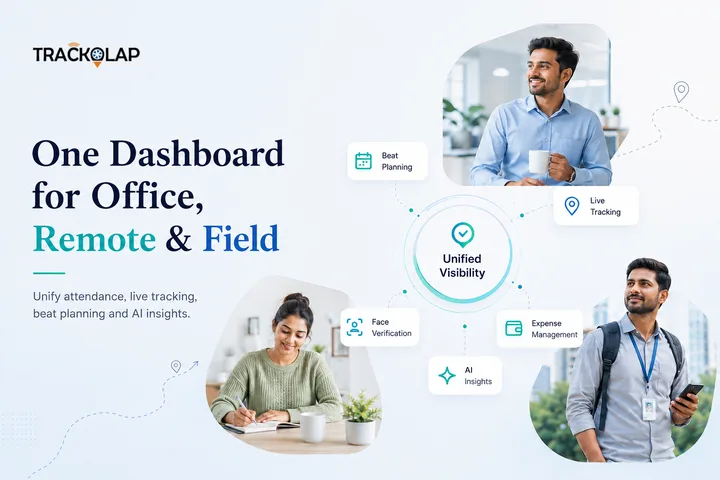
How unified field force automation — beat planning, live tracking, expense management, face verification and AI insights — replaces scattered tools with a single source of truth.
Quick answer (for readers in a hurry
A single workforce dashboard unifies attendance, beat planning, live GPS tracking, expense management, desktop and dual-monitor monitoring, and AI-driven productivity insights across office, remote and field teams.
For hybrid Indian businesses, this ends the blind spots created by disconnected apps — and, just as importantly, it makes attendance and payroll data audit-ready for the new Labour Codes and DPDP era. TrackOlap Field
Force delivers this unified visibility in one platform.
The hybrid reality,
in three numbers
|
80% of firms will monitor remote &
hybrid workers in 2026 |
17.3% CAGR of the global field force
automation market |
82% of Indian MSMEs now confident using
digital tools |
Hybrid work was supposed to be a flexibility win. Instead, for most Indian businesses it quietly became a visibility crisis. A single company now runs three very different workforces at once: the office team logging in on desktops, the remote team working from home or co-working spaces, and the field team moving between client sites, retail beats, warehouses and delivery routes. Each of these teams generates its own stream of attendance records, activity data, travel, expenses and outcomes — and in most organisations, each stream lives in a different tool, spreadsheet or WhatsApp group.
The result is a management blind spot. Leaders can tell you last quarter’s revenue but not whether a field executive actually visited the eight outlets on today’s beat plan. Finance can process salaries but cannot instantly see which reimbursement claims are genuine. HR can mark attendance but cannot verify that the person who punched in is the person doing the work. When your workforce is distributed, fragmented tools do not just slow you down — they hide the very information you need to run the business.
You cannot manage what you cannot see. And in a hybrid, field-heavy operation, most leaders are flying half-blind.
This article makes the case for consolidation: replacing a patchwork of point tools with one dashboard that unifies office, remote and field visibility. We will look at why fragmentation is so costly, why 2026 makes this urgent from a compliance standpoint, and exactly how a unified field force automation platform — with live tracking, beat planning, expense management, face verification, desktop and dual-monitor monitoring, and AI insights — closes the gap.

Why fragmented tools quietly drain your business
When each team and each function uses a separate system, the damage compounds in ways that rarely show up on a single line of a P&L. Consider a mid-sized distribution company running a biometric attendance machine at head office, a spreadsheet for field attendance, one app for expense claims, another for order booking, and manager memory for beat plans. On paper, everything is “covered.” In practice, four expensive problems appear.
1. Data lives in silos, so decisions rely on guesswork
Field visit data never meets sales data, which never meets expense data. Nobody can answer a compound question — “Which reps are visiting the most outlets but converting the least, and what are they spending on travel?” — without a manual, multi-day reconciliation. By the time the answer arrives, it is history, not insight.
2. Accountability gaps become revenue leaks
Without live tracking and verified attendance, there is no reliable way to confirm that a beat was actually walked, an outlet was actually visited, or a work-from-home day was actually worked. Every unverified activity is a small leak; across a large field force, the leaks become a river.
3. Double data entry and reconciliation burn hours
Attendance copied from a machine into a sheet, expenses re-keyed from paper bills, beat reports typed up at day’s end — this manual glue between disconnected tools is where teams lose their most productive hours and where errors and fraud slip in.
4. Compliance exposure hides in the gaps
The most dangerous cost is the one you discover during an audit. Attendance data scattered across a machine, a sheet and an app is nearly impossible to reconcile into the auditable, digital record that India’s new labour and data-protection regime now expects.
The fragmentation tax
● Blind spots: leaders cannot see field activity in real time.
● Revenue leakage: unverified visits and inflated expenses go unnoticed.
● Lost hours: staff spend time moving data between tools instead of selling and serving.
● Audit risk: non-reconcilable records under
● Labour Codes and DPDP.
The 2026 compliance clock makes unification urgent
Consolidating your workforce data is no longer just an efficiency upgrade — it is fast becoming a regulatory necessity. Two landmark reforms have turned “nice to have” into “need to have.
First, India’s four Labour Codes — on Wages, Industrial Relations, Social Security, and Occupational Safety, Health and Working Conditions — are now in force, having consolidated 29 legacy laws. The Code on Wages standardises the definition of “wages” and requires basic pay to be at least half of total compensation, directly reshaping payroll, provident fund and gratuity calculations. Employers must issue appointment letters, formalise contracts and maintain digital compliance records. You can review the official framework on the Ministry of Labour & Employment Labour Codes portal.
Second, the Digital Personal Data Protection (DPDP) Act, notified by MeitY, is a real advantage for businesses that keep employee data — attendance, location and monitoring records — in one secure, governed platform.
A unified dashboard turns data protection from a worry into a trust signal you can show customers and staff (see MeitY’s official DPDP Act page).
For the millions of small and medium enterprises formalising through Udyam Registration under the Ministry of MSME, these obligations arrive at exactly the moment they are scaling field and workforce headcount. A unified dashboard is the most practical way to satisfy both regimes at once: one auditable record for attendance and payroll inputs, and one governed, secure store for the sensitive employee data DPDP protects
Scattered attendance data may survive a normal week. It will not survive an audit.
What “one dashboard” actually means
A unified workforce dashboard is not simply three separate reports on one screen. It is a single platform where attendance, location, tasks, sales activity, expenses and productivity flow into one connected data model — so that any question can be answered in real time, and every metric can be traced back to a verified source. For a hybrid, field-first Indian business, that platform needs to do six things exceptionally well. TrackOlap Field
Force is built around exactly these capabilities.

Beat planning that turns routes into results
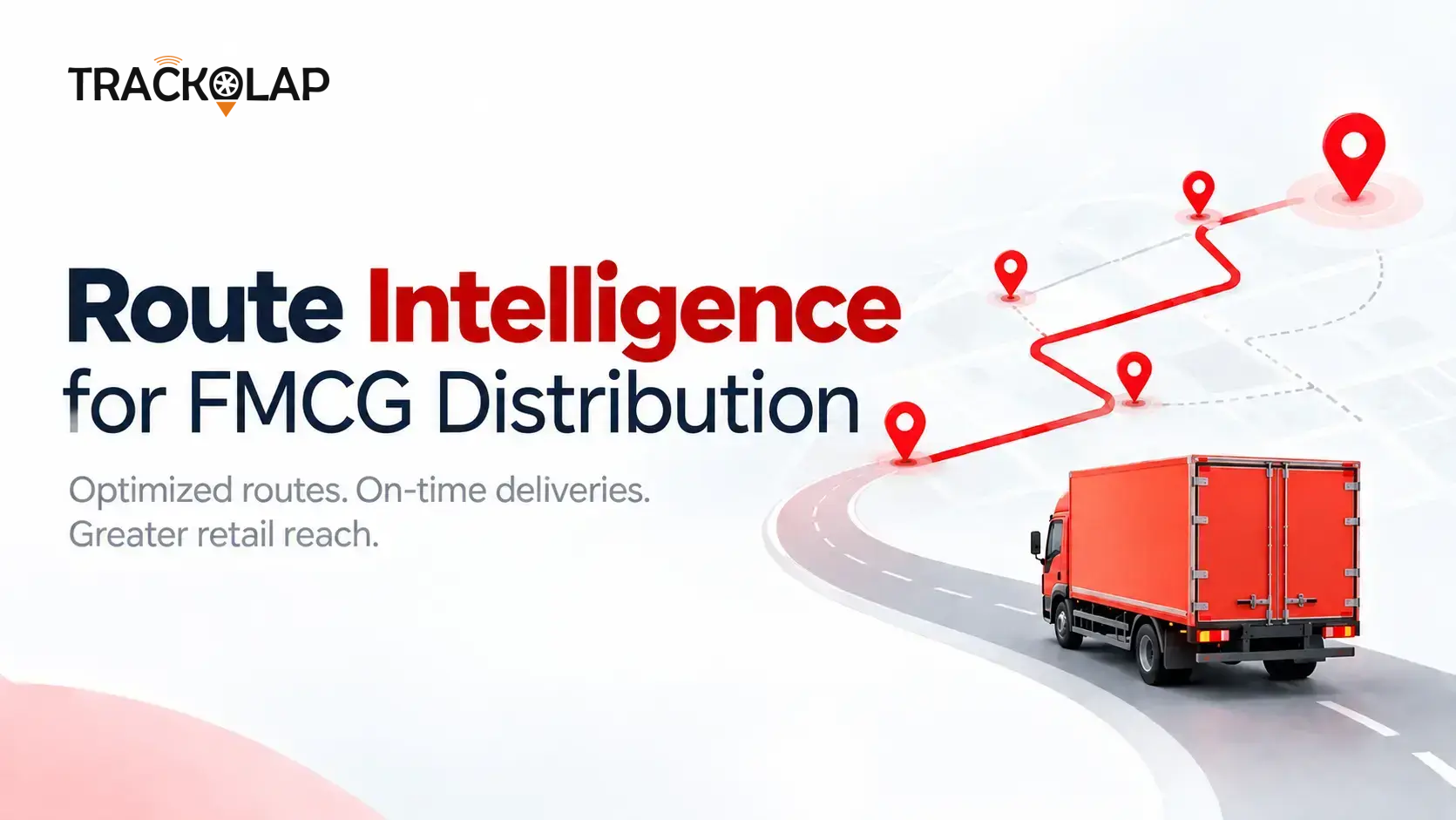
For field and distribution teams, the day begins with the beat plan — which outlets, clients or sites each executive must cover. Digital beat planning lets managers assign optimised routes, set visit targets, and sequence stops to cut travel time and fuel cost. Instead of a WhatsApp list, every rep opens the app to a clear, geo-tagged itinerary; every completed visit updates the dashboard instantly. This is the beating heart of any capable field sales management software: unifying beats with tracking and sales data means you finally see the full chain — planned visit → actual visit → order → revenue.
Live tracking that proves the work, not just the intent
Real-time GPS live tracking shows where each field executive is through the day, with geofencing to confirm they reached the client site and time-stamped check-ins at every stop. A modern field employee tracking app makes this effortless and battery-friendly. This is not about surveillance for its own sake; the 2026 evidence is clear that heavy-handed spying reduces output, while transparent, outcome-based tracking maintains it. Done right, live tracking simply replaces “I visited eight shops” with verifiable proof, protecting honest reps and surfacing genuine gaps. It also powers accurate travel-expense calculation and safer lone-worker operations.
Expense management that pays for itself
Manual reimbursement is one of the slowest, most fraud-prone processes in any field operation. Integrated expense management lets executives capture bills on their phone, auto-calculates distance-based travel claims from live-tracking data, routes approvals digitally, and flags anomalies before money leaves the account. Because expenses sit in the same platform as attendance and visits, a claim can be validated against where the person actually was — turning reimbursement from a trust exercise into a data-backed workflow. For most teams, expense management is the fastest-payback module and the easiest entry point into full field force automation.
Face verification and attendance you can trust
Attendance is only meaningful if you can confirm who marked it. Face verification — selfie-based, AI-powered attendance with liveness checks — ends buddy punching and proxy attendance for both field and remote staff, without the hygiene and hardware limits of shared biometric machines. Combined with geo-tagging, it produces a clean, auditable attendance trail that maps neatly onto Labour Codes payroll requirements: the right person, at the right place, at the right time, recorded digitally.
Desktop and dual-monitor monitoring for office and remote teams
Field teams are only half the picture. For office and work-from-home staff, desktop monitoring brings the same clarity — measuring active versus idle time, application and website usage, and task progress. Crucially, modern dual-monitor tracking captures activity across both screens of the increasingly common two-monitor setup, so productivity data is complete rather than half-recorded. Presented transparently and focused on outcomes, this monitoring supports fair workload balancing and burnout detection instead of micromanagement — the approach the data shows actually lifts performance.
AI insights that turn data into decisions
The final layer is intelligence. Once attendance, location, beats, expenses and productivity share one data model, AI insights can surface what humans miss: which beats underperform, which reps are trending toward burnout, which expense patterns look irregular, and where routes can be tightened. Rather than chasing the 88% of AI pilots that fail by over-reaching, the winning approach is narrow, high-ROI automation — smart task allocation, follow-up nudges, attendance-anomaly alerts and expense flags — that pays back in months. AI turns the dashboard from a rear-view mirror into a forward-looking co-pilot.
The six pillars of a unified workforce dashboard
● Beat planning — optimised, geo-tagged field routes.
● Live tracking — real-time GPS with geofenced visit proof.
● Expense management — mobile capture, auto travel claims, fraud flags.
● Face verification — AI attendance that ends proxy punching.
● Desktop & dual-monitor monitoring — complete office/remote productivity data.
● AI insights — anomaly alerts, nudges and optimisation.
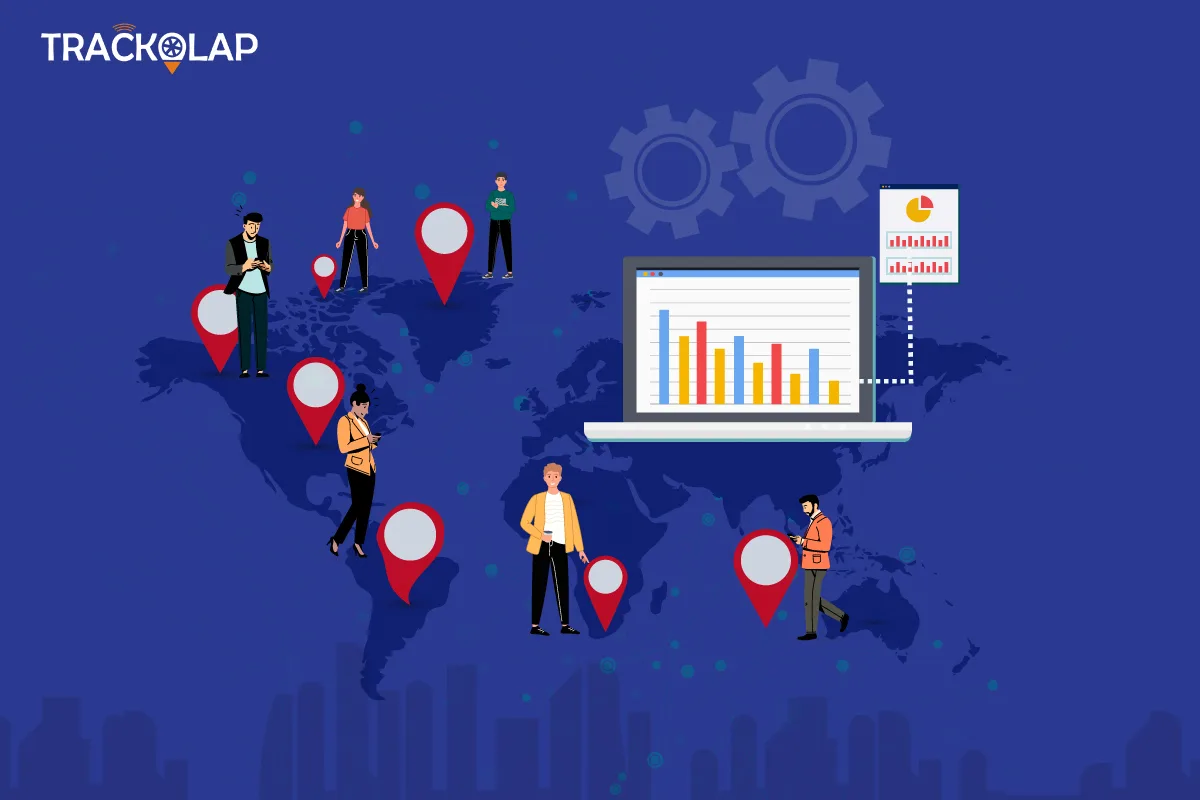
The payoff: from blind spots to a single source of truth
Consolidation is not a cost centre; it is a compounding return. When office, remote and field data converge, four things change almost immediately.
Visibility becomes real-time. Leaders open one dashboard and see attendance, live locations, beat completion, sales activity and spend as they happen — not in a report next week. Decisions get faster and better because they rest on verified data.
Accountability replaces assumption. Verified attendance and geofenced visits mean every hour and every claim is backed by evidence. Honest employees are protected; leakage is exposed and closed.
Productive hours come back. Eliminating double entry and manual reconciliation returns time to selling, serving and managing. Industry studies attribute roughly a 23% productivity uplift and up to a 30% sales increase to field force automation done well.
Compliance becomes a by-product. Because attendance and payroll inputs are already digital, auditable and access-controlled, meeting Labour Codes and DPDP expectations stops being a fire drill and becomes business as usual.
Where it matters most: real-world use cases
The unified-dashboard advantage shows up across every field-heavy sector of the Indian economy.
● FMCG & distribution: beat planning, mobile order booking and secondary-sales visibility across a dense kirana network heading toward a trillion-dollar market.
● Pharma: verified medical-representative visits, sample and expense tracking, and territory-level AI insights.
● Logistics & delivery: live tracking, route optimisation and SLA adherence as quick-commerce resets customer expectations.
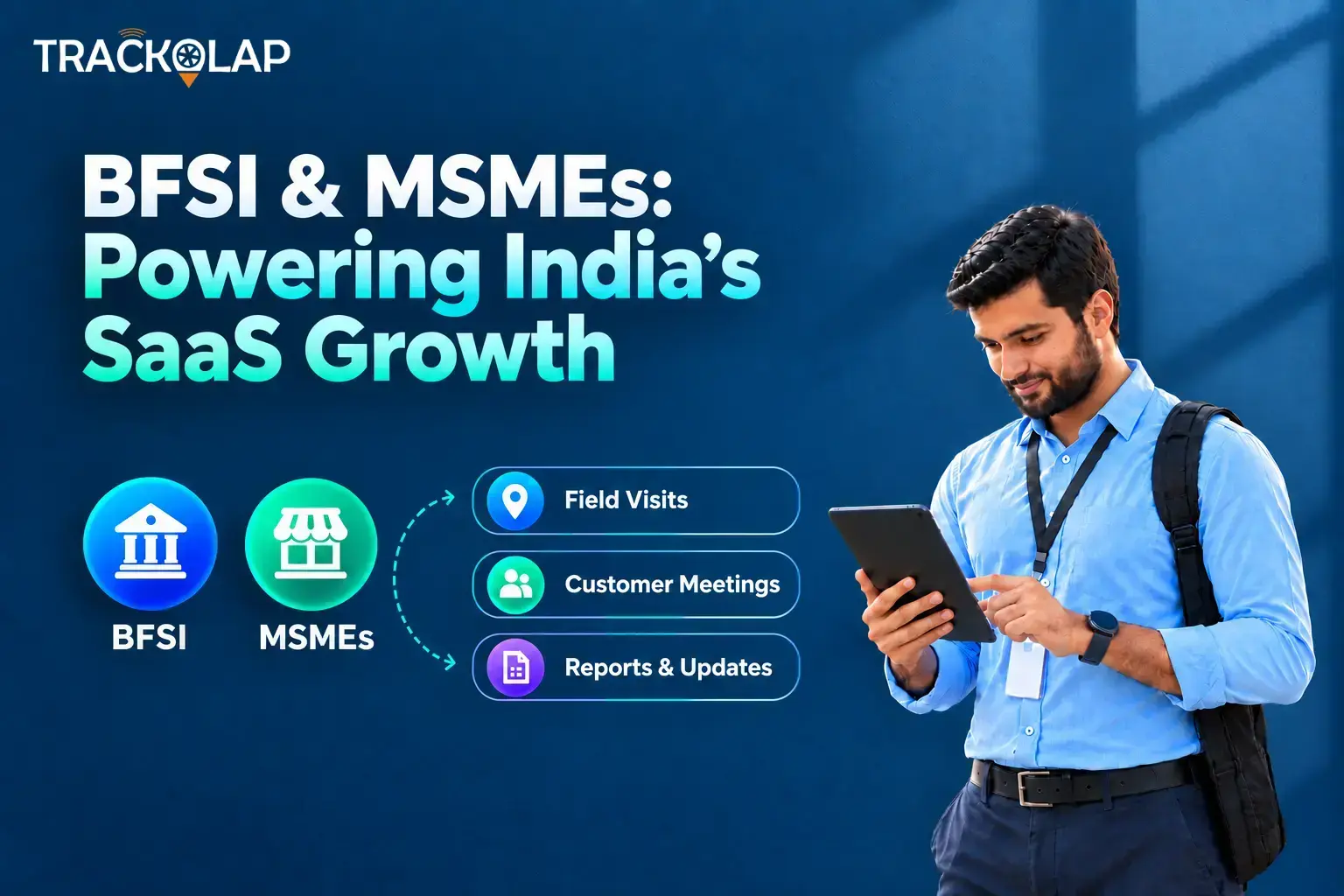
● BFSI & NBFCs: field agent tracking, secure handling of sensitive data, and compliant, auditable attendance.
● Manufacturing & services: desktop and dual-monitor monitoring for back-office teams alongside field-service tracking.
How to move from scattered tools to one dashboard
The shift does not have to be a disruptive “big bang.” The pragmatic path is to lead with the fastest-payback module and expand.
1. Start with expense management or face-verification attendance. Both deliver visible ROI in weeks and win employee buy-in quickly.
2. Add live tracking and beat planning for field teams. Connect planned routes to actual visits and sales outcomes.
3. Layer in desktop and dual-monitor monitoring for office and remote staff. Present it transparently, focused on outcomes.
4. Switch on AI insights across the unified data. Let automation flag anomalies, nudge follow-ups and optimise routes.
Frequently asked questions
What is a unified workforce dashboard?
It is a single platform that brings attendance, live location, beat plans, tasks, sales activity, expenses and productivity for office, remote and field teams into one connected view — replacing multiple disconnected apps and spreadsheets so leaders get real-time, verifiable visibility.
How does field force automation help hybrid teams in India?
It gives managers one place to plan beats, track field executives live, verify attendance with face recognition, manage expenses, monitor office and remote productivity, and read AI-driven insights — ending the blind spots created by managing three different workforces on separate tools.
What is beat planning in field sales?
Beat planning is the process of assigning each field executive an optimised, geo-tagged route of outlets or clients to visit. Digital beat planning cuts travel time and fuel cost, sets visit targets, and links planned visits to actual visits and revenue on one dashboard.
How does face verification improve attendance accuracy?
Face verification uses AI-based selfie attendance with liveness detection to confirm the identity of the person marking attendance. It eliminates proxy or buddy punching for both field and remote employees and produces a clean, auditable, geo-tagged attendance record.
What is dual-monitor tracking?
Dual-monitor tracking captures activity across both screens of a two-monitor workstation, ensuring desktop productivity data is complete rather than partially recorded — important for accurate, fair measurement of office and remote staff.
Does employee monitoring comply with India’s DPDP Act?
Employee monitoring can be DPDP-compliant when data is collected transparently, limited to legitimate purposes, secured with reasonable safeguards and access controls, and handled with employees informed. A unified platform makes this governance far easier than scattered tools. Key takeaways ● Hybrid work created a visibility crisis: office, remote and field teams generate data that scattered tools keep siloed. ● Fragmentation costs more than time — it hides revenue leakage, kills accountability and creates audit risk. ● India’s Labour Codes and DPDP Act: make unified, auditable, secure workforce data a compliance necessity in 2026. ● One dashboard should deliver beat planning: live tracking, expense management, face verification, desktop and dual-monitor monitoring, and AI insights. ● Start with the fastest-payback module — expenses or face-verification attendance — then expand to full field force automation. See it on one screen TrackOlap Field Force unifies beat planning, live tracking, expense management, face verification, desktop and dual-monitor monitoring, and AI insights into a single dashboard — so you can end workforce blind spots and stay audit-ready in hybrid India


 D-5, Logix Infotech Park, Sector 59, Noida - 201301, Uttar Pradesh (India)
 contactus@trackolap.com
 7011494501






 Demo
at free of cost
Demo
at free of cost