












 Back to Blogs
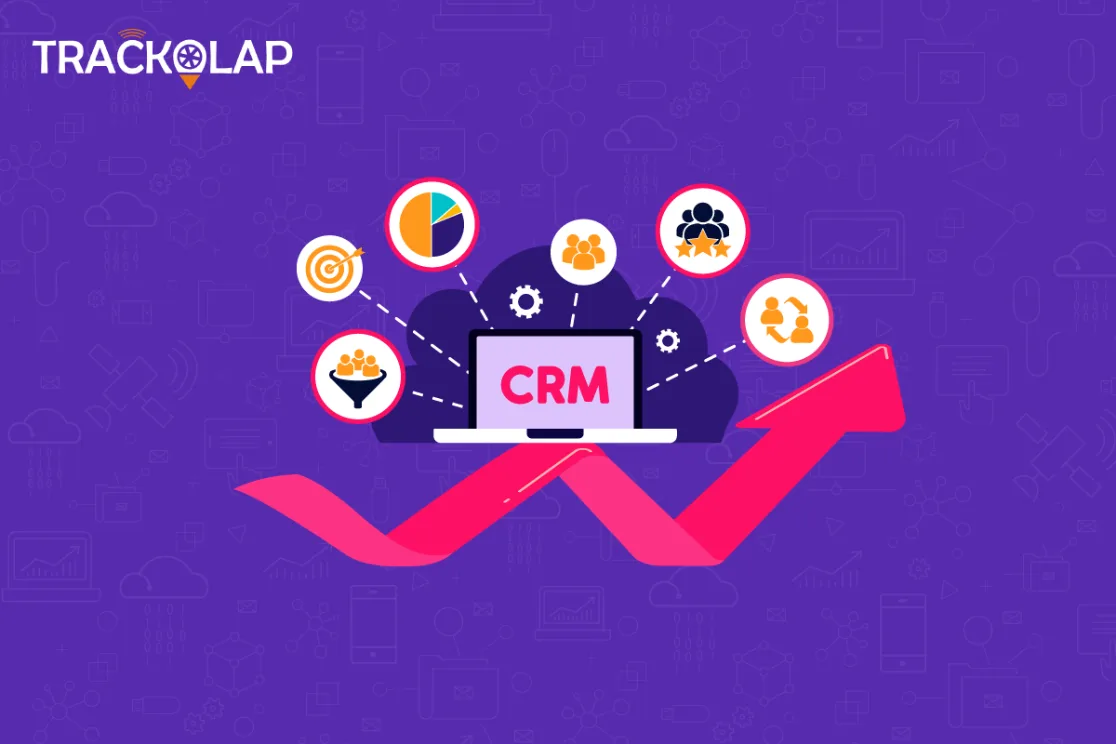
Do you want to grow your business? Of course, you do!
Then, what are you doing to grow your business?
Yes, people only saying that you want to grow your business will not help. You need a proper business growth strategy to scale up your operations in a systematic manner.
You need to decide which tools and policies can take your business ahead of your competitors. In short, you must plan a well-structured strategy to skyrocket your business growth.
Don’t know how to create a business growth strategy?
Then, no need to worry about it. This guide will show you how to develop a business growth plan using a customer relationship management platform.
What is Business Growth?
Business growth is when a company expands and needs more revenue streams. For example, this can occur when a company's revenue increases, more products or services are produced, or its customer base expands.
Growth is the primary goal of the vast majority of businesses. With this in mind, business decisions are frequently made based on what will contribute to the company's long-term growth and success. Several methods can help with growth, which we will discuss further below.
Types of Business Growth
Business owners have several options for their workflow expansion. Business expansion can be classified into the following categories:
1. Organic
Organic growth occurs when a company expands through its own operations, using its own internal resources. It is the opposite of seeking outside resources to help with development.
Making production more efficient so that you can produce more in a shorter time frame is an example of organic growth, which leads to increased sales. Organic growth has the advantage of relying on self-sufficiency and avoiding debt. Furthermore, the increased revenue generated by organic growth can be used to fund more strategic growth methods in the future.
2. Strategic
Strategic growth entails creating initiatives that will aid your company's long-term growth. Two examples of strategic development are — coming up with a new product or designing a market plan to reach a new audience.
Unlike organic growth, these initiatives often require significant resources and funding. As a result, businesses frequently take an organic approach first, hoping to generate enough capital to invest in future strategic growth initiatives.
3. Internal
The internal growth strategy aims to increase revenue by optimizing internal business processes. This strategy, like organic growth, relies on companies using their internal resources. However, an internal growth strategy is about using existing resources best.
Internal growth could be demonstrated by reducing wasteful spending and running a leaner operation by automating some of its functions rather than hiring more employees. However, internal growth can be more difficult because it requires businesses to consider how their processes can be improved and made more efficient rather than focusing on external factors such as entering new markets to facilitate growth.
4. Acquisitions, mergers, and partnerships
While riskier than the other types of growth, mergers, partnerships, and acquisitions can yield high rewards. There is strength in numbers, and a well-executed merger, partnership, or acquisition can help your company enter a new market, expand your customer base, or expand your products and services.
What is a Business Growth Strategy?
A growth strategy enables businesses to expand their operations. Growth can be attained through practices such as opening new locations, investing in customer acquisition, or broadening a product line. The targeted market of your company influences the growth strategies.
Strategizing is considered as your option, incorporated into your business plan. Depending on the type of company you're establishing, your growth strategy may include elements such as:
● Including new locations
● Putting money into customer acquisition
● Opportunities for franchising
● Expansions of product lines
● Selling products across multiple platforms online
Your industry and target audience will influence your decisions, but new customer acquisition will almost always play a significant role.
Watch Video:- How Employees Can Claim Expenses from Company
How Can a CRM Platform Support Your Business Growth?
Customer relationship management software can help businesses to interact with customers and store their data. It can provide analytical data to develop a robust business growth plan.
Using a CRM platform, businesses can better plan growth strategies as follows:
Find and group potential leads
A CRM system can help you easily and quickly identify and add new leads and accurately categorize them. As a result, sales can prioritize opportunities to close deals by focusing on the right leads. Likewise, marketing teams can identify information that requires more nurturing and prime them to become quality leads.
Sales and marketing can focus their attention on potential clients if they have
complete, accurate, and centralized information about them.
Retarget your existing customers
Cross-selling and upselling opportunities become clear as you gain a better understanding of your customers, giving you the opportunity to win new business from present customers.
With increased visibility, you'll be able to provide better service to your customers. According to some studies, happy customers are more likely to become repeat customers, and repeat customers spend more — up to 33% more.

Improve customer experience
Customers today expect prompt, personalized service at all hours of the day and night. A Sales CRM platform can assist you in providing your customers with high-quality service. Your sales reps can quickly see what products customers have ordered and obtain a record of every interaction, allowing them to give customers the answers they require on time.
A CRM can enhance your customers' experiences to offer better customer service, marketing, and more.
Better design products and services
A sound CRM system will collect data from various sources within your organization. This provides unprecedented insights into how your customers feel and what they say about your company — allowing you to improve your offerings, spot problems early, and identify gaps.
Customer management solutions can help you find, win, and retain customers more quickly and efficiently.
5 Ways to Create a Business Growth Strategy Using CRM
Businesses can finally put customers first with customer relationship management software (CRM). However, technology has its limitations. Without an effective CRM strategy, businesses risk failing to provide superior customer value. Here are some pointers to help your company develop a successful CRM strategy:
1. Set your goals
Above all, your CRM should assist your company in meeting its objectives. As a result, the first step in implementing a CRM strategy is to identify those objectives.
After knowing what you want to obtain from your CRM platform, the next step is to figure out how you will get there. Break down your goals into smaller chunks, more manageable objectives, and then plan out how and when you intend to complete these steps. This map should be adaptable, allowing for changes along the way.
2. Prioritize your valuable customers
Businesses frequently want to treat all of their customers fairly. The issue is that business is not a democracy; to be successful, a company must be willing to prioritize customers based on how profitable (or likely to become profitable) they are.
Returning customers, for example, are frequently much more valuable, spending nearly twice as much as new customers. Your company may have its definition of what makes a customer value, so it is up to you to identify the characteristics you most value in a buyer so that you can segment your accounts to increase metric effectiveness.

3. Interact with your employees
Your CRM is designed to handle large amounts of data and facilitate communication among various groups, but your employees will determine whether your objectives are met. Involve your employee in all aspects of the strategic planning process.
This will help them internalize the tools and give them personal ownership over the company's direction. In addition, employees who have been invested will be better able to integrate new policies and technologies to benefit everyone.
4. Changes should be staggered
If an aspect of your business isn't functioning correctly, you may feel pressed to implement new policies and technologies as soon as possible to mitigate any damage.
The issue with this mindset is that implementing too many changes at once can harm your employees' productivity. So keep your workforce in mind, and whenever possible, phase in your new CRM policies.
5. Everything should be synced to your CRM
Many CRMs include built-in programs that mimic the functionality of other, frequently used applications. When this is the case, your systems can easily sync so that any notes or appointments made throughout the system are automatically tracked through the rest of the CRM.
However, if external applications are required, sync your CRM with whatever other programs are being used. The best CRMs will handle this automatically, importing client appointments from your calendar, updating cancellations and other changes, and sending reminders as needed. Syncing everything together will help ensure you use your CRM to its full potential.
The Best CRM Platform to Create Your Business Growth Strategy: TrackOlap
TrackOlap is the Employee Monitoring Software with employee and customer tracking services. We offer a complete CRM platform with an analytical dashboard that compresses all your lead information and helps faster lead conversion.
TrackOlap CRM dashboard has the four core features:
● Lead management software to identify qualified leads and priorities them for quick conversion.
● Task management solution to complete lead nurturing tasks faster and align your team.
● Employee live tracking to ensure your team is always productive and efficient.
● The field force automation platform streamlines field and in-office sales reps.
So, do you want the best CRM platform to build a progressive business growth strategy?
Then, let’s book a free demo with the TrackOlap team to better understand our system.
Frequently asked questions
Why is a CRM important for business growth?
A CRM helps centralize customer data, analyze interactions, prioritize leads, and identify upsell or cross-sell opportunities — aiding in strategic growth.
What types of business growth can CRM support?
CRM supports organic growth (through existing operations), strategic growth (new products or markets), internal growth (efficiency optimization), and growth via partnerships/acquisitions.
How do I set growth goals using my CRM?
Define what you want to achieve with CRM — whether it’s increasing sales, improving customer retention, or growing your pipeline — then break those into smaller, measurable objectives.
How can CRM help you prioritize your most valuable customers?
Using CRM data, you can segment customers by profitability potential, repeat purchases, or engagement, enabling you to focus your efforts on high-value relationships.
Why should employees be involved in the CRM strategy?
Engaging employees in your CRM strategy helps them take ownership, ensures adoption, and aligns CRM usage with your business processes.
How should CRM changes be rolled out to the team?
Implement CRM changes in phases rather than all at once — stagger updates so employees can adapt without being overwhelmed.
Why is integrating other systems with CRM important?
Syncing your CRM with other tools (calendar, email, task manager) ensures that all customer interactions are tracked in one place, making data more useful and reducing silos.
How can CRM data help improve your products or services?
By analyzing CRM data, you can identify what customers like or dislike, spot gaps in your offerings, and use that feedback to shape your product roadmap.
How do I measure the success of my CRM-driven growth strategy?
Track metrics like lead conversion rate, customer retention, average deal size, and customer lifetime value to assess how effectively your CRM strategy is driving growth.
What makes TrackOlap CRM a good choice for building a growth strategy?
TrackOlap CRM brings together lead management, task tracking, employee live tracking, and field sales automation — giving you a complete view and control to drive growth.


 D-5, Logix Infotech Park, Sector 59, Noida - 201301, Uttar Pradesh (India)
 contactus@trackolap.com
 7011494501





 Demo
at free of cost
Demo
at free of cost