
















 Back to Blogs
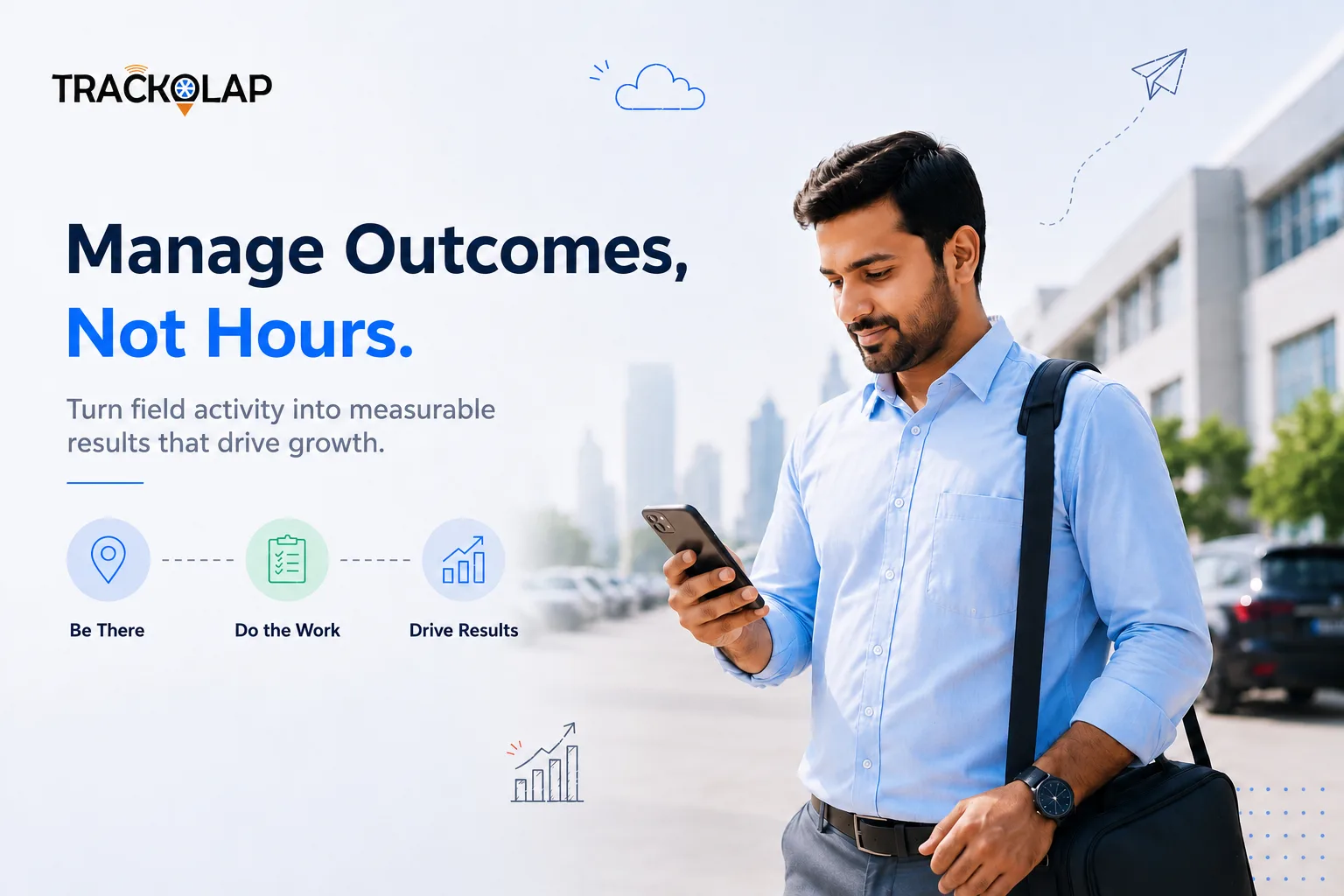
How field-force and remote teams turn “manage outcomes, not hours” from a slogan into a system — with the data, beat planning, and expense management that make it actually work.
What is outcome-based management?
Outcome-based management is a leadership approach that evaluates employees on the results they deliver rather than the time they spend or the activity they appear to perform.
Instead of asking “Were you at your desk for eight hours?” it asks “Did the customer get visited, did the pipeline move, did the target get hit?” For office teams that might mean shipped features or resolved tickets. For field and remote teams — sales reps, service engineers, distribution and merchandising staff — it means visits completed, orders booked, collections made, and deals moved through the funnel.
|
TL;DR — the 30-second
version |
Outcome-based management judges people on results — deals moved, visits made, tasks completed — not hours logged.
- It fails without data. No measurement means “outcome-based” quietly becomes “vibes-based.”
- Field and remote teams need three connected data layers: presence, activity, and outcome.
- Beat planning and expense management are where outcomes become visible — and where money leaks when they aren't tracked.
- Platforms like Trackolap Field Force turn raw field activity into outcome data managers can trust.
The slogan everyone repeats
Walk into any leadership offsite in 2026
and you will hear the same line: manage outcomes, not hours. Stop policing who
logged in at 9 a.m. Start counting what actually got done — deals closed, sites
visited, service tickets resolved, revenue moved. It is one of the most
repeated ideas in modern management with field force automation software, and it is a good one. Flexible,
trust-based, results-first: this is how high-performing teams say they want to
work.
And yet most “outcome-based” programs
quietly fall apart within a quarter or two. Not because the philosophy is
wrong, but because the operating system underneath it is missing.
|
Outcome-based
management fails without one thing: data. |
Outcomes are not opinions. A field visit either happened or it didn't. A deal either advanced a stage or it didn't. An expense claim was either genuine and policy-compliant or it wasn't. Strip away the measurement and “outcome-based” collapses into “vibes-based” — a manager's gut feeling wearing the vocabulary of performance. Measure the work, and the flexibility everyone wants stops feeling like a risk.
Why it's easy to say
The idea sells itself because it flatters
everyone in the room. Leaders like it because it sounds modern and lean.
Managers like it because it promises fewer babysitting duties. Employees like
it because it promises freedom from surveillance and clock-watching. In a
hybrid, distributed, field-heavy world, “we trust you to deliver outcomes” is
exactly what a talented workforce wants to hear.
It is also easy to say because saying it
costs nothing. Announcing an outcome-based culture requires a slide, not a
system. That is precisely why so many organizations get stuck at the slogan.
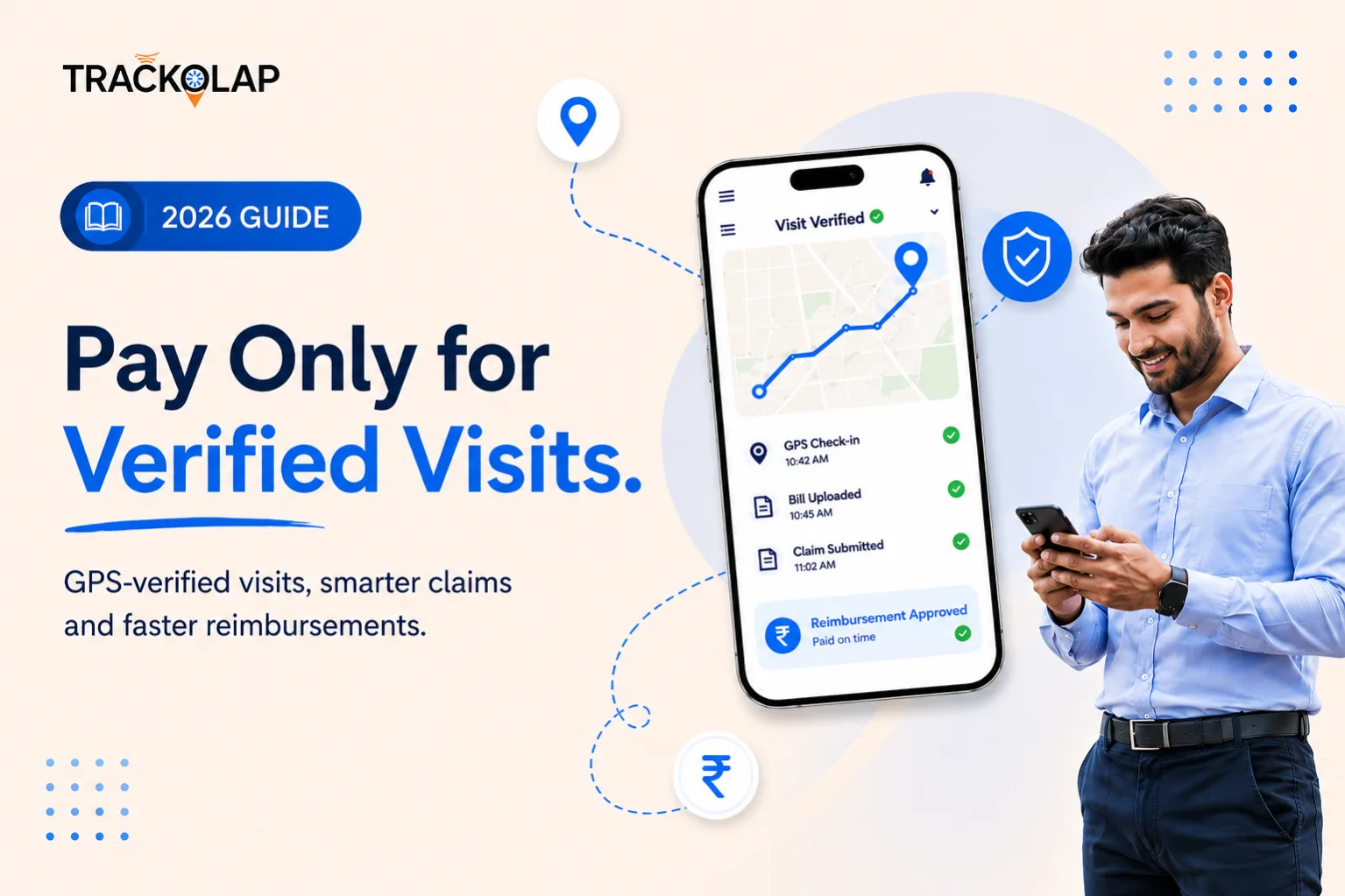
Why it's hard to run — the “vibes-based” trap
Running outcome-based management is hard
because outcomes have to be defined, observed, and trusted — continuously,
across people you often cannot see. This is where the wheels come off,
especially for field forces.
Consider a distributed sales team. A
manager wants to reward results, not hours. But without data, what does that
manager actually have? A rep who is confident and articulate on the Monday call
looks like a top performer. A quieter rep who booked more orders but says less
looks average. Reviews drift toward who tells the best story, not who did the
most work. That is the vibes-based trap: in the absence of measurement,
perception becomes the metric — and perception is biased, gameable, and unfair.
Remote and hybrid knowledge teams hit the
same wall from a different direction. Status updates replace visibility, and
the person best at writing updates can look more productive than the one
quietly shipping the most work. Whether the team is in the field or on a
laptop, the failure is identical: without a shared record of what actually got
done, management defaults to whoever is loudest. This is why employee monitoring software — and, for desk-bound roles, Employee Productivity Software —
has moved from niche to mainstream: not to spy on people, but to create the
shared, objective record that fair outcome-based reviews depend on.
Three failure
modes show up again and again:
The fix is not more surveillance. It is
better instrumentation — a lightweight, transparent layer of data that makes
real work visible to everyone.
The three data layers that make outcomes measurable
To manage outcomes credibly, you have to
convert everyday field activity into structured data across three layers.
|
Data layer |
What it captures |
Example data |
Outcome it proves |
|
Presence |
Where and when work happened |
GPS attendance, geo-verified check-ins |
The rep was actually at the client site |
|
Activity |
What was actually done |
Visits logged, calls, orders, meeting notes |
9 productive visits, 3 product demos |
|
Outcome |
What changed for the business |
Deals moved, revenue booked, collections |
Pipeline advanced this week |
When these three layers connect, a manager
can finally answer the only question that matters in outcome-based management:
did the effort produce the result? Miss any layer, and you are back to
guessing.
Take a simple example. Two reps each report
a busy week. The presence layer shows both were in-market five days. The
activity layer shows Rep A logged twelve outlet visits to Rep B's five. The
outcome layer shows Rep B booked three large orders while Rep A booked none.
Only with all three layers can a manager coach fairly — celebrating Rep B's
conversion while asking Rep A why high activity produced no results. Take away
the data and you would likely have promoted the wrong rep.
Where field teams break without data
Two operational areas expose the data gap
faster than anything else: beat planning and expense management. They are also,
not coincidentally, where the money is.
Beat planning: the outcome engine for field sales
A “beat” is the planned route and set of
outlets or clients a field rep is expected to cover. Beat planning decides who
visits which customers, how often, and in what sequence. Done on a whiteboard
or a spreadsheet, it is a wish list. Done with data, it becomes an outcome
engine.
Smart beat planning ties each planned visit
to an expected outcome — an order, a collection, a demo, a renewal — and then
measures the gap between plan and reality. Which beats convert? Which outlets
are visited but never buy? Which high-value clients get skipped because they
sit inconveniently on the map? Without visit-level data, none of these
questions can be answered, and outcome-based management of the field team is
impossible. With it, beat planning becomes a continuous optimization loop:
plan, execute, measure, reroute.

Expense management: the outcome signal hiding in plain
sight
Field work runs on expenses — fuel, travel,
lodging, client meals, daily allowances. Handled on paper or WhatsApp photos,
expense management becomes a monthly headache of lost bills, inflated claims,
and slow reimbursements that quietly erode both trust and cash flow. The
alternative is purpose-built expense management software that captures a
receipt at the moment of spend and routes it straight to approval.
But expenses are also an outcome signal.
Mileage should map to visits made; fuel should map to the beat covered. A claim
that shows heavy travel with no matching visits or orders is a red flag that
outcome data surfaces instantly. Tighter expense management is not just cost
control — it is a cross-check on whether the field effort you are paying for
actually produced results.
It is a compliance matter, too. In India,
reimbursements of expenses incurred wholly and exclusively for official duties
are generally not treated as taxable salary — but only when they are backed by
genuine bills and proper records, as the Income Tax Department's guidance on employee benefits and allowances makes clear.
Digitized, receipt-linked expense management protects the employee's tax
position and the company's audit trail at the same time. For businesses
claiming input tax credit, GST-compliant expense management that records
tax-invoice details on every bill turns reimbursement from a liability into a
clean, auditable trail.
Flexibility and compliance are not opposites
Leaders sometimes worry that measuring
field work clashes with the flexible, trust-based culture outcome-based
management promises. In practice, the opposite is true. Clear data is exactly
what lets you extend flexibility safely. When you can see that outcomes are
being met, you no longer need to police hours — so genuine autonomy finally
becomes possible.
The same logic applies to audits. When
attendance, activity, and expenses live in one system, a compliance review
becomes a report you export rather than a fire drill you dread — and the
records that protect the company are the very same records that let your people
work with freedom.
There is a regulatory dimension as well.
India's consolidation of 29 central labour laws into four Labour Codes —
including the Occupational Safety, Health and Working Conditions Code,
2020 — pushes employers toward cleaner records on working hours,
attendance, and workplace conditions. Structured field data is not red tape; it
is how a modern, distributed organization stays both flexible and compliant.
Measuring productivity the right way
The discipline of measuring output rather than hours is not new. National statistics agencies have tracked labour productivity as output per hour worked for decades — the U.S. Bureau of Labor Statistics, for instance, defines it precisely as real output divided by hours worked. The lesson for managers is the same at company scale: productivity is a ratio of results to effort, and you cannot manage what you have not instrumented.
Outcome-based management simply brings that
macroeconomic logic down to the individual rep, route, and day.
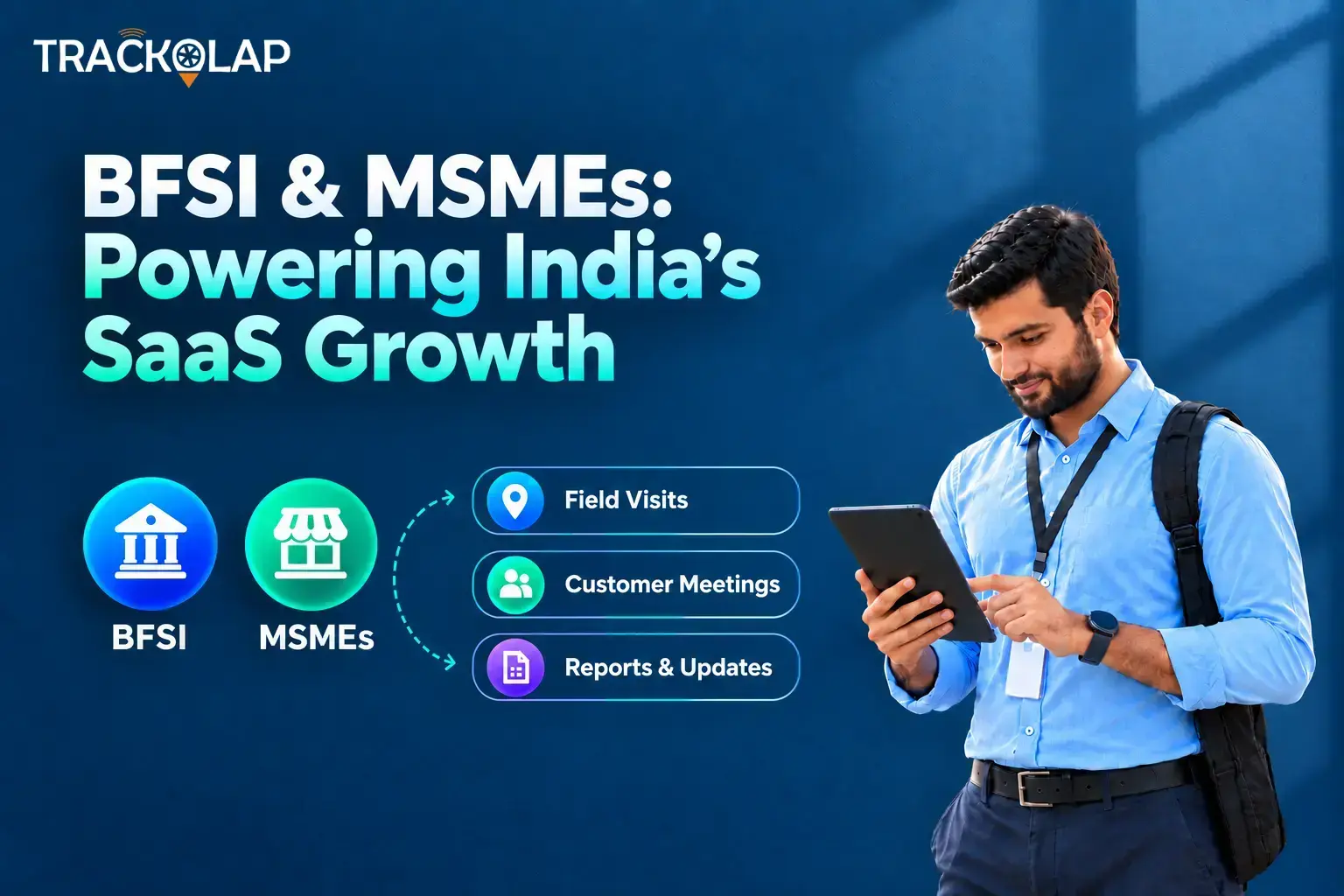
How Trackolap turns the slogan into a system
This is the gap Trackolap Field Force — a
field force automation software built for distributed teams — is designed to
close. Instead of asking managers to trust vibes, it captures the three data
layers automatically and turns them into outcomes leaders can act on:
When teams shortlist the best employee
monitoring software of 2026, the deciding factor is no longer how closely a
tool watches people — it is how clearly it connects everyday activity to
business outcomes. That is the shift from monitoring for its own sake to
management that produces measurable results.
The result is the culture everyone wanted
in the first place — trust-based, flexible, results-first — but now standing on
a foundation of data instead of hope. Flexibility stops feeling like a risk,
because the outcomes are finally visible.
Quick self-assessment: is your team really outcome-based?
Score one point
for each “yes.”
- You can name the top three outcomes each field role is responsible for.
- You can see, today, who visited which client and what resulted.
- Your beat plans are measured against actual conversions, not just marked “completed.”
- Every expense claim is linked to a verifiable activity. Reviews are driven by data, not by who spoke most confidently on the call.
|
4–5 You are
genuinely outcome-based. 2–3
Outcome-aspiring — the philosophy is there, the data isn't. 0–1 You are running on vibes; start by
instrumenting presence and activity. |
Frequently asked questions
What is outcome-based management in simple terms?
It is judging employees on results — deals moved, visits completed, tasks finished — instead of hours logged or time spent looking busy.
Why does outcome-based management fail?
It fails when there is no data to measure outcomes. Without reliable records of activity and results, managers fall back on perception, and “outcome-based” becomes “vibes-based.”
How do you measure outcomes for remote and field teams?
Capture three connected layers of data: presence (GPS attendance and check-ins), activity (visits, tasks, orders), and outcome (deals moved, revenue, collections). Field-force platforms like Trackolap automate this capture in real time.
How does expense management support outcome-based management?
Expenses cross-check effort against results. When mileage and travel map to real visits and orders, expense data confirms the field work was productive — while keeping reimbursements compliant and fast.
What is beat planning and why does it matter?
Beat planning is the routing of field reps across clients or outlets. Tied to outcome data, it reveals which routes and visits actually convert, turning field coverage into measurable results. The bottom line Everyone wants to manage outcomes, not hours. But outcomes need data — tasks completed, visits made, deals moved, expenses justified. Without that, outcome-based management is just a nicer word for guessing. Measure the work, and flexibility stops feeling like a risk; it becomes your competitive advantage.



 D-5, Logix Infotech Park, Sector 59, Noida - 201301, Uttar Pradesh (India)
 contactus@trackolap.com
 7011494501






 Demo
at free of cost
Demo
at free of cost