
















 Back to Blogs
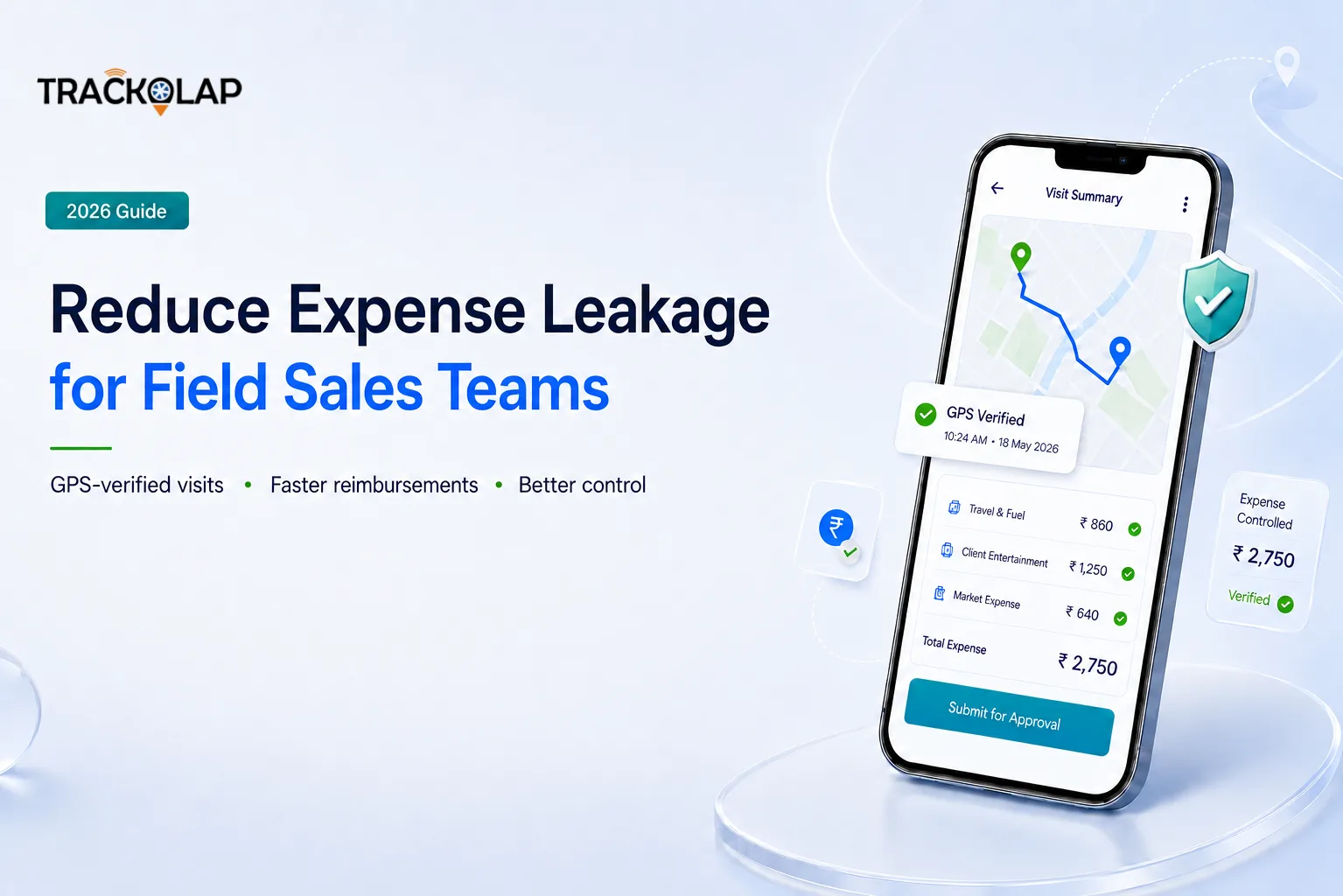
Every rupee a field executive spends on travel, fuel, lodging and daily allowance is supposed to buy your company one thing: a genuine customer visit that moves a deal forward. When the link between the spend and the visit breaks, you get expense leakage — money that leaves the business without producing the outcome it was meant to fund.
This is rarely about dishonest people. In most Indian small and mid-sized businesses, leakage is a process problem: paper vouchers that can't be checked, claims approved on faith because nobody has time to audit them, and reimbursement cycles so slow that even honest staff pad their numbers to stay cash-neutral. Fix the process and the leakage shrinks on its own.
This guide gives finance and operations leaders a practical, 2026-ready playbook to reduce expense fraud in field-sales reimbursement — using GPS-verified visits, disciplined beat planning and digital expense workflows. It is the exact model modern field service management software is built around, and the one TrackOlap delivers out of the box.
01 — THE PROBLEM
The real cost of expense leakage
Leakage hides in small, repeated amounts that never look alarming on any single voucher — which is precisely why it survives for years. In a distributed field team, the common leak points look like this:
– Ghost visits: A daily allowance and travel claim for a customer meeting that never happened, or happened at a fraction of the distance claimed.
– Inflated distance & fuel: Odometer or kilometre figures rounded generously upward, or the same route billed twice.
– Duplicate & recycled bills: The same restaurant or fuel receipt submitted across two months, or shared between colleagues.
– Policy creep: Lodging, meals and miscellaneous spends that quietly exceed grade-wise limits because nothing stops them at entry.
– Beat drift: Executives visiting easy, nearby accounts while claiming the full planned territory.
|
5–15% of field T&E
budgets typically lost to leakage & weak controls |
7–20 days common reimbursement
wait in manual, paper-based cycles |
1 system needed to verify the
visit and the claim together — not two |
|
THE CORE INSIGHT You cannot audit
an expense you cannot verify. A fuel bill only tells you money was spent —
not that a real, productive customer visit justified it. The moment you can prove the visit, most leakage has nowhere
left to hide. |
02 — THE HIDDEN TAX
Why reimbursements crawl
Slow reimbursements are the twin of expense fraud, and they feed each other. When claims move through WhatsApp photos, email threads and a shared spreadsheet, every step adds delay: the executive collates bills at month-end, a manager eyeballs them without real proof, finance keys them in, queries bounce back, and payout lands weeks later.
Two things break as a result. First, trust erodes — reliable performers resent chasing their own money and start over-claiming to build a buffer. Second, control collapses under volume — approvers rubber-stamp claims because scrutinising a hundred paper vouchers a week is impossible. Speed and honesty are not a trade-off here; the same fix improves both.
There is also a compliance dimension worth getting right. Reimbursements for genuine official travel are treated very differently from taxable allowances under Indian income-tax rules. Conveyance and travel paid to meet the actual cost of official duties can be exempt to the extent of real expenditure incurred, as clarified by the Income Tax Department's guidance on salary income and Section 10(14) allowances and its published list of allowances allowable to a taxpayer. Clean, documented, verifiable expense records don't just cut fraud — they make that exemption defensible if the numbers are ever examined.
03 — FIX ONE
GPS-verified visits & beat planning
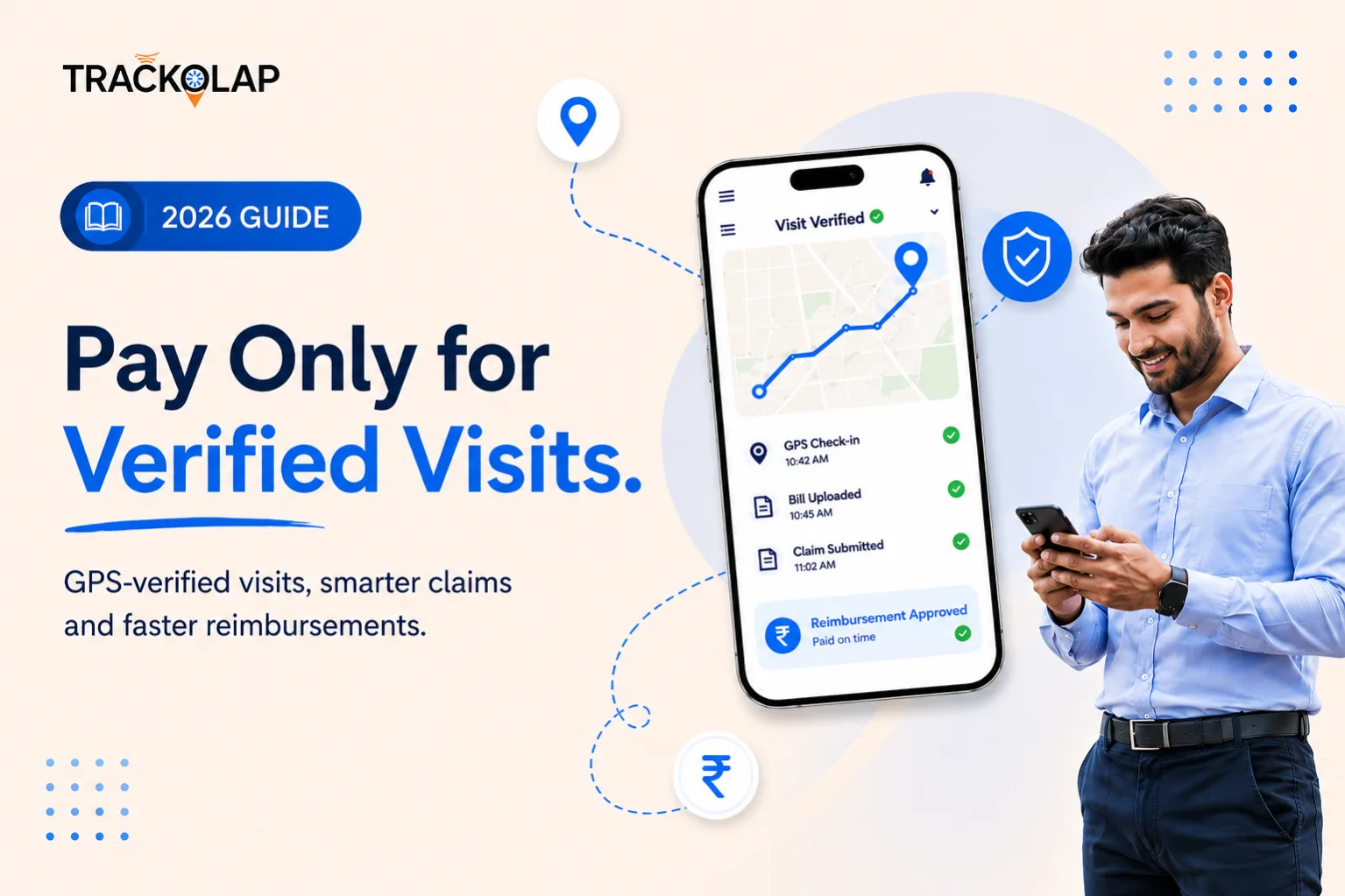
The single highest-leverage move you can make is to attach proof of presence to every visit. Instead of taking a visit on trust, the executive's app records a time-stamped, location-verified check-in at the customer's site. Now a travel or daily-allowance claim can be matched against a fact, not a story.
This is where beat planning turns from a wall chart into a control. A beat is the planned sequence of accounts an executive is meant to cover in a day or week. When the plan lives in the same system that captures GPS check-ins, three things become visible instantly:
– Plan vs actual. Which planned outlets were genuinely visited, which were skipped, and which unplanned stops were added.
– Route sanity. Whether the distance claimed matches the actual path between verified check-ins.
– Coverage & productivity. Visits per day, time on site, and territory reach — the real drivers of field ROI.
With verified beats in place, expense claims practically self-validate. A distance allowance is approved because the route between two genuine check-ins supports it. A daily allowance is paid because the day shows real, productive coverage. This is the model that mature field service management platforms and field service operations software are built on — and it is exactly what TrackOlap's field force platform delivers for sales, service and distribution teams.
04 — FIX TWO
|
DO IT RESPONSIBLY Location
tracking is powerful, so use it lawfully and transparently. Under India's new
privacy regime — the Digital Personal Data Protection Act, 2023 and the DPDP Rules, 2025 notified by the Government of India
— location data is personal data. Track only during work hours, state the
purpose clearly to your team, capture consent, and limit access. Done right,
GPS verification builds trust rather than eroding it. |
Digital expense workflows that pay faste
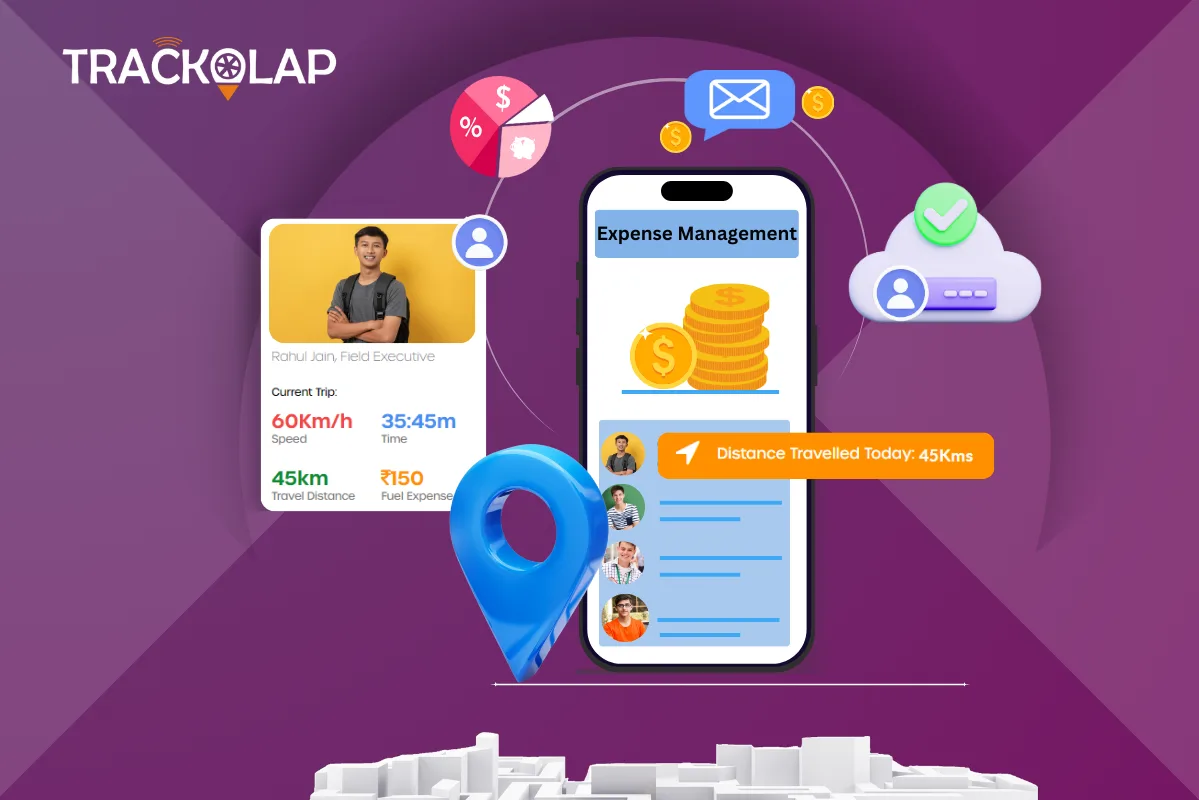
Verifying the visit closes the biggest gap. Digitising the claim closes the rest — and it is what finally makes reimbursements fast. A modern field force expense management workflow replaces the month-end paper scramble with capture-at-source, controls-at-entry and approval-in-flow.
Capture at the source
The executive photographs a bill the moment it is incurred. The app geo-tags and time-stamps it, reads the amount, and attaches it to the day's verified visit. No shoebox of receipts, no end-of-month reconstruction, no room for a recycled bill from three weeks ago.
Enforce policy at entry, not after payout
Grade-wise limits for lodging, meals, fuel and daily allowance are built into the form. A claim that breaches policy is flagged before it is ever submitted — so approvers spend their attention on genuine exceptions instead of policing every line. Duplicate-bill detection catches the same receipt twice automatically.
Approve in flow, reimburse on time
Claims route to the right manager with the visit proof already attached. Approvals happen from a phone in minutes; finance exports a clean, audit-ready batch for payout. The reimbursement cycle compresses from weeks to days — which, on its own, removes most of the incentive to over-claim.
|
Same day bill capture,
geo-tagged at the point of spend |
Auto policy-limit &
duplicate checks at submission |
Days not weeks — verified
claims to reimbursement |
05 — THE DIFFERENCE
Manual process vs TrackOlap
Put the two models side by side and the gap is stark. This is the difference between hoping claims are honest and knowing they are.
|
Capability |
Manual / spreadsheet |
TrackOlap |
|
Proof of visit |
None — taken on trust |
GPS & time-stamped
check-in |
|
Beat plan vs actual |
Invisible |
Tracked automatically |
|
Bill capture |
Month-end, easy to
recycle |
Geo-tagged at source |
|
Policy limits |
Checked after payout |
Enforced at entry |
|
Duplicate detection |
Manual, unreliable |
Automatic |
|
Reimbursement speed |
1–3 weeks |
Days |
|
Audit trail |
Fragmented |
Single, exportable
record |

06 — GET STARTED
A 30-day rollout checklis
You don't need a six-month transformation programme. Most teams reduce leakage measurably within a single expense cycle by moving in this order:
– Week 1 — Set the rules. Publish clear grade-wise limits for travel, fuel, lodging, meals and daily allowance, and define what a valid, verifiable visit looks like.
– Week 2 — Digitise capture. Roll out the app for GPS check-ins and geo-tagged bill capture. Communicate the privacy purpose and secure team consent up front.
– Week 3 — Wire the beats. Load planned beats so plan-vs-actual and route data start flowing, and switch expense approvals into the digital workflow.
– Week 4 — Close the loop. Run your first fully digital reimbursement batch, review the leakage and coverage dashboards, and tighten any limit that exceptions expose.
By the end of one cycle you will have two things you never had before: proof for every visit and a reimbursement cycle measured in days. Leakage falls, genuine performers get paid on time, and finance finally has an audit trail it can stand behind.
07 — ANSWERS
Frequently asked questions
How does GPS verification actually reduce expense fraud?
It attaches proof of presence to every visit. A travel or daily-allowance claim can then be matched against a time-stamped, location-verified check-in instead of being approved on trust. Ghost visits and inflated distances stop being possible because the underlying visit is either verified or it isn't.
Is employee GPS tracking legal in India?
Yes, when done lawfully and transparently for a legitimate business purpose. Under the Digital Personal Data Protection Act, 2023 and the DPDP Rules, 2025, location data is personal data — so you should track only during work hours, clearly state the purpose, obtain consent, and limit who can access the data. Used this way, it strengthens trust rather than undermining it.
Are field-staff reimbursements taxable?
Reimbursements of genuine official travel and conveyance expenses can be exempt to the extent of the actual expenditure incurred, per the Income Tax Department's guidance on Section 10(14) allowances. Clean, verifiable, well-documented records make that treatment defensible. This is general information, not tax advice — confirm your specific structure with a qualified professional.
What is beat planning, and how does it help with expenses?
A beat is the planned sequence of accounts a field executive should cover in a day or week. When beats sit in the same system as GPS check-ins, you can see plan versus actual coverage and validate that claimed distances and allowances match real, productive visits — turning expense approval from guesswork into evidence.
How much can a business save by fixing expense leakage?
Field T&E leakage commonly runs in the 5–15% range where controls are weak. Closing ghost visits, duplicate bills and policy creep — while speeding up reimbursements so honest staff stop over-claiming — typically recovers a meaningful share of that within the first cycle or two.
How quickly can we roll this out?
Most teams see measurable results within a single expense cycle — roughly 30 days: set clear policy limits, deploy app-based GPS check-ins and geo-tagged bill capture, load beats, and run the first fully digital reimbursement batch.



 D-5, Logix Infotech Park, Sector 59, Noida - 201301, Uttar Pradesh (India)
 contactus@trackolap.com
 7011494501






 Demo
at free of cost
Demo
at free of cost