
















 Back to Blogs

Microfinance Institutions (MFIs) play a life-changing role in financial inclusion. They also give small loans to shopkeepers, farmers, and daily wage earners who may not necessarily have access to conventional banking. However, behind any successful microfinance initiative, there is a massive logistical challenge of weekly collections.
Most MFIs rely on field teams to meet borrowers once a week, unlike banks that receive the monthly EMIs digitally. It ensures that repayments are small and easy to manage by the borrowers, but this also makes field work complicated. It is not easy to deal with hundreds of visits every week, to track the payments, and to ensure that everything is correct.
That is the reason why a significant number of MFIs are considering field sales automation software to streamline and update their field operations.
Understanding Weekly Collections in Microfinance
Weekly collections hold together the operations of the microfinance. Borrowers will pay a little installment on a weekly basis either in group meetings or in scheduled visits.
This model is effective since:
Small weekly payments are easier for borrowers
MFIs detect repayment issues early
Field teams build strong relationships with customers
But there is also a weekly collection that puts operational pressure. Each field employee can have 400-600 borrowers per week. Without technology, this is hard to control.
Field sales automation software is the solution to the game-changer.
Why Manual Collection Methods No Longer Work
Spreadsheets, phone calls, and paper registers are still used by a few MFIs. Although these methods were effective in the past, they find it hard to manage the increased borrower bases.
Common challenges include:
1. Unplanned Field Routes
Field teams cover several rural areas and localities daily. Without proper planning, they could end up wasting hours on travel and missing vital visits.
2. Limited Visibility for Managers
At the end of a week or a day, managers are usually updated. This lag renders it difficult to follow up on real-time progress.
3. Cash Handling Risks
Money is collected every week, and this poses a high risk of mistake or fraud.
4. No Proof of Field Visits
Managers are unable to easily attend the meetings that occurred as scheduled.
Field sales automation software addresses these problems in current MFIs.
How Field Sales Automation Software Supports Weekly Collections
Field Sales Automation Software and the Weekly Collection Assistance.
The automation introduces order, openness, and effectiveness to the whole collection process. Solutions such as TrackOlap have become common instruments used by many MFIs to digitize their field operations and enhance their performance in terms of collection.
Let’s explore how this works.
Smart Route Planning with Beat Plan Software
It is time-consuming to plan routes of daily collections manually. Managers have to allocate villages, groups of borrowers, and schedules of visits.
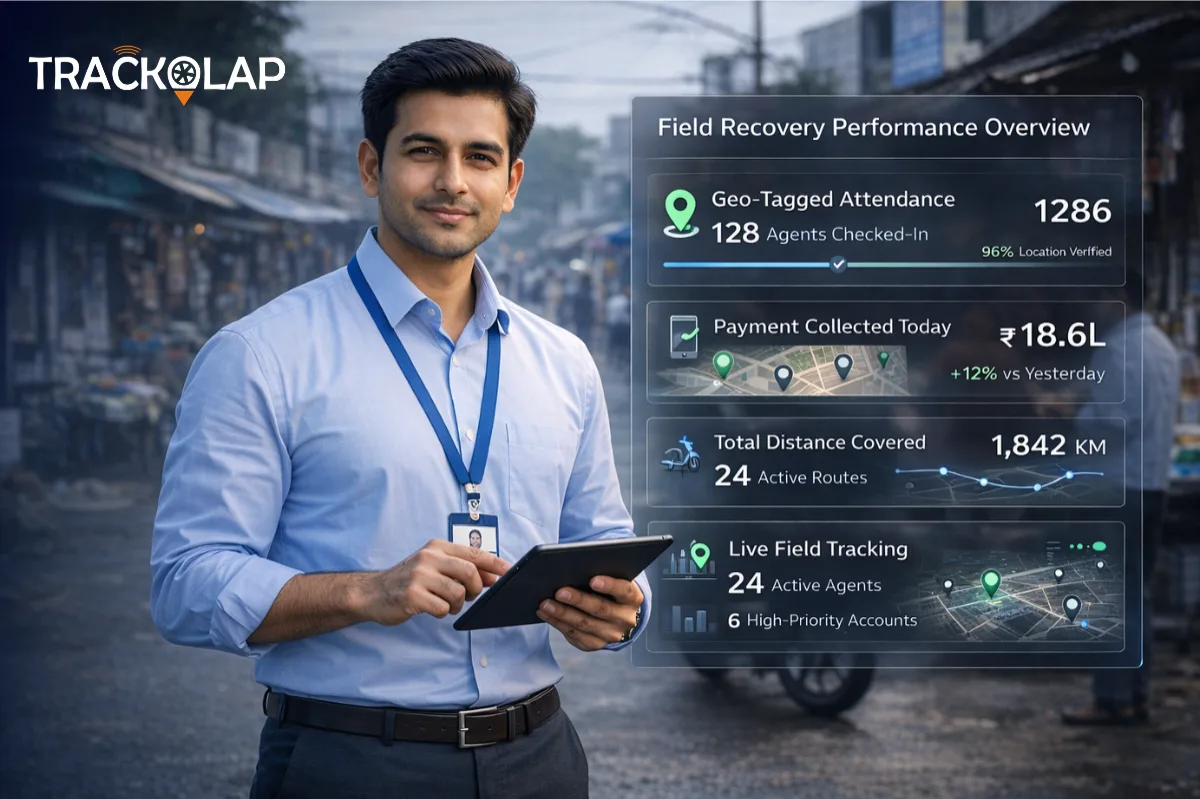
Using Beat plan software, which is a key component of field sales automation software, MFIs can:
Create structured weekly visit plans
Assign routes digitally
Balance workloads among field officers
Reduce travel time and fuel costs
The mobile app follows a schedule that field officers only have to follow. It does not leave out any group of borrowers. This organized planning enhances discipline and increases the efficiency of the collection.
Real-Time Visibility with Employee Live Tracking Software
Real-time tracking is one of the greatest advantages of the field sales automation software.
With employee live tracking software, managers are in a position to know the location of the field officers during working hours.
It is a response to the valuable questions immediately:
Did the officer reach the assigned village?
Are visits happening on time?
Which locations are pending?
Real-time visibility, such as TrackOlap, eliminates the necessity of making constant phone calls to follow up and enhance accountability.
Digital Collection Recording on the Spot
Paper registers reduce the speed of reporting and lead to errors. Field officers use mobile apps to capture collections through the assistance of field sales automation software.
They can:
Update borrower accounts instantly
Generate digital receipts
Reduce duplicate data entry
Avoid end-of-day paperwork
Managers receive real-time updates rather than having to wait and receive manual reports.
Visit Verification Builds Trust
Microfinance requires trust. The borrowers will require frequent meetings and clear records.
The field sales automation software checks with:
GPS tagging
Time-stamped check-ins
Digital attendance logs
It makes field officers stick to the schedule, and meetings are held regularly.
Such solutions as TrackOlap assist MFIs in keeping accountability and provide field officers with evidence of work.
Real-Time Reports for Faster Decisions
Data helps MFIs act quickly.

Using field sales automation software, managers have access to dashboards that display the following:
Daily collection progress
Pending payments
Branch performance
Field officer productivity
When collections decline in an area, the managers can investigate instantly. Making decisions quickly will prevent minor issues from becoming major ones.
Improving Field Officer Productivity
Weekly collections depend on field officers. Productivity is affected when their workload is converted into manual and repetitive work.
Field sales automation software is useful because:
Providing clear daily schedules
Reducing paperwork
Simplifying reporting
Improving route planning
Using tools such as TrackOlap, field officers are more engaged in communication with borrowers and are not spending their time on manual work.
Better Experience for Borrowers
Borrower satisfaction is also enhanced with automation.
Borrowers enjoy the following advantages with field sales automation software:
Timely visits
Clear payment accounts.
Instant digital receipts
Consistent communication
Repayment discipline will come automatically when the borrowers have confidence in the system.
Reducing Fraud and Errors
There is always a risk of cash collections. Lack of receipts, wrong entries, and disagreements may hurt trust.
Field sales automation software establishes an electronic record of each operation. It reduces:
Fake entries
Lost records
Payment disputes
Miscommunication
Openness enhances adherence and fosters trust throughout the company.
Scaling MFI Operations with Confidence
Manual systems cannot match MFIs as they expand.
Expansion increases:
Borrower numbers
Field staff size
Reporting complexity
Collection volume
It is inconceivable to lack automation in operations.
The field sales automation software provides MFIs with the framework to grow and not lose control.

The Shift from Manual Collections to Intelligent Field Operations
| Traditional Workflow (Earlier) |
Modern Workflow with Field Sales Automation Software |
| Routes planned manually, often leading to delays and missed visits |
Daily schedules automatically assigned and visible on the mobile app |
| Dependence on paper registers for recording collections |
Visits verified in real time using employee live tracking software |
| End-of-day reporting required after long field hours |
Payments captured and updated instantly during field visits |
| Manual report submission late at night |
Reports generated automatically with real-time data access |
Why MFIs Are Moving Toward Digital Collections
The microfinance industry is turning out to be a more competitive and controlled industry. MFIs have to be accurate, transparent, and efficient.
The manual systems cannot sustain the modern growth.
This is why the field sales automation software is becoming popular in more institutions to modernize weekly collections.
It helps MFIs:
Improve repayment rates
Enhance the productivity of the field.
Reduce operational costs
Enhance the relationship between the borrowers.
Conclusion
Weekly collections maintain healthy repayment cycles and develop good relationships with borrowers.
However, their management is no longer feasible.
The field sales automation software enables MFIs to automate planning, verify visits, track field teams, and record collections in real time. Employee live tracking software and Beat plan software ensure that there is accountability and efficiency at each level.
To become a growing company with the purpose to serve borrowers more, not only as a scale to the upgrades, but also as the next stage of the weekly collections field sales, field sales automation software will be a mandatory step forward.
Frequently asked questions
Why do MFIs collect loan repayments every week?
Repayment is easier, and repayment is easy since weekly collections coincide with small and frequent income cycles of the borrowers, thus MFIs are able to identify risks at an early stage.
How does field sales automation software simplify weekly collections?
Field sales automation software assists in route planning, field officer tracking, payment registering in real-time, and real-time reporting.
How does employee live tracking software help MFI managers?
Live tracking software for employees provides visibility of visits made by the employee to the field in real-time, hence accountability and minimizing continuous follow-ups.
What role does the Beat plan software play in MFI operations?
The beat plan software will be used to coordinate the village visits, workloads, and ensure that none of the groups of borrowers are left out during the collection of the weekly payment.
Can field sales automation software improve repayment rates?
Yes, automation means it will be on time, records will be correct, and communication with borrowers will be enhanced, leading to improved repayment discipline and trust.




 D-5, Logix Infotech Park, Sector 59, Noida - 201301, Uttar Pradesh (India)
 contactus@trackolap.com
 7011494501






 Demo
at free of cost
Demo
at free of cost