
















 Back to Blogs
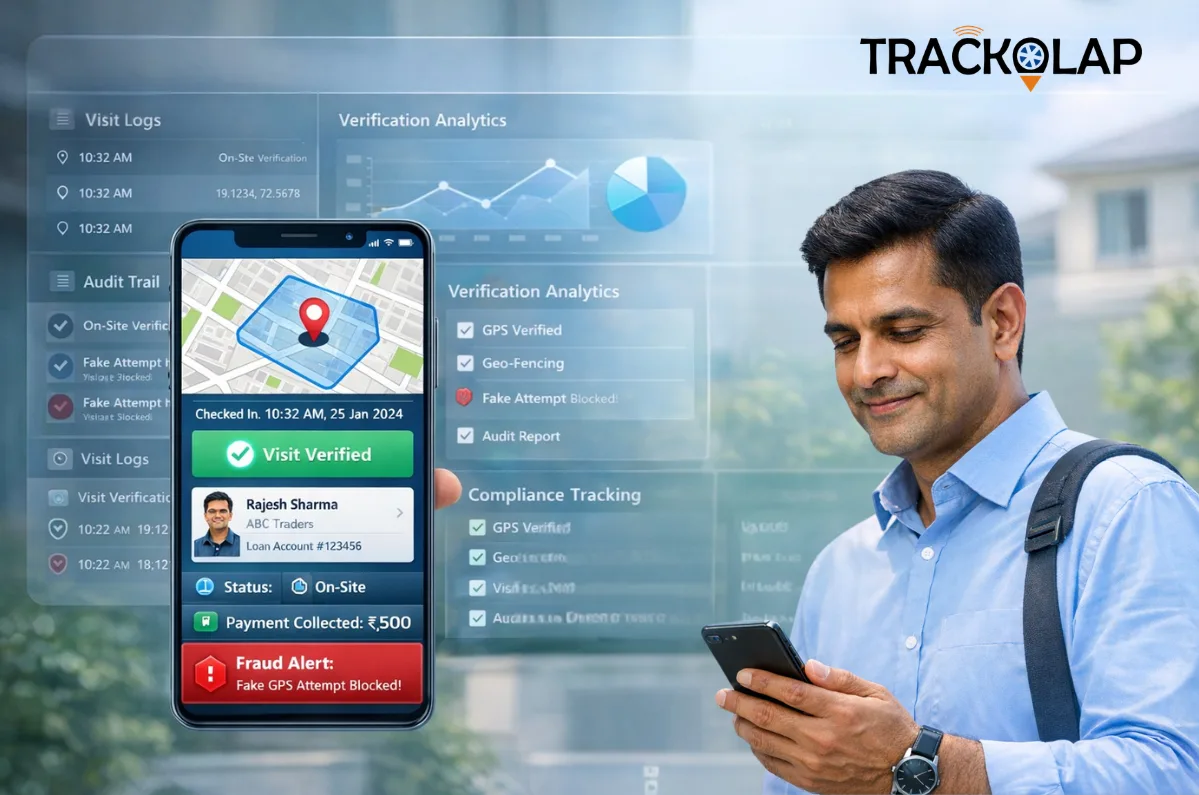
The Non-Banking Financial Companies (NBFCs) depend on field operations. Field agents are essential in ensuring the trust, compliance, and effectiveness of such organizations, through checking loan applications to tracking repayment. However, with the increase in operations, one of the issues has been an increase in subtle influence, and that is fake or unverified visits. Under-reporting by field personnel not only impacts collections but also puts NBFCs at risk of compliance as well as operational inefficiencies.
Here, the location-based verification of visits with the help of such solutions as TrackOlap can transform the NBFC field management.
Why Field Visit Authenticity Matters in NBFC Operations
The NBFCs are highly dependent on the field staff to handle customer contacts, collections, and document verification. The quality of field visit data determines the success of these operations. Without proper reporting, managers will find themselves in a guessing game about which visits have been made and which have not. It often leads to erroneous decisions, delayed collections, and reduced accountability.
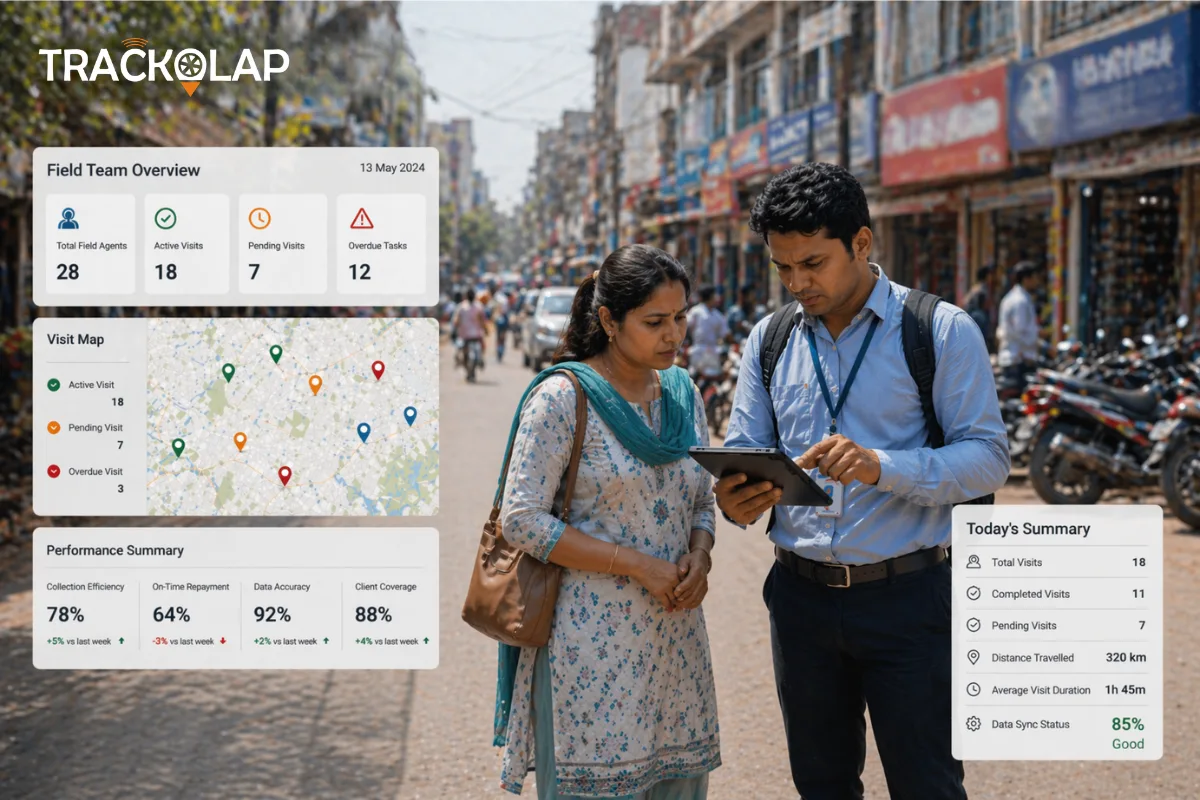
For NBFC leaders, genuine field data is not just a productivity issue, but a trustworthiness issue with customers, regulating bodies, and within the companies themselves. When field visits are verified and real-time data is available, operational control can be greatly improved, and managers can focus on strategy rather than micromanagement.
The Hidden Problem of Fake Visits in Field Operations
Fake visits occur where field agents make entries of customer visits that did not actually take place. The pressure to meet goals or the challenges of manual reporting systems are the main causes of many of them, while others may be human error.
Employees report visits at the end of the day or the end of the week without providing proof of attendance under the outdated work procedures. It is challenging for supervisors to keep an eye on every report because they handle large teams and geographical areas. All these unverified visits may add up over time, distorting the information and hiding the inefficiencies in field operations.
Business Risks Caused by Unverified Field Visits
The effects of invalid visits are way more than inaccurate reporting. If the field visit is not confirmed, the NBFCs may face the following actual business risks:
Inaccurate Customer Records: Visits made without verification may record completed collections or verifications that have not been made, and hence provide wrong customer details.
Delayed Recoveries: Fake visit delays corrective action, as the managers feel that agents have done their task.
Compliance Exposure: Regulatory audits are based on the proper documentation of the interactions with the customers. False visits could leave a gap that could lead to noncompliance.
Reduced Managerial Confidence: Managers lose trust in field reports and end up micromanaging, thus creating operational inefficiency.
NBFCs can improve compliance, reduce errors, save time, and increase operational transparency by addressing the problem of fake visits.
What Location-Based Visit Verification Really Means
A technology-based technique for verifying that a field representative visited a customer's location is called location-based visit verification. Using GPS-enabled devices, visits are automatically timed and recorded to create a digital record of presence. In practice, this means:
- Agents can check in only when they are at the exact location of the customer.
- Visits are automatically recorded with precise timestamps and GPS coordinates.
- Managers can access real-time data to monitor field activity without relying solely on end-of-day reports.
This strategy ensures managers have a transparent, trustworthy view of field operations when paired with personnel live monitoring tools, greatly lowering the possibility of fake reporting.
How Location-Based Verification Stops Fake Visits
This is how NBFCs can avoid fake visits using location-based checks:
- Geo-Fenced Check-Ins: Agents are allowed to check in within a defined area of location, hence they visit the appropriate location.
- Automatic Logging: Check-in and check-out are automatically logged so as to avoid any manipulation of the manual logs.
- Live Visibility: Managers can also track the movement of field staff and visits made, and take immediate steps in case irregularities are observed.
- Tamper-Resistant Records: GPS and timestamp records leave an audit trail, making it hard to fake visits on the part of the employees.
With the incorporation of field sales automation software such as TrackOlap, the processes become simplified, and NBFCs do not need an extensive administrative load to implement accountability.
Operational and Compliance Benefits for NBFCs
Validated data about visits introduces quantifiable improvements to the NBFC operations:
Reliable Field Reporting: Managers will be able to make better decisions based on data and feel secure knowing that every visit that is documented is real.
Faster Corrective Action: As soon as the differences are found, immediate correction is made to avoid collection or verification delays.
Better Accountability: With real-time location verification, the agents become more responsible.
Audit-Ready Records: GPS-based records are an easy way to demonstrate field activity, which reduces compliance and regulatory audits.
Ultimately, these benefits reduce the possibility of conflicts or errors, improve operational efficiency, and save managers' time.
Moving from Assumed Activity to Verified Field Performance with TrackOlap

NBFCs that want to improve operational management and eliminate fake visits might utilize TrackOlap to change field operations. TrackOlap uses employee live tracking software and field sales automation software to see all the visits recorded correctly, with each visit visible to the managers in real time and soundly stored to be audited.
Key capabilities include:
- Geo-based attendance and visit verification for field agents.
- Automated logging and reporting of daily field activity.
- Analytics dashboards for tracking productivity, visit completion, and team performance.
- Seamless integration with compliance workflows to ensure regulatory adherence.
Shifting the presumed activity to the actual operations, the NBFCs gain confidence in their field data, enhance productivity, and concentrate on expansion instead of pursuing the lost reports.
Wrapping Up
Unverified or fake field visits pose a serious operational and compliance risk for NBFCs. When deployed with such solutions as TrackOlap, location-based visit verification is a viable technology-based mechanism that can verify that all visits are authentic.
NBFC managers can minimize uncertainty, enhance responsibility, and confidently increase operations while upholding compliance and operational efficiency with the use of automated procedures from field sales automation software and real-time insights from staff live tracking software. Going from assumptions to confirmed performance is not only convenient but also essential in today's cutthroat financial environment.
Frequently asked questions
What is a fake visit in NBFC operations?
A fake visit is where one of the field agents records a visit that never took place with the customer.
How does location-based visit verification prevent fake visits?
It uses GPS check-ins and time to ensure that the agents are present at the physical location of the customer.
Can location-based verification help with compliance and audits?
Yes. Authenticated visits produce digital audit-ready records, which guarantee regulatory compliance and minimize operational disputes.
How does TrackOlap improve field visit tracking?
TrackOlap offers a real-time view, automated visit-recording, and structured reporting, which offer accountability and efficiency in operations.
Will location-based verification affect employee workflow or privacy?
No. It only logs work-related destinations and does not interfere with daily activities and privacy



 D-5, Logix Infotech Park, Sector 59, Noida - 201301, Uttar Pradesh (India)
 contactus@trackolap.com
 7011494501






 Demo
at free of cost
Demo
at free of cost