















 Back to Blogs
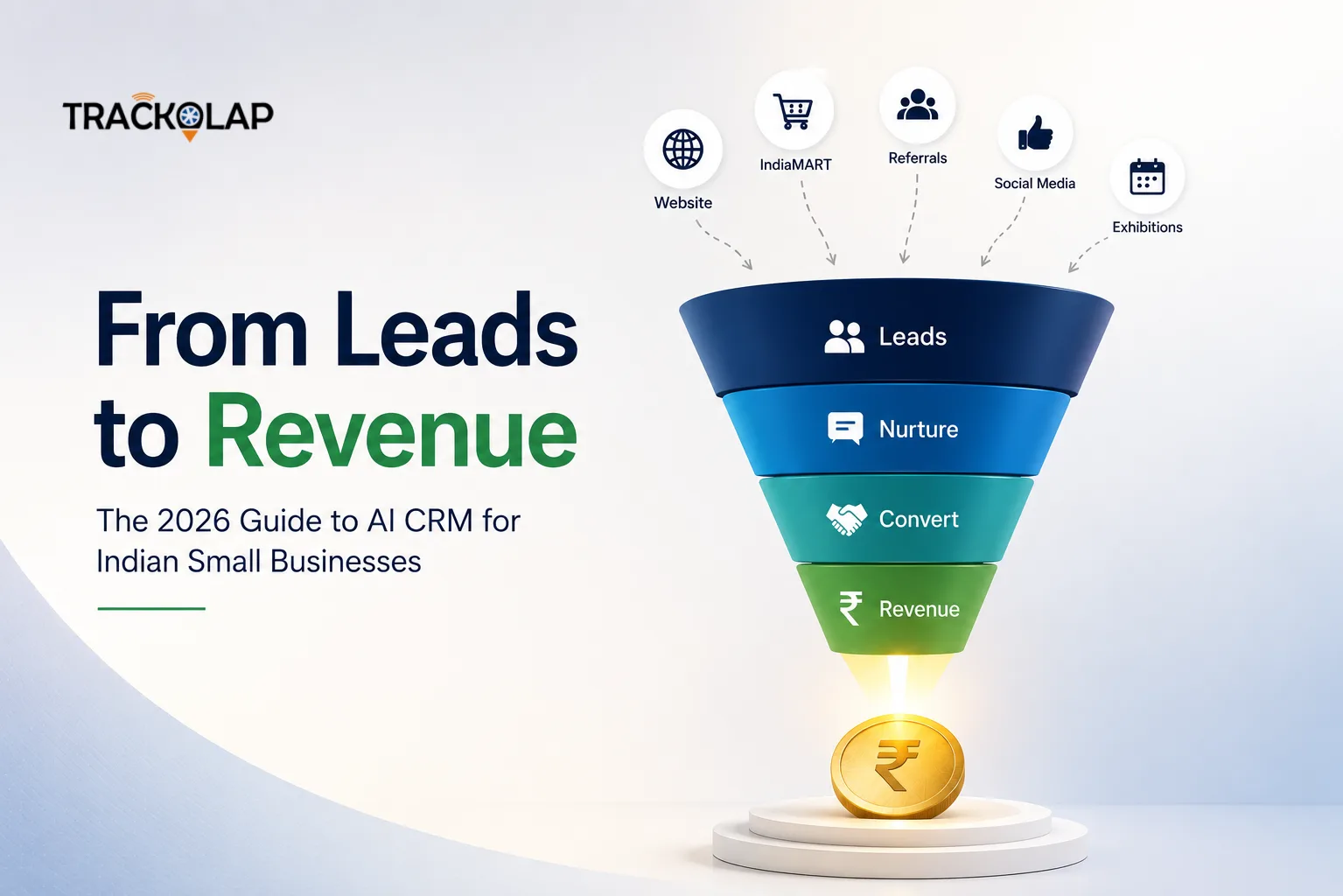
For most Indian small businesses, the CRM has been a well-intentioned filing cabinet. Leads went in. Notes went in. And somehow, revenue still depended on which salesperson remembered to follow up, which field executive actually visited the outlet, and which expense claim did or did not get reconciled at month-end.
2026 is the year that quietly changed.
Artificial intelligence has moved from a boardroom buzzword to a working layer inside everyday sales tools — and Indian SMEs are adopting it faster than most global markets. Businesses using an AI sales CRM Software are reporting materially shorter sales cycles, sharper lead prioritisation, and clearer visibility into their revenue pipeline. The reason is simple: a modern AI CRM does not just store information. It acts on it. Pair it with field force automation software and the entire journey — desk to doorstep — runs on one connected system.
But here is the truth that most vendors will not tell you. AI works best on clean, connected data. When your sales, field, and expense information is organised in one place, AI can prioritise leads, verify activity, and surface insights that compound your growth. The foundation comes first; the intelligence follows.
This guide walks through the full journey — from leads to revenue — and shows exactly where lead automation, beat planning, field force expense management, and AI insights fit in. If you run a growing Indian SME, this is the operating blueprint for the year ahead.
Why AI CRM is going mainstream for Indian SMEs in 2026
Three forces converged this year.
First, India’s digital rails matured. Aadhaar-linked onboarding, UPI, GST-integrated invoicing, and the broader push under Digital India have made it normal for even a 20-person distributor to run operations on connected software rather than registers. The government’s own Startup India programme, managed by the DPIIT, has pushed digital-first thinking deep into Tier-2 and Tier-3 cities, where nearly half of new business activity now originates.
Second, the cost of AI collapsed. Capabilities that once needed an enterprise budget now ship inside affordable SaaS subscriptions. India’s 63 million-plus MSMEs — which the Ministry of Micro, Small & Medium Enterprises notes contribute roughly a third of national GDP — suddenly have access to the same intelligence layer as large corporates.
Third, competition got faster. Buyers expect same-day responses. Field markets are being squeezed by quick commerce and dark stores. Margins are tighter. In that environment, a lead that sits unattended for two days is not a lead — it is a gift to your competitor.
Put together, the question for an SME in 2026 is no longer whether to adopt an AI CRM. It is how to implement one so that every stage — lead, visit, expense, and decision — feeds the next.
Quick gut-check: If your sales, attendance, field visits, and expense data currently live in four different tools (or four different WhatsApp groups), you do not have a single source of truth. You have four arguments waiting to happen. That is the gap this guide closes.
The leaky funnel: where Indian SMEs lose revenue today
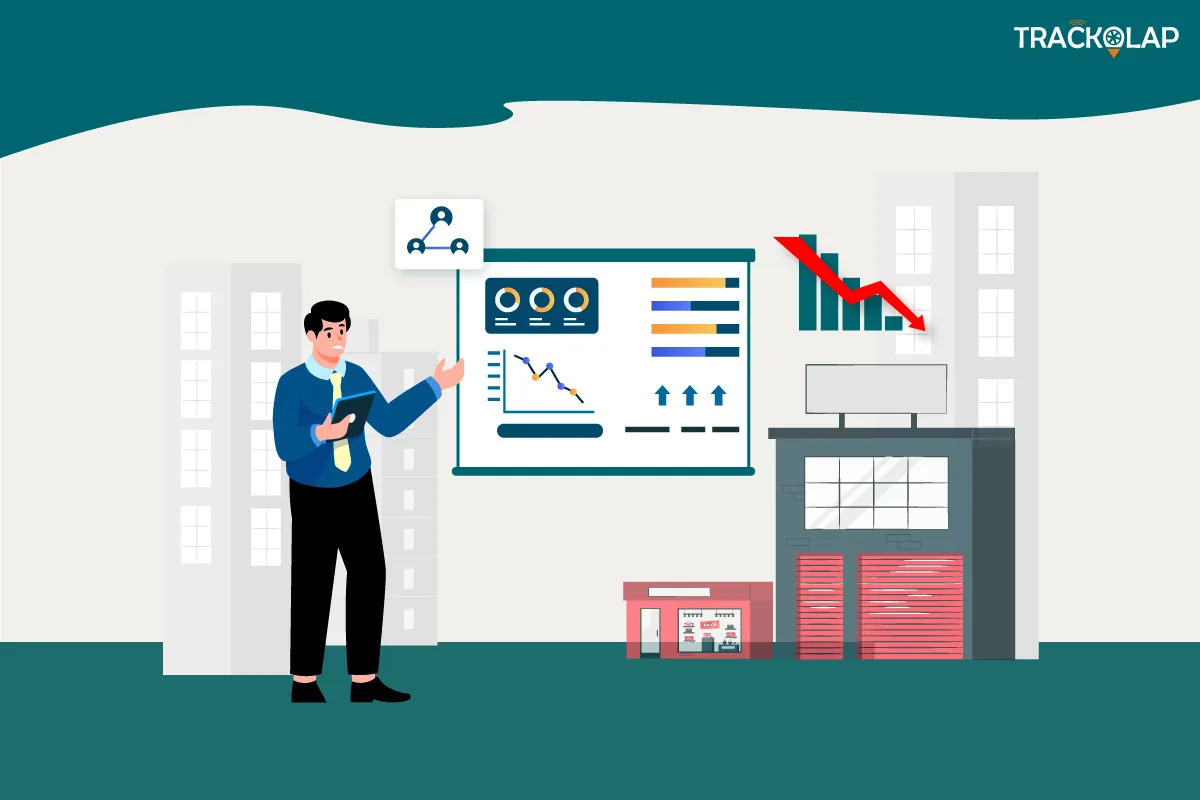
Before the solution, name the problem. Revenue leaks out of five specific cracks:
1. Slow first response: Leads arrive from a dozen channels — website, IndiaMART, referrals, exhibitions, social — and no one owns them fast enough.
2. Invisible follow-ups: Deals stall because no system nudges the salesperson at the right moment.
3. Unverified field activity: Field executives claim visits that cannot be confirmed, so managers plan the next day on faith rather than fact.
4. Expense leakage: Fuel, travel, and daily allowances are submitted on paper, approved on trust, and reconciled in a monthly scramble.
5. Blind decisions: With data scattered, leadership reacts to last month’s problems instead of anticipating next month’s.
Each crack looks small. Together, they are the difference between a business that scales and one that plateaus. An intelligent, connected platform — such as TrackOlap — is designed to seal all five. Let us take them one pillar at a time.
Pillar 1: Lead automation — Never let a Lead go Cold
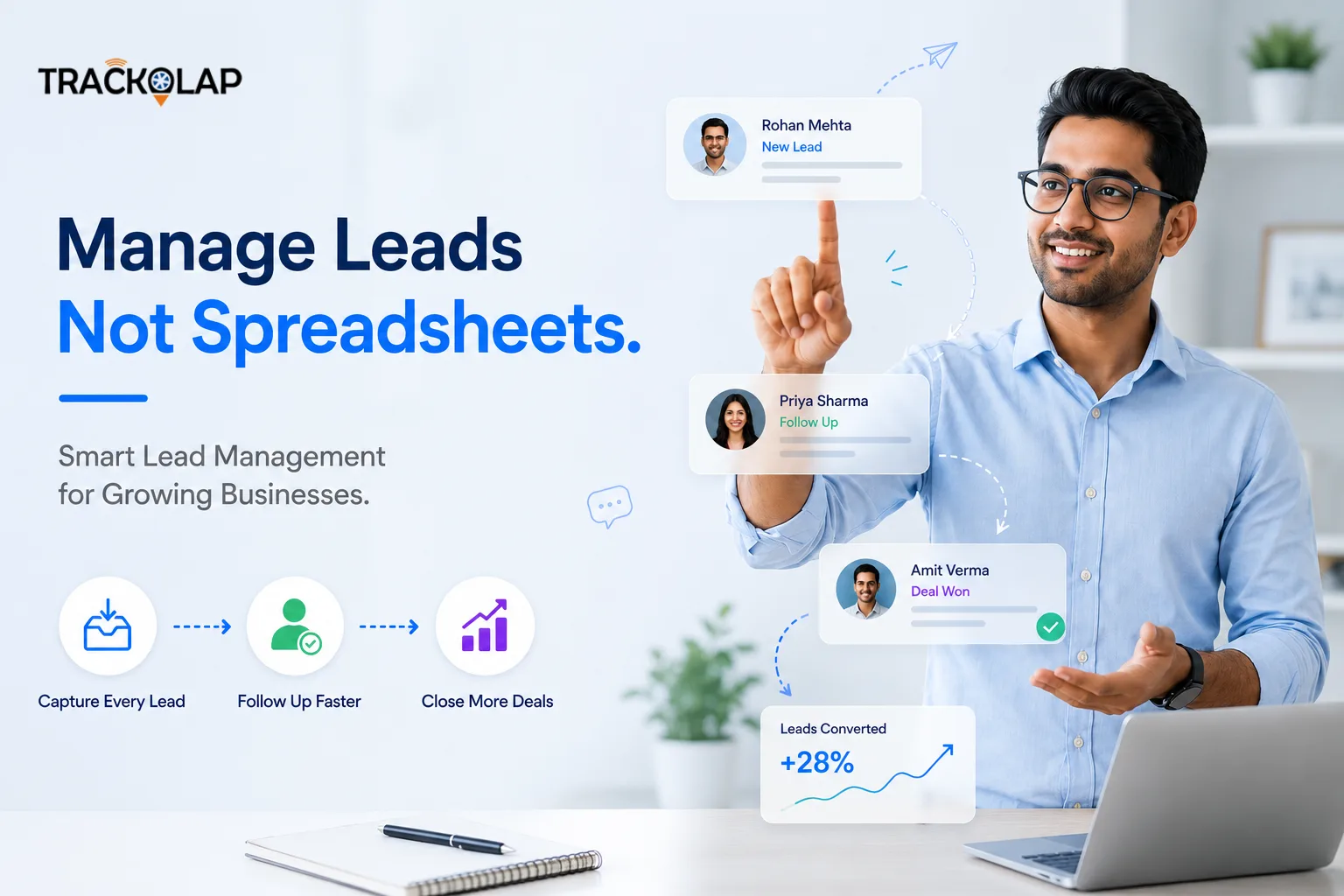
The journey from lead to revenue begins the moment an enquiry lands. Lead automation ensures that moment is never wasted.
A modern AI CRM captures leads automatically from every source and drops them into one pipeline. It then does what humans forget to do under pressure:
• Auto-assigns each lead to the right salesperson by territory, product, or workload — instantly.
• Scores and prioritises leads using AI, so your team works the enquiries most likely to convert first, rather than the loudest or the newest.
• Triggers timed follow-ups — reminders, WhatsApp nudges, and email sequences — so no deal dies of neglect.
• Tracks every interaction, giving managers a live view of stage, ageing, and next action.
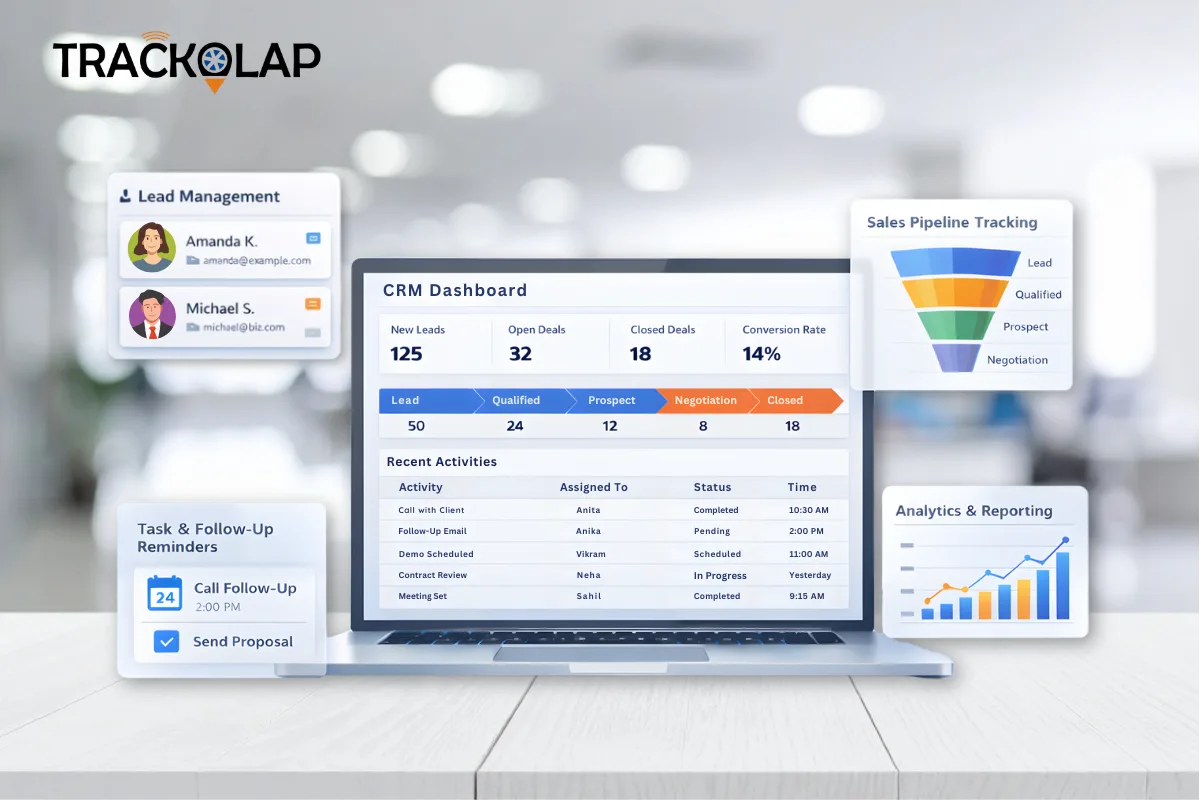
The impact is not theoretical. SMEs that automate lead handling routinely report double-digit gains in conversion and meaningfully shorter sales cycles, because speed-to-lead is the single biggest predictor of whether a prospect buys from you or from someone else. With TrackOlap’s lead management, the pipeline stops being a spreadsheet you update and becomes a system that works while you sleep.
Pillar 2: Beat planning — turn field chaos into a disciplined route to revenue
For any Indian business with a field team — FMCG distributors, pharma, building materials, financial services, retail supply — the pipeline does not close at a desk. It closes at the outlet, the dealership, and the doorstep.
This is where beat planning becomes the engine of growth.
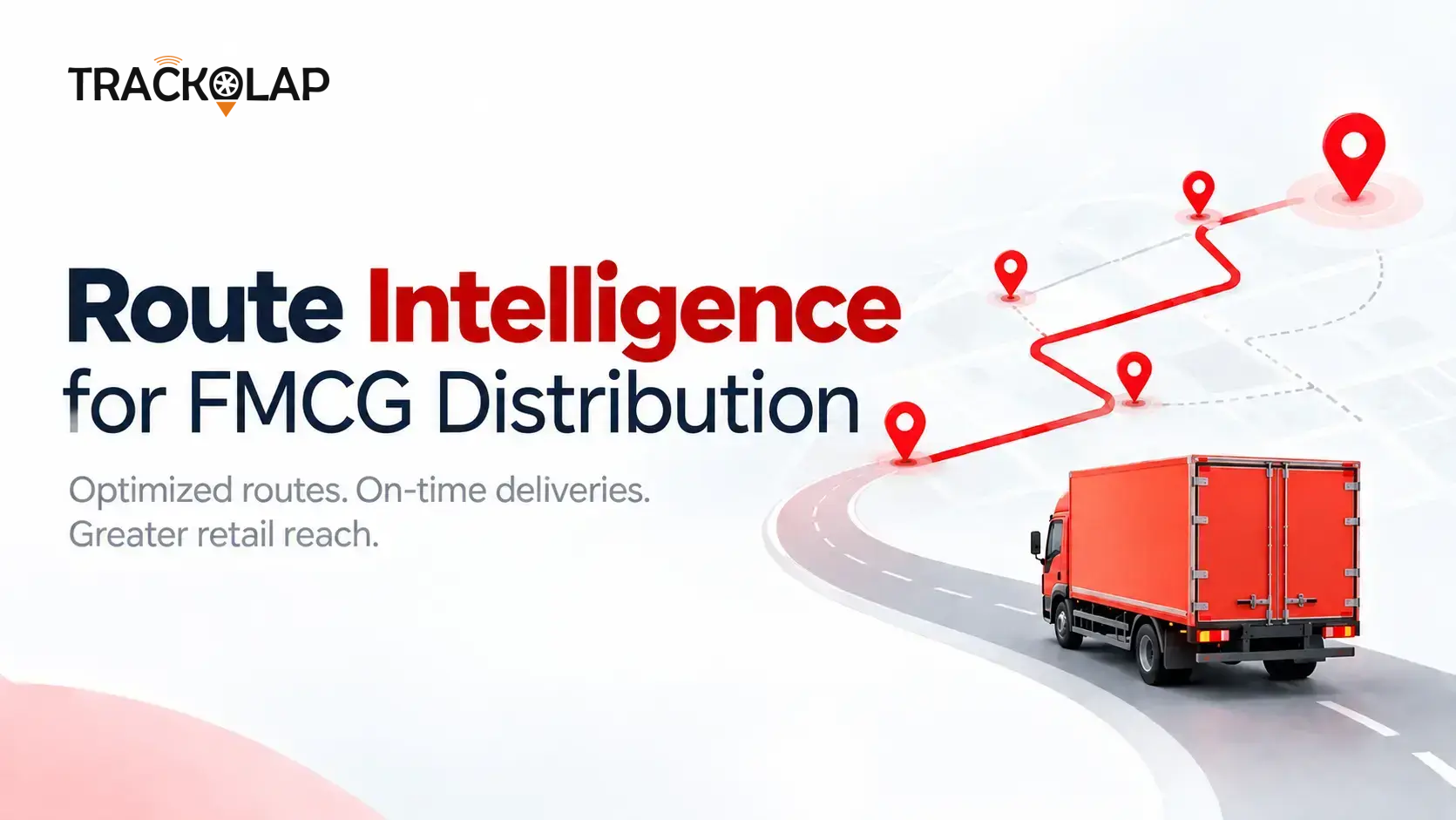
Beat planning is the science of deciding which customers a field executive visits, how often, and in what sequence — and then verifying that it actually happened. Done manually, it is guesswork. Done intelligently, it is a repeatable revenue machine.
A capable field force platform lets you:
• Design optimised beats and routes so reps cover more outlets with less travel and fewer missed calls.
• Verify visits with GPS and geo-fencing, so a “visit” means the executive was genuinely at the location, not near it.
• Capture orders, stock, and feedback on the spot, feeding real market data straight back into the CRM.
• Measure coverage per rep — outlets touched, productive calls, and beat adherence — as a live metric rather than a month-end guess.
In a market where dark stores now number in the thousands and expect delivery in minutes, traditional distribution cannot afford loose routes and unverified activity. Smart beat planning is how field-led SMEs stay fast, stay visible, and stay relevant. TrackOlap’s beat planning software and field force tracking app convert a scattered field team into a disciplined, measurable extension of your sales engine.
Interactive checkpoint — rate your field visibility (0 to 5): Can you tell, right now, which of your field reps is at which outlet? A score below 3 means beat planning is your fastest available revenue upgrade.
Pillar 3: Field force expense management — plug the silent leak
Here is the leak most owners underestimate. Field teams generate expenses every single day — fuel, tolls, travel, daily allowances, client meetings. When these run on paper bills and end-of-month reconciliation, three things happen: reimbursements get delayed, claims get inflated, and finance loses days to manual verification.
Field force expense management closes that leak by making expenses digital, verifiable, and instant. A strong system delivers:
• On-the-go expense capture — reps photograph a bill and log a claim from their phone the moment it happens.
• Auto-tagging and policy checks so out-of-policy or duplicate claims are flagged before they are approved.
• GPS-linked travel and distance calculation, so fuel and conveyance claims match the actual route travelled during the beat.
• Faster, transparent approvals with a clean audit trail — critical as India’s new labour and compliance norms raise the bar on record-keeping.
This matters for more than tidiness. With GST 2.0’s rate changes taking effect and MSMEs under closer scrutiny during funding and due diligence, clean, categorised expense data is now a genuine business asset. It protects margins, speeds reimbursements (which field teams deeply value), and keeps you audit-ready. Purpose-built expense management software ties expenses directly to verified field activity — so every rupee claimed maps to a real visit on a real beat. That is exactly how TrackOlap’s field force expense management is designed to work.
Pillar 4: AI insights — from data to decisions
Capture the leads, run the beats, digitise the expenses — and you have created something most SMEs never had: clean, connected, real-time data across the entire journey. This is where AI insights turn operational data into a strategic advantage.
A modern AI CRM continuously reads this data to surface what a busy owner would otherwise miss:
• Which leads and territories are trending up or cooling down — before the quarter ends.
• Which reps are productive versus merely busy, judged on outcomes rather than hours.
• Which routes and outlets deliver the best return, so beats are refined with evidence.
• Where expenses are drifting out of line with revenue generated.
• Predictive nudges — the deals at risk, the customers due for reorder, the anomalies worth a second look.
The shift here is philosophical as much as technical. In 2026, boards are measuring productivity per hire and output, not hours. AI insights give leaders that honest scoreboard — and give teams fair, transparent
recognition rather than surveillance. Decisions stop being reactions to last month and start being anticipations of next month.
The full loop: how it all connects into revenue
The magic is not any single pillar — it is the loop.
A lead is captured and auto-assigned (lead automation). The salesperson or field executive acts on it during an optimised route (beat planning). The visit is GPS-verified, and the associated travel and cost are logged instantly (field force expense management). Every one of those data points flows back into one platform, where AI reads the whole picture and tells leadership what to do next (AI insights). That refined decision shapes tomorrow’s leads and beats — and the loop tightens with every cycle.
That is what “from leads to revenue” actually means in practice: not four disconnected tools, but one connected system where each stage makes the next one smarter. TrackOlap is built as exactly this loop — sales CRM, lead automation, field force tracking, beat planning, and expense management under a single, AI-driven roof.
Interactive self-assessment: is your SME AI-CRM ready?
Score one point for every “yes.” Be honest.
• Every incoming lead is captured automatically and assigned within minutes.
• Follow-ups are triggered by the system, not by memory.
• You can see, live, where your field team is and which outlets they have covered.
• Field visits are GPS-verified, not self-declared.
• Expenses are submitted and approved digitally, tied to actual visits.
• Your sales, attendance, and expense data live in one place, not five.
• Leadership reviews AI-driven insights weekly, not month-end spreadsheets.
5–7: You are ahead of most Indian SMEs — now optimise for compounding gains. 3–4: You have a solid base but real revenue is leaking; prioritise the weakest pillar. 0–2: This is your single biggest growth lever for 2026.
Start with lead automation and beat planning.
Backed by policy: the Indian SME tailwind
Adopting an AI CRM is not a leap of faith — it aligns with the direction the country is already moving. The Ministry of MSME has redefined enterprise categories and continues to push formalisation and digital adoption, while free Udyam Registration makes it easier than ever for small enterprises to access government schemes, credit, and benefits. Recognition under Startup India adds tax and compliance advantages for eligible new-age firms. The through-line is clear: the businesses that digitise their operations are the ones the ecosystem is built to reward.
Frequently asked questions
What is AI CRM for small businesses?
AI CRM for small businesses is customer relationship management software that uses automation and artificial intelligence to help teams capture leads, prioritize prospects, schedule follow-ups, track sales pipelines, and convert more enquiries into revenue.
How does AI CRM help Indian small businesses grow revenue?
AI CRM helps Indian small businesses grow revenue by reducing missed follow-ups, organizing customer data, assigning leads quickly, showing pipeline visibility, identifying high-priority opportunities, and helping sales teams act faster on every enquiry.
Can AI CRM replace spreadsheets for lead management?
Yes. AI CRM can replace spreadsheets by automatically capturing leads, assigning them to salespeople, tracking every follow-up, updating pipeline stages, and giving managers real-time visibility into lead status and sales progress.
What features should Indian small businesses look for in AI CRM?
Indian small businesses should look for lead capture, lead assignment, follow-up reminders, pipeline tracking, AI insights, mobile access, sales reports, team activity tracking, integration support, and lead-to-revenue visibility.
How does TrackOlap help with AI CRM and lead management?
TrackOlap helps businesses manage leads, track sales activities, automate follow-ups, monitor field and sales teams, view pipeline performance, generate reports, and improve conversion from enquiry to revenue.


 D-5, Logix Infotech Park, Sector 59, Noida - 201301, Uttar Pradesh (India)
 contactus@trackolap.com
 7011494501






 Demo
at free of cost
Demo
at free of cost