
















 Back to Blogs

The 6 PM Reality of Field Collections - By 6 PM, most Microfinance Institution (MFI) managers remain awaiting calls, spreadsheets, and WhatsApp notifications to get a clue of how many collections have been made. In fact, this difficulty reflects a real trend in the sector.
According to the Microfinance Institutions Network (MFIN), over 95% of microfinance borrowers in India are located in rural and semi-urban areas, requiring regular physical interaction for servicing and collections.
Collections occur outside of digital systems, which often reduces visibility. Many organisations are using field sales automation software to bridge this operational gap and transition from delayed reporting to real-time field information.
Why MFI Collections Still Depend on Manual Visibility
Client meetings, doorstep visits, and the relationship of field teams continue to dominate MFI collections.
Microfinance repayments in India are largely collected through regular field visits and group meetings, making operations highly field-dependent and decentralised.
Key reasons include:
- Weekly client meetings
- Doorstep repayment model
- Cash & assisted payments
- Widely spread borrowers
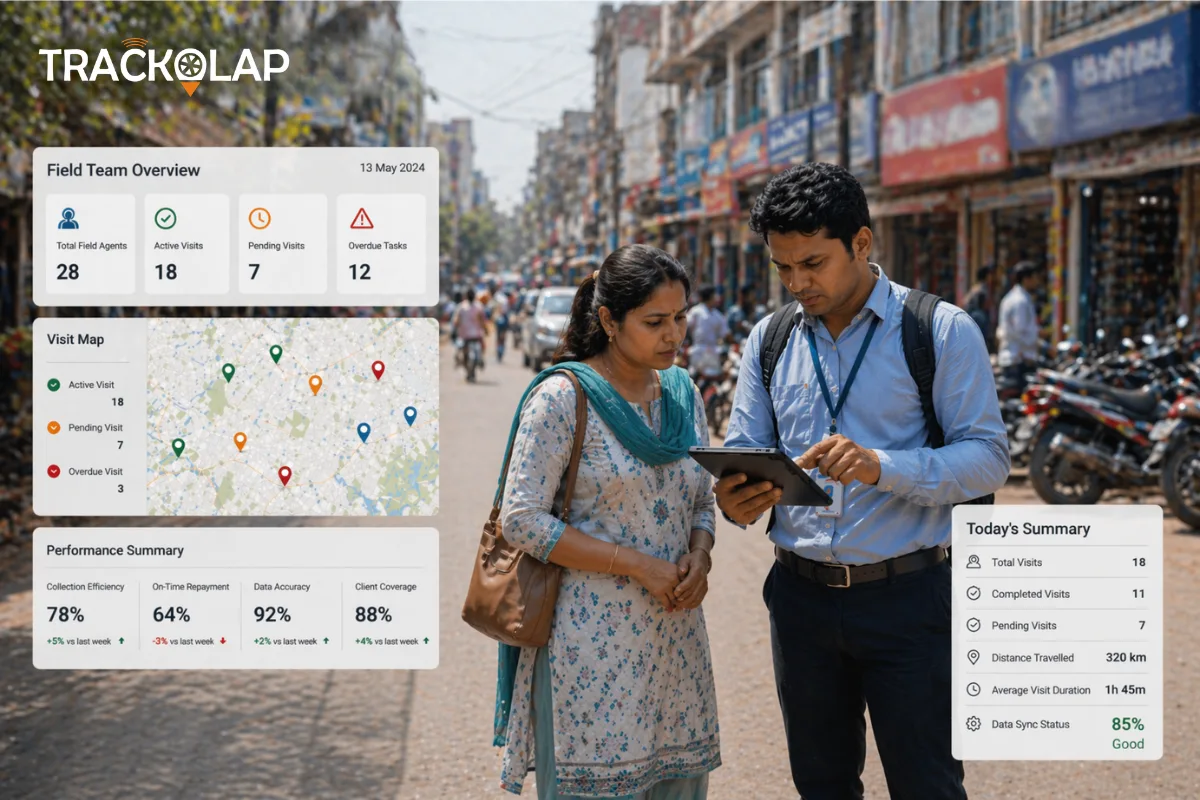
Excessive dependency on the field workforce.
Many organisations continue to rely on manual updates for the field tasks. With these manual processes, managers normally receive the entire reports at the end of the day, which creates delays, uncertainty, and pressure in decision-making.
The Visibility Gap Between Head Office and Field Reality
When field teams are working around the clock, it is hard to understand the entire picture throughout the day. The gap between planning and execution grows hour by hour. Field sales automation software fills this gap, where daily activity is transformed into measurable and visible workflows.
Problem Cluster 1: The Daily Planning Chaos
Each day starts with route planning, borrower allocation and target setting. Planning, without field sales automation software, is often done on an experience basis instead of using structured data.
- Manual route planning
- Unclear visit priorities
- Last-minute adjustments
- Duplicate assignments
Lack of structure in planning also wastes the precious time of field agents who rearrange their schedules rather than meeting borrowers. Before the day even starts, this lowers visit productivity and raises travel inefficiencies.
Problem Cluster 2: The Mid-Day Execution Black Hole
Once agents leave for the field, visibility fades quickly. Managers are dependent on phone calls or messages to know the progress, thus posing a big execution blind spot.
- No live visibility
- Missed visits unknown
- Delayed issue escalation
- Productivity uncertainty
Managers often struggle to guide their teams in real time without employee live tracking software. Small issues turn into major delays because they are discovered too late to fix.
Problem Cluster 3: The End-of-Day Reporting Burden
Agents still have reports to finish after a long day on the field. This manual procedure is time-consuming and prone to mistakes.
- Manual data entry
- Late reporting hours
- Error-prone summaries
- Delayed dashboards
This reporting overload decreases morale and slows down next-day planning.
How These Challenges Escalate Across MFI Operations
The visibility gap will quickly widen beyond collections and affect the entire organisation. Daily inefficiencies increase operational risks without any automation tool.
Key business impact is:
- Lower predictability of collection.
- High supervision effort
- Rising operational costs
- Inadequate performance knowledge.
- Increased compliance risks
Without real-time execution information, leaders may make quick decisions. Planning is based on historical data rather than current field realities, which results in a lack of progress and deterioration. By integrating task management and employee live tracking software, this situation has been modified, and daily tasks become actionable. Field sales automation software becomes the backbone of the operation that involves linking the plan of action with implementation and allowing expansion at a scaled level.
From Reactive to Real-Time: How Field Sales Automation Transforms MFI Collections
MFIs are moving towards real-time models of execution. The field sales automation software helps in planning effectively, monitoring in real time and receiving automated reports using a single integrated ecosystem.
Smarter Start of the Day with Structured Planning
The secret to a successful day starts with being clear. Field sales automation software provides managers with the opportunity to allocate visits to borrowers and to set routes and priorities automatically.
- Digital route planning
- Smart borrower allocation
- Priority visit mapping

Task assignment is centrally assigned
Using task management software, the agents start their day with good schedules and the most optimised routes. It minimises confusion, saves time on travelling and increases the rate of visits per day. The teams are not reactive to changes; instead, they are structured to work in a way that is the most productive and has stable collections.
Real-Time Mid-Day Execution with Live Field Visibility
The largest driver of transformation is mid-day visibility. Employee live tracking software helps managers to keep track of movement and offer instant assistance.
- Live location tracking
- Real-time visit status
- Instant issue escalation
- Dynamic task updates

Field sales automation software also equips the supervisors with the power to intervene in instances of difficulty. Managers can redirect agents, change priorities and reschedule missed visits at once. This responsive support contributes immensely to accountability and team confidence, as well as enhancing the engagement of borrowers.
Stress-Free End-of-Day Reporting Through Automation
Planning should be at the end of the day and not paperwork. Field sales automation software is a software that records the activity automatically and reports on it immediately.
- Automated visit logs
- Digital collection records
- Instant dashboards
- Dynamic performance reports.
Task management software makes it an automatic by-product of day-to-day running to report. Managers get the right insights without having to wait, so that they can make manual submissions. This accelerated loop of feedback enhances forecasting, planning, and performance appraisal.
How TrackOlap Powers Modern MFI Field Operations
TrackOlap is a business automation platform that is specific to field-intensive organisations. It helps MFIs to arrange visits to borrowers digitally, real-time field movement, and automation of daily reporting. Managers can have quick dashboards and performance updates and minimise manual supervision. TrackOlap helps MFIs to enhance transparency, compliance, and collect to scale without adding complexity to their operations by linking their head office strategy with field execution.
Conclusion
The collections of microfinance rely on the high field performance, whereas the visibility through manual means restricts scalability. Field sales automation software is the one that substitutes the uncertainty with official planning, real-time tracking, and automated reporting. To the business owners and managers, such a transformation enhances productivity, lessens operational pressures, and reinforces relations between borrowers. Under the TrackOlap, MFIs will be able to shift their coordination functions to execution, transforming daily field activity into performance and operational development for the long term.
Frequently asked questions
Why are MFIs shifting toward field sales automation software for collections?
To enhance productivity, minimise costs, and make large collections with distributed field teams, MFIs require real-time visibility, faster planning, and automated reporting.
How does employee live tracking software improve field collections?
It allows real-time location tracking, verifies field visits, enhances accountability, and assists managers in supporting agents in real-time, rather than waiting until they receive updates.
Can task management software reduce end-of-day reporting stress?
Yes. Tasks are also automatically updated throughout the day, eliminating manual input, creating fewer errors, and offering real-time dashboards to monitor performance and compliance reporting.
Is field sales automation software suitable for growing MFIs?
Yes. It assists MFIs to expand operations, handle a bigger staff, handle coordination issues, and stay productive without augmenting management duties.
How does TrackOlap help MFIs modernise operations?
TrackOlap is a live tracking and automation of tasks combined with real-time dashboards that enhance field operation visibility, productivity, accountability, and decision-making based on data.




 D-5, Logix Infotech Park, Sector 59, Noida - 201301, Uttar Pradesh (India)
 contactus@trackolap.com
 7011494501






 Demo
at free of cost
Demo
at free of cost