











Yes. Turn operational and performance data into actionable findings. At TrackOlap, we connect Business Insights with Summary Reports so teams can keep supporting records, activity, and follow-up actions in one operational workflow. Our Employee Productivity Software provides a centralized way to coordinate this work.
Reporting & Analytics
Summary Reports
What Are Summary Reports and How Do They Help Businesses Analyze Performance?
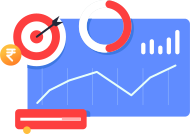
Summary Reports are a reporting feature that consolidates important business activities and performance data into a single, easy-to-understand overview. Instead of reviewing detailed logs individually, managers can use summary reports to view key information from daily activities, attendance, tasks, field operations, sales, and other business processes in one place.
By highlighting important metrics, results, and trends, summary reports make it easier for managers to understand overall performance and identify areas that require attention.
Why Are Summary Reports Important for Businesses?
Reviewing large amounts of raw data, spreadsheets, and detailed activity logs can be time-consuming and make it difficult to identify the information that matters most.
Summary Reports simplify this process by presenting important data in a concise and organized format. Managers can quickly review performance, identify trends, compare results, and make informed decisions without going through every individual record.
This saves administrative time, reduces manual analysis, and helps businesses turn operational data into actionable insights for better planning and decision-making.
What Are the Key Benefits of Summary Reports?
- Consolidated insights: Bring important information from multiple activities or reports into one view.
- High-level overview: Get a quick understanding of overall performance and operational results.
- Performance highlights: Focus on important metrics, trends, and areas that need attention.
- Faster decision-making: Access key information quickly to support timely business decisions.
- Reduced manual review: Minimize the time spent reviewing detailed records and spreadsheets.
- Actionable data: Turn business data into useful insights for planning and operational improvements.
- Improved reporting efficiency: Make it easier for managers to create, review, and use business reports.
Which TrackOlap Features Support the “Summary Reports” Experience?
Employee Productivity Software
Measure work patterns and productivity trends with actionable employee insights.
Learn More about Employee Productivity Software in a new tabField Sales Automation
Automate field workflows, visit plans, and sales processes to boost team productivity.
Learn More about Field Sales Automation in a new tabSales CRM
Manage customer information, leads, opportunities, and sales activity from one platform.
Learn More about Sales CRM in a new tabTask Management
Assign, prioritize, and track tasks across teams to ensure nothing goes incomplete.
Learn More about Task Management in a new tabSee Summary Reports in action with TrackOlap.
Book a demoFrequently Asked Questions
Yes. Connect day-level work updates with broader reporting views. At TrackOlap, we connect Daily Report with Summary Reports so teams can keep supporting records, activity, and follow-up actions in one operational workflow. Our Field Sales Automation provides a centralized way to coordinate this work.
Yes. Include attendance, working-hour, and leave information in management reviews. At TrackOlap, we connect Attendance Management with Summary Reports so teams can keep supporting records, activity, and follow-up actions in one operational workflow. Our Attendance Management provides a centralized way to coordinate this work.
Yes. Review assigned, pending, and completed work across teams. At TrackOlap, we connect Task Management with Summary Reports so teams can keep supporting records, activity, and follow-up actions in one operational workflow. Our Task Management provides a centralized way to coordinate this work.
Yes. Summarize customer visits, field activities, and sales execution. At TrackOlap, we connect Field Sales Automation with Summary Reports so teams can keep supporting records, activity, and follow-up actions in one operational workflow. Our Field Sales Automation provides a centralized way to coordinate this work.
Yes. Compare work patterns and productivity trends in a consolidated view. At TrackOlap, we connect Employee Productivity with Summary Reports so teams can keep supporting records, activity, and follow-up actions in one operational workflow. Our Employee Productivity provides a centralized way to coordinate this work.
Yes. Measure work patterns and productivity trends with actionable employee insights. At TrackOlap, we connect Employee Productivity Software with Summary Reports so teams can keep supporting records, activity, and follow-up actions in one operational workflow. Our Employee Productivity Software provides a centralized way to coordinate this work.
Yes. Manage customer information, leads, opportunities, and sales activity from one platform. At TrackOlap, we connect Sales CRM with Summary Reports so teams can keep supporting records, activity, and follow-up actions in one operational workflow. Our Sales CRM provides a centralized way to coordinate this work.
Managers, operations leaders, HR teams, and sales leaders can benefit from Summary Reports when they need a concise view of activity and performance without reviewing every detailed record. At TrackOlap, we help these teams combine Summary Reports with our Employee Productivity Software to manage related activities, records, and decisions from one platform.
 Demo
at free of cost
Demo
at free of cost